
 The Standard Group Plc is a multi-media organization with investments in media
platforms spanning newspaper print
operations, television, radio broadcasting, digital and online services. The
Standard Group is recognized as a
leading multi-media house in Kenya with a key influence in matters of national
and international interest.
The Standard Group Plc is a multi-media organization with investments in media
platforms spanning newspaper print
operations, television, radio broadcasting, digital and online services. The
Standard Group is recognized as a
leading multi-media house in Kenya with a key influence in matters of national
and international interest.


Patients with chronic conditions want the Ministry of Health to make systems work and clarify enhanced services offered under the newly gazetted benefit package.
The tariffs for healthcare services (amendment), 2026, were gazetted last week, provided under the Social Health Act, 2023.
A new package gazette notice published by Health Cabinet Secretary (CS) Aden Duale, the new package includes maternity, haematology, and oncology services.
In the package, individuals with sickle cell anaemia shall be provided with selected services, including apheresis platelets at Sh20,000 and red cell exchange at Sh70,000.
Each of the services that manage the genetic disease shall be covered up to three times per policy period.
Apheresis platelets and red cell exchange, treatments that were previously limited or inaccessible to many patients.
The apheresis platelets is a procedure where a specialised donation is done using a machine to separate and collect platelets, while returning red blood cells and plasma to the patient.
The allocation according to sickle cell patients is, however, low, and they had requested an increase to Sh100,000.
- How I rose above seizures to build a digital brand
- Naivasha witnesses spike in ENT infections linked to flower farms
- MPs call for overhaul of cancer treatment access and funding
- Kenya, African leaders reject free use of pathogen data by developed states
Keep Reading
“There is no change for allocations in the current tariffs, and what we have been offered before,” says Michelle Asesa Omullo, a sickle cell patient.
Omullo adds, “SHA has been paying Sh70,000; Kenyans are happy, but we patients have nothing to smile about because this can only be assessed in public hospitals that are not effective.”
Omullo travels from Kisumu to Nairobi, where she does the procedure in a private facility.
She uses private insurance, paying Sh150,000 for a single session. At times, the cover gets depleted.
“We appreciate that SHA caters to sickle cell services, unlike NHIF, that was not provide any care. However, patients still struggle to access care, and we therefore need to understand the benefits more, because at times what is gazetted is never the reality,” claims Omullo.
Omullo, 32, was the first Kenyan to undergo red cell exchange at Jaramogo Oginga Odinga Teaching and Referral Hospital (JOORTH) in September 2025.
She was diagnosed with the disease at three, at Kenyatta National Hospital (KNH), after presenting with jaundice.
Was the first patient to undergo red cell exchange. Automated red blood exchange transfusion. In public hospitals.
Currently has undergone at least three exchanges, a procedure she says repairs damaged cells and improves quality of life.
Additionally, she pleads with SHA to provide an additional session, to have four, from three.
Alongside the treatment, she uses hydroxyurea and folic acid.
However, she claims the SHA system is always down, including other gaps that need to be addressed for quality care of sickle cell patients.
Also, most public hospitals that use the SHA cover do not offer sickle cell services, whereas a few that offer take long before approvals.
Initially, Omullo used to access care at Lake Victoria Hospital, a Level 5 in Kisumu, but the facility has a long waiting queue, delaying care.
The revised tariffs have increased allocation for the Emergency, Chronic, and Critical Illness Fund from Sh150,000 to Sh400,000.
The fund will cater to patients with chronic diseases and those in need of emergency care.
Among patients with chronic cases of cancer, whose benefit has been enhanced from Sh550,00 to Sh800,000.
Holistic oncology consultations covered up to Sh2,500 per visit, including access to an oncologist, nutritionist, mental health support, and palliative care.
Chemotherapy administration is set at Sh5,500 and radiotherapy at Sh3,600 per session for 30 sessions.
CT scans for cancer have been allocated Sh6,900, and Sh40,000 for brachytherapy for three sessions.
This, according to experts, will improve the quality of care to cancer patients, amid increased cases.
However, patients want the government to be able to account for the allocation to prevent hospitals from cheating the system.
Ken Anjejo, a kidney patient from Kisumu, told The Standard that additional money in the benefits should benefit patients by enhancing the quality of care, and getting additional services not previously provided.
Patients with kidney complications are entitled to dialysis at Sh10,650 per session, twice a week. This is an increase from Sh9,500 under the defunct NHIF.
Initially, SHA had promised to increase sessions from two to three every week, a move yet to be effected.
Those depleting their cover stand to benefit from the ECCIF.
“The biggest problem with enhanced services under SHA is who checks for accountability. If the government increases allocation, who checks to ensure patients are getting better?” posed Anjejo.
Anjejo warned that the increased allocations might be making hospitals richer, instead of improving care for patients.
“What is the increased Sh1,150 supposed to cover for patients? Have services improved? These are questions to answer because the government is serving patients and not hospitals,” questioned Anjejo.
Pregnant women shall also have access to free maternity care and Level 2 and 3 hospitals (dispensaries and health centres).
“All registered beneficiaries will have access to free delivery services at Level 2 and Level 3 primary healthcare facilities, on a walk-in, walk-out basis,” reads a section of the public notice, made by SHA Chief Executive Officer (CEO) Dr Mercy Mwangangi.
The maternity services shall be financed through the Primary Healthcare Fund, budgetary allocation, from the exchequer.
In the benefits, SHA will reimburse facilities Sh10,000 for normal deliveries, and Sh30,000 for Caesarian Section (C-Section).
But experts have poked provision of free maternal care, which states- ‘all registered individuals stand to benefit’.
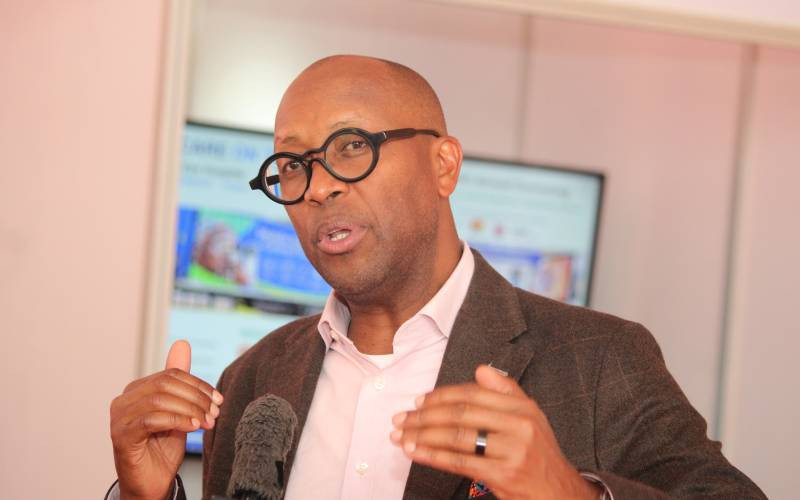
Beatrice Kairu, a health economist and policy expert, told The Standard that SHA should be clear on whether the service is free to all women or only those who have registered with the scheme.
Kairu gives a comparison of deliveries with Linda Mama, under defunct NHIF, where all women not able to pay for health insurance were registered, for free delivery.
“Are we looking at just registration without contributions, or do individuals who register must pay to access free deliveries? Posed Kairu.
Money paid from the exchequer, according to Kairu, should benefit all Kenyans, regardless of who pays or not, as it is taxpayers' money.
“Registering with premiums is the same as paying cash for service. This matter needs to be clarified,” said Kairu.
The health economist also questioned the provision of C-sections in Level 2 and 3 hospitals.
C-Section, she explained, is a complex delivery procedure done by a specialised obstetric gynaecologist, in a well-equipped facility, with a theatre.
The lower facilities, she said, do not have theatre, X-rays, laboratories, and lack blood testing and transfusion.
Also, some of the hospitals lack wards for observing women after delivery, aimed at containing maternal-related complications and deaths.
“How can a C-Section be done at a Level 2 and 3 hospital? Hospitals that are operated by only nurses? Aren't we risking more maternal deaths?” posed the expert.
In Kenya, at least 15 mothers die every single day during childbirth, with 92 babies.
“Clear communication is required on the provision of these services under the SHA. The reason why Kenyans lack trust in SHA is that they lack clear communication on services,” observed Kairu.
Contacted for clarity, SHA CEO Dr Mwangangi said an implication circular shall be released today.







 join
join