
 The Standard Group Plc is a multi-media organization with investments in media
platforms spanning newspaper print
operations, television, radio broadcasting, digital and online services. The
Standard Group is recognized as a
leading multi-media house in Kenya with a key influence in matters of national
and international interest.
The Standard Group Plc is a multi-media organization with investments in media
platforms spanning newspaper print
operations, television, radio broadcasting, digital and online services. The
Standard Group is recognized as a
leading multi-media house in Kenya with a key influence in matters of national
and international interest.

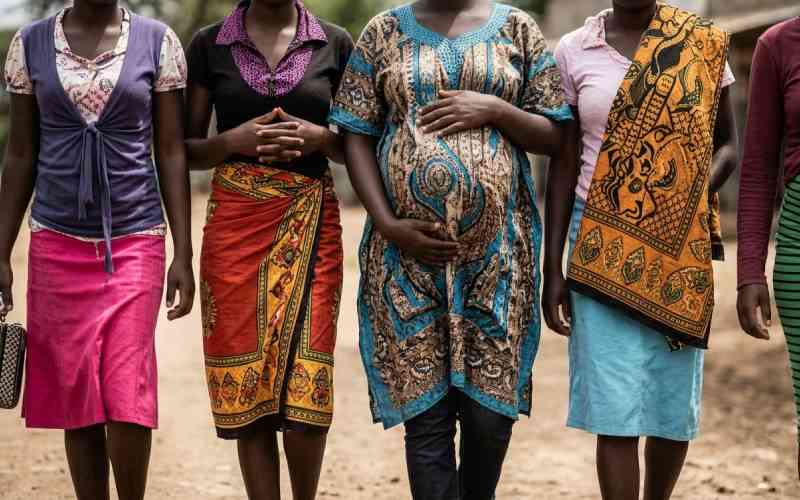
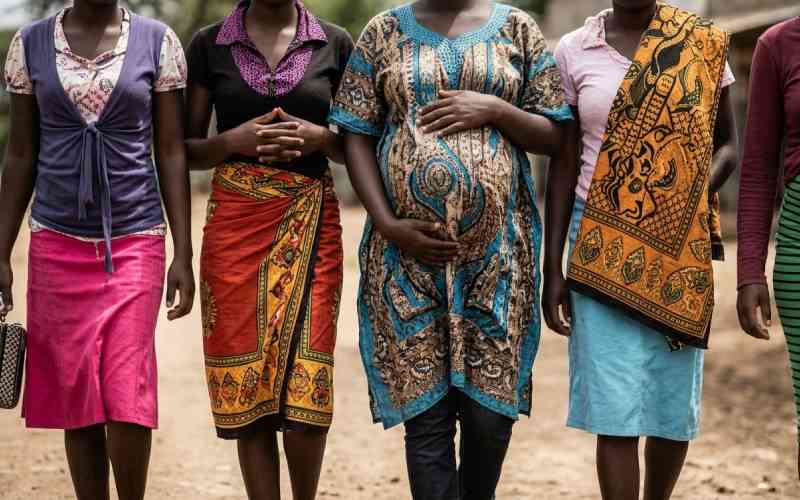
Some numbers should instantly stop every parent, chief, teacher and health worker in Kenya in their tracks.
According to the 2022 Kenya Demographic and Health Survey (KDHS), half of all teenage girls aged 15 to 19 in Samburu have been pregnant.
In West Pokot, it’s more than one in three. Nationally, 15 per cent of young girls that age are already mothers or carrying a child.
Look past the data, though and you’ll see a familiar face: a girl at home doing chores, laughing with classmates, or queuing at the local kiosk long before she ever becomes a maternal health statistic.
By the time she reaches a hospital delivery bed, a whole network of support has already failed her. This isn't about blaming a single villain. It’s about a chain of care, spanning home, school, community, local clinics and the justice system that keeps snapping at every link.
Kenya’s commitment to free maternity care remains one of our most vital health achievements, sparing hundreds of thousands of women from crippling medical bills. But even the best maternity program kicks in after a pregnancy has happened. For a teenager, that is simply too late.
While every young girl can now walk into a public hospital to give birth without paying a deposit, we have to ask ourselves a harder question: could we have reached her earlier, as families, neighbours, and a health system, so she never needed that delivery bed in the first place?
Some of what keeps this chain breaking is not oversight but unresolved national debate. Whether adolescents should be able to access contraception remains politically and socially contested. A Reproductive Healthcare Bill intended to clarify adolescents' rights to accurate information and youth-friendly services has stalled in Parliament for more than a decade.
- How worried should I be about my child lying?
- When the back-to-school glow fades and real life begins
- Small habits that quietly shape a child's character
- Why raising independent children is not enough
Keep Reading
Kenya also committed to comprehensive sexuality education under the 2013 Eastern and Southern Africa Ministerial Commitment, yet implementation remains inconsistent.
People on different sides of these debates all say they want to protect girls, but leaving these questions unresolved has a cost and that cost is being paid by 15-year-olds in Samburu, West Pokot, and across the country.
There is, however, genuine progress worth building on. The government's Every Woman Every Newborn Everywhere (EWENE) Acceleration Plan 2026–2028, launched in May 2026, represents one of Kenya's strongest commitments to maternal and newborn survival.
Together with the 2026/27 Budget, it increases investment in maternal health services, family planning, essential commodities, primary healthcare, and the health workforce, including the deployment of 5,000 additional nurses and midwives and the formalisation of more than 100,000 Community Health Promoters.
These investments recognise that maternal mortality is not inevitable. But even the strongest health system cannot reach a girl before the decisions, pressures, and vulnerabilities shaping her future have already taken hold.
That is why efforts such as the Okoa Mama na Mtoto Initiative (OMMI), which works with county governments to strengthen advocacy and accountability for maternal and newborn health, matter. They demonstrate what reaching girls earlier can look like. Yet no single programme can solve this challenge alone.
The greatest gaps still open long before a girl enters a health facility: in homes where conversations about puberty remain taboo, in schools where sexuality education is inconsistent, in communities where early marriage is tolerated, and in clinics where teenagers seeking contraception may still be met with judgment instead of support.
Budgets can fund commodities and hospital beds, but they cannot change conversations around kitchen tables or resolve long-standing policy debates. That responsibility belongs equally to parents, teachers, elders, chiefs, community health promoters, and government.
Three actions could make a meaningful difference this year. Parliament should conclude debate on the Reproductive Healthcare Bill so adolescents' rights to accurate information and services are no longer left to individual interpretation.
The Ministry of Education should ensure comprehensive sexuality education is consistently taught in every public school, backed by funding and accountability. The Social Health Authority should expand to every county the temporary identification pathway for pregnant teenagers without national IDs so registration never becomes a barrier to free maternal care.
Kenya's Reproductive, Maternal, Newborn, Child, Adolescent Health and Nutrition Investment Case (2025–2030) estimates that sustained investment could save more than 4,600 mothers, nearly 28,000 children, prevent over 11,000 stillbirths, and generate an estimated Sh565 billion in economic gains.
EWENE, increased financing, and Community Health Promoters are important steps forward. The next test is whether families will talk earlier, schools will teach honestly, communities will protect rather than shame, and government will invest as seriously in prevention as it does in treatment.
Reach her before the delivery bed, and we will spend far less time repairing damage that could have been prevented.











 join
join