
 The Standard Group Plc is a multi-media organization with investments in media
platforms spanning newspaper print
operations, television, radio broadcasting, digital and online services. The
Standard Group is recognized as a
leading multi-media house in Kenya with a key influence in matters of national
and international interest.
The Standard Group Plc is a multi-media organization with investments in media
platforms spanning newspaper print
operations, television, radio broadcasting, digital and online services. The
Standard Group is recognized as a
leading multi-media house in Kenya with a key influence in matters of national
and international interest.

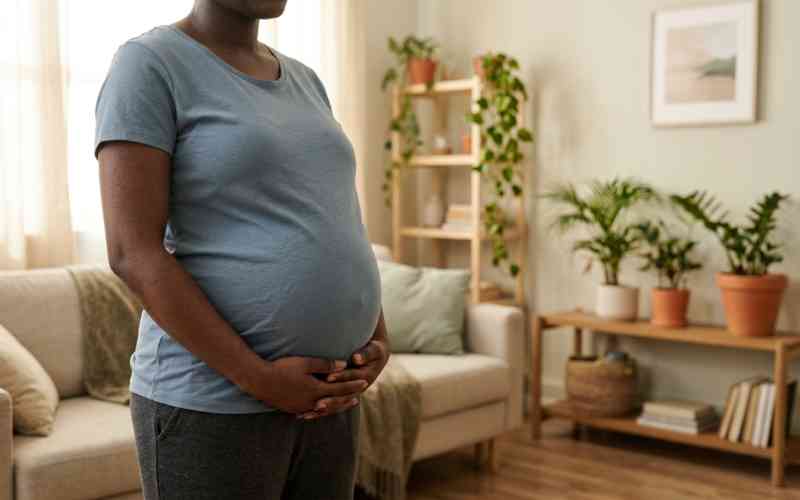
At 16, Mercy, now 22 and a mother of one, was a high school student imagining her future when a pregnancy test changed everything.
“I was stunned when the doctor broke the heavy news to me. It was traumatising. I couldn’t imagine being a mother at 16,” she recalls.
For Mercy, teenage motherhood was not simply about becoming a mother before she was ready. It was about watching the life she had imagined suddenly become uncertain. Her experience is shared by thousands of girls across Kenya.
According to the Kenya Economic Survey 2026, adolescent pregnancies among girls aged 10–19 increased from 224,333 in 2024 to 235,938 in 2025. Among girls aged 10–14, cases rose from 11,126 in 2024 to 11,605 in 2025.
Behind those numbers are girls whose lives can be abruptly redirected while they are still developing their identities, completing their education and depending on adults for support.
Counselling psychologist Joyce Andere says adolescence is already a critical period of identity formation, when young people are exploring their identity, belonging and future.
“Teenage motherhood can bring those developmental tasks into collision where a girl is still developing her own identity while simultaneously being expected to take on the identity and responsibilities of a mother,” she explains.
For Mercy, that collision was only the beginning.
- How worried should I be about my child lying?
- When the back-to-school glow fades and real life begins
- Small habits that quietly shape a child's character
- Why raising independent children is not enough
Keep Reading
Pregnancy brought fear about her future. But the emotional burden became even heavier when she lost her baby shortly after delivery.
“The fact that my child died immediately after delivery almost sunk me into depression. I was battling two things at the same time: the struggle of teenage pregnancy and the loss of my child,” she says.
Her experience demonstrates why the conversation around teenage pregnancy should not focus only on the baby.
“A young mother may need emotional support, acceptance, practical guidance and someone willing to listen without immediately judging her,” Andere explains.
She may also need to be reminded that motherhood is only one part of her identity. She can still be a student, daughter and young woman with ambitions of her own.
But for some girls, the first challenge is finding someone who will stand beside them.
For Ann, now a 23-year-old mum of one, her pregnancy meant losing some of the relationships she had relied on.
“I was 17 when I discovered I was pregnant. My parents were mad at me and did not want to see me. My friends left me and I was all alone. I was stressed,” she recalls.
Even ordinary needs became sources of anxiety. She experienced pregnancy cravings but was afraid to ask her mother, fearing she would instead be confronted about the person responsible for the pregnancy.
Nelson Onyimbi, a health policy associate at the Network for Adolescents and Youth of Africa (NAYA) Kenya, says nutrition is one of the challenges that can easily be overlooked when discussing teenage motherhood.
For young mothers from difficult socio-economic backgrounds, Onyimbi explains, meeting their nutritional needs during pregnancy can be difficult.
After childbirth, the demands increase as the mother is expected to recover physically while also meeting the needs of her baby.
And while pregnancy may be the point at which a girl becomes identified as a mother, childbirth does not magically make her an experienced parent.
Learning how to care for a young baby comes with its own challenges.
Right from feeding, cleaning and nursing a child, while still trying to understand motherhood itself, can be overwhelming.
Ann recalls one attempt where the baby slipped from her hands into a basin while she was bathing him, prompting her mother to intervene.
The incident was frightening, but it exposed something often forgotten: the young mother is learning too.
Society can expect a teenage mother to instinctively know how to care for a child, yet she may never have performed these tasks before.
“Motherhood is something she is learning, not something she has to perfectly know from day one. A teenage mother can be physically caring for a baby while emotionally struggling,” says Andere.
That contradiction can leave young mothers caught between two worlds, where they are expected to provide protection and comfort for their children while needing guidance and reassurance themselves.
For Ann, the pressure was further compounded by the financial demands of raising a child alone. When her partner left, she made the difficult decision to look for a job to provide for her child.
“It was difficult parting with my child because he was only a few months old, but I had to look for a job,” she recalls.
Today, she continues to raise her child largely on her own while working to meet his needs. Her experience has strengthened her belief that parents should support teenage mothers rather than reject or isolate them.
But that support cannot depend entirely on whether a girl happens to have a supportive family.
Traditionally, Onyimbi notes, childcare in many African communities was communal, with mothers, grandmothers, siblings and other relatives helping young mothers.
But not every girl has such a safety net.
Even healthcare facilities, which should be places of safety, can become intimidating for some young mothers.
Onyimbi says teenage mothers may encounter stigma when seeking healthcare, including being judged or scolded for becoming sexually active at a young age instead of receiving the care they need.
For a young woman already dealing with fear and uncertainty, such treatment can reinforce the feeling that she is navigating motherhood alone.
But the challenges do not end with healthcare. For many young mothers, education becomes another difficult question: can they return to school and will they be able to stay?
Mercy eventually returned to school after losing her baby to attempt to reclaim the future she had imagined.
But the classroom did not provide the fresh start she needed.
“It was very difficult to stay in school because of the stigma. Everyone in school was talking about me, including some teachers, and eventually I dropped out,” she says.
Her experience reveals the gap between allowing a girl to return to school and creating an environment in which she can actually remain there.
Kenya’s National Guidelines for School Re-Entry in Early Learning and Basic Education, issued in 2020, allow pregnant girls and teenage mothers to continue their education.
But evidence suggests that implementation remains a challenge.













 join
join