
 The Standard Group Plc is a multi-media organization with investments in media
platforms spanning newspaper print
operations, television, radio broadcasting, digital and online services. The
Standard Group is recognized as a
leading multi-media house in Kenya with a key influence in matters of national
and international interest.
The Standard Group Plc is a multi-media organization with investments in media
platforms spanning newspaper print
operations, television, radio broadcasting, digital and online services. The
Standard Group is recognized as a
leading multi-media house in Kenya with a key influence in matters of national
and international interest.


Scolastica Kidwawa gets her eye checked by a specialist during a free eye camp at Uzima University grounds, Kisumu, on August 2016. [File, Standard]
When 75-year-old Ayanae Apukae stepped into the eye medical camp in Lokori, she did not walk alone. Her granddaughter held her hand and guided her carefully through the crowd.
One of her eyes had gone blind while the other could barely make out shadows.
Apukae traveled to attend the medical camp, though with mixed feelings of fear and hope.
In her village in Lokori, stories abound that eye surgery can steal the little sight one has left. Yet Apukae clung to the hope that she might once again witness weddings, see her livestock graze, and watch her great-grandchildren grow.
What began as a mild itch in May 2025 slowly turned her world into darkness. By December, she could no longer see clearly. She remembers sitting outside her home in the morning and remaining in the same spot until sunset because no one was around to guide her.
“For many months, I depended on others to move. If nobody came, the sun would find me where I remained sitting. Today I can see again trees, people, houses, even the hills. It feels like I have been given my life back,” Apukae.
- Nakuru residents benefit from free cataract surgeries
- Ebola outbreak nears 3,000 cases as South Sudan spread raises Kenya border concerns
Keep Reading
Apukae is one of more than 60 patients who underwent successful procedures during the recent eye camp in Lokori, part of a wider outreach programme supported by the Turkana County Government and the Fred Hollow Foundation.
According to the 2024 Rapid Assessment of Avoidable Blindness (RAAB), Turkana’s prevalence of avoidable blindness stands at 6.2 percent more than double the national average.
Cataracts remain the leading cause, yet surgical coverage is still far below global recommendations. For many, distance, misinformation, poverty and fear stand between them and treatment.
This week in Lokori, 196 people were screened. Fifty cataract surgeries and 14 other corrective procedures were performed. In the days leading up to the camp, health teams had already screened 370 people across 47 villages a sign of both need and growing trust.
Veronicah Etee, the County Acting Eye Coordinator, says the burden remains heavy.
“We record nearly 2,000 new cases of blindness and visual impairment every year. Many patients delay seeking help, and some die before ever reaching surgery. Fear, myths, and mobility challenges among elderly and nomadic communities make our work harder,” she explained.
She says outreach camps are designed not just to operate, but to educate. “When one person returns home able to see, they become our ambassador. That is how we slowly break the fear.”
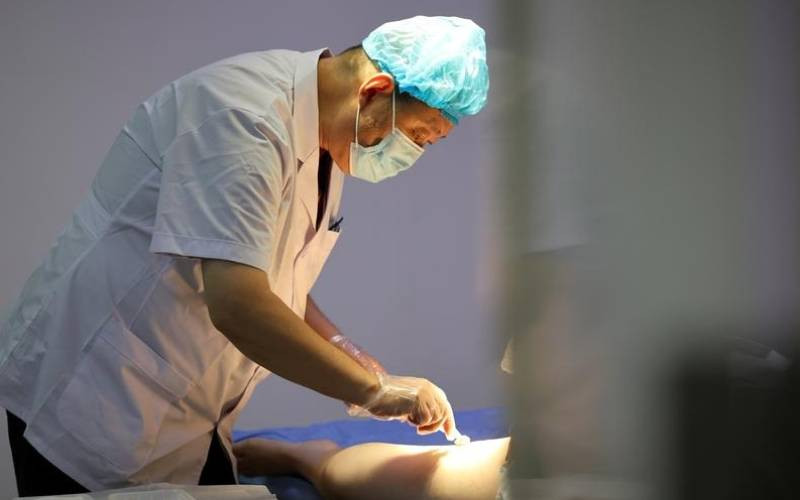
Dr Mbugua Edwin, the lead surgeon at the camp, describes cataract surgery as life-changing yet straightforward. After screening, counselling and consent, patients undergo a procedure that replaces the cloudy natural lens with an artificial one. Because many travel long distances, they stay overnight for observation.
“The most powerful moment is the morning after surgery. When we remove the bandage and the patient opens their eyes, the smile says everything. You see disbelief turn into joy,” Dr. Mbugua.
For Samuel Mwangi, a local pastor, that moment marked a spiritual and personal renewal.
“I struggled for three years. When the surgeons began with a word of prayer, I felt calm. Today is different. I can read again. I can lead again. It is a new beginning,” he said.
Twelve-year-old Brandy Kapua, a Grade Six pupil, said poor vision had quietly eroded her confidence in school. Now she dreams of becoming a surgeon herself.
“I can read my books clearly again. I will tell my friends not to be afraid. The doctors are kind, and there is no pain.” she said with excitement.
Seventy-two-year-old Kerio Thericho laughed as she admitted she once vowed never to undergo surgery.
“I used to say I would never allow it.Now I am an ambassador. I will tell other elderly women not to fear,” she said.
Others, like 70-year-old Ekai Tong’oriak, a herder, had endured years of cloudy vision, assuming it was an inevitable part of aging.
“I came thinking I would just get medicine. When they told me surgery could help permanently, I agreed. That night, I slept peacefully,” she said.
Community mobilization has been key to such transformations. Ayanae Sarah, who coordinates eye services in Turkana East and Suguta, works closely with community health promoters and local leaders to identify patients in advance.
“Trust is everything. Once one successful surgery happens in a village, the whole community gains confidence,” Ayanae said.
To strengthen long-term care, the County with partners including The Church of Jesus Christ of Latter-day Saints and Essilor has established a spectacle manufacturing workshop at Lodwar County Referral Hospital, reducing waiting time for glasses to just 24 hours.
While cataracts continue to pose a major challenge, officials say progress is visible. Trachoma Trichiasis prevalence has significantly declined over the years, and more eye-care workers are being trained to manage refractive errors.
Still, the backlog remains large, and clearing it may take years. But in Lokori this week, several eye patients regained sight and returned to their normal lives.







 join
join