
 The Standard Group Plc is a multi-media organization with investments in media
platforms spanning newspaper print
operations, television, radio broadcasting, digital and online services. The
Standard Group is recognized as a
leading multi-media house in Kenya with a key influence in matters of national
and international interest.
The Standard Group Plc is a multi-media organization with investments in media
platforms spanning newspaper print
operations, television, radio broadcasting, digital and online services. The
Standard Group is recognized as a
leading multi-media house in Kenya with a key influence in matters of national
and international interest.

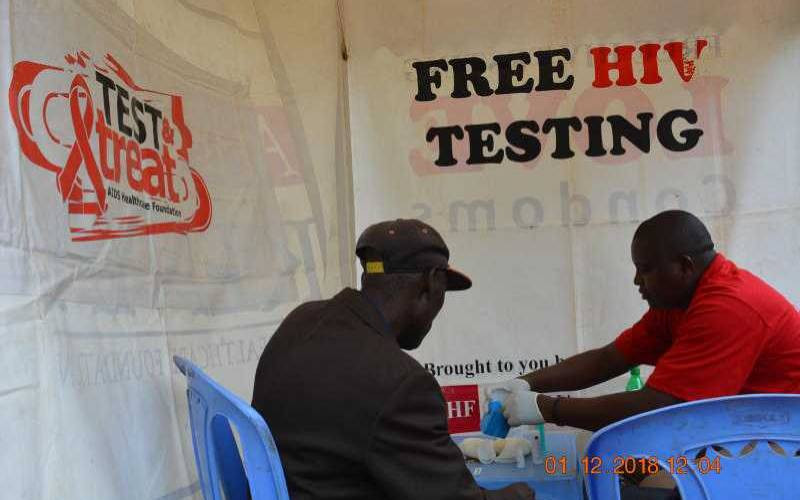
A man undergoes HIV testing. Funded by the US President’s Emergency Plan for AIDS Relief (PEPFAR), Stawisha Pwani was implemented in Coast counties. [File, Standard]
County governments face a major test in sustaining primary healthcare services after a key health partner formally exited the programme.
The transition of the donor-funded Stawisha Pwani project places greater responsibility on counties to sustain HIV, Tuberculosis (TB) and laboratory services, raising concerns over whether gains made under the five-year programme can be maintained.
Funded by the US President’s Emergency Plan for AIDS Relief (PEPFAR), Stawisha Pwani was implemented in Mombasa, Kilifi, Kwale and Taita Taveta counties to strengthen their capacity to own, manage and deliver integrated HIV services.
The project was implemented by a consortium comprising LVCT Health, the Center for International Health, Education and Biosecurity (CIHEB)-Kenya and Amref Health Africa in Kenya.
The transition now puts counties on the spot to maintain treatment gains, keep laboratory services running and ensure patients do not experience disruptions following the donor exit.
Stawisha Pwani chief of party and project director Dr Patrick Oyaro said sustainability should remain at the centre of the transition to prevent disruption of primary healthcare services.
- USAID exit exposes fragility of Africa's donor-funded health systems
- Experts urge Government to fix quality of care to curb maternal, newborn deaths
Keep Reading
“The truth is that sustainability for any programme is important. We appreciate donor funding. We appreciate partnership. But if something is not sustainable, then I would say that you have failed,” he said.
Oyaro said the handover was designed to equip counties with practical tools and systems to continue running the services independently.
In Mombasa, the transition included the handover of 25 laptops and three motorbikes to the county Department of Health. The laptops will support Health Management Information System officers with data entry, health analysis and digital reporting.
The motorbikes will be integrated into the county laboratory network to facilitate the transportation of samples and reduce delays in diagnostic testing.
Mombasa County HIV services coordinator Zaitun Ahmed said the county was committed to protecting the progress made in HIV treatment.
“We have had at least our clients getting treatment. Ninety-five per cent of them are successfully being treated in all the facilities,” she said.
Ahmed said the county would take ownership of the systems and resources handed over by the project and maintain the quality of care.
“We are going to retain and maintain all this as the County Department of Health Services,” she said.
She added that patients would continue receiving the same quality of services despite the transition.
Laboratory sample referral is among the areas expected to test the county’s capacity to sustain services previously supported by Stawisha Pwani.











 join
join