
 The Standard Group Plc is a multi-media organization with investments in media
platforms spanning newspaper print
operations, television, radio broadcasting, digital and online services. The
Standard Group is recognized as a
leading multi-media house in Kenya with a key influence in matters of national
and international interest.
The Standard Group Plc is a multi-media organization with investments in media
platforms spanning newspaper print
operations, television, radio broadcasting, digital and online services. The
Standard Group is recognized as a
leading multi-media house in Kenya with a key influence in matters of national
and international interest.

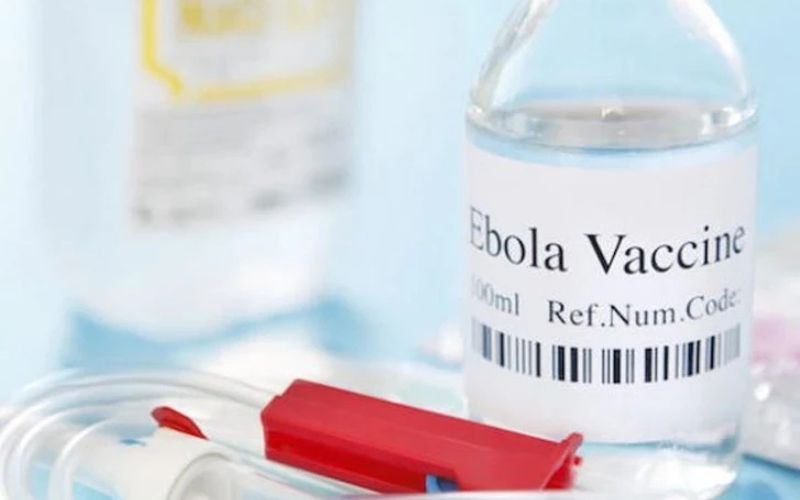
The World Health Organization has recommended that Ervebo, the only licensed Ebola vaccine, be tested against the Bundibugyo virus as the Democratic Republic of Congo battles an outbreak that has exposed a critical gap in protection against the disease.
The recommendation could pave the way for a Phase 3 clinical trial during the ongoing outbreak, after new laboratory and animal evidence suggested that the vaccine may offer cross-protection against Bundibugyo virus, including protection against death.
The decision was reached by WHO's Technical Advisory Group on Candidate Vaccine Prioritization (TAG-CVP), which met on July 31 to review emerging evidence and assess vaccine options for the outbreak in the Democratic Republic of Congo and Uganda.
The advisory group recommended that Ervebo be prioritised for inclusion in a Phase 3 clinical trial, without first conducting a separate Phase 2 study.
WHO said the urgency of the outbreak and the need to generate evidence that could guide future policy decisions made a direct move to Phase 3 appropriate.
The proposed trial would use a ring vaccination strategy, in which people who have been exposed to confirmed Ebola cases, together with their contacts, are vaccinated to create a protective ring around infected individuals.
The approach could allow researchers to determine whether Ervebo protects people exposed to Bundibugyo virus while also contributing to outbreak control.
- WHO declares international emergency as Ebola kills over 80 in DR Congo
- Duale: No Ebola in Kenya as DRC outbreak kills 88, reaches Uganda
- Duale: Three suspected Ebola cases tested negative, surveillance upped
- WHO warns of rising Ebola threat as Kenya tightens response efforts
Keep Reading
But WHO has stressed that the recommendation should not be interpreted as proof that Ervebo works against Bundibugyo Ebola.
The vaccine was developed and licensed to prevent Ebola virus disease caused by the Zaire species. Bundibugyo belongs to a different Ebola species, meaning protection against Zaire Ebola cannot automatically be assumed to extend to Bundibugyo virus disease.
That distinction has been one of the biggest challenges in responding to the current outbreak. There is currently no licensed vaccine specifically approved to prevent Bundibugyo virus disease.
The latest recommendation follows new evidence from non-human primate and ferret challenge studies, alongside laboratory testing using pseudoviruses.
According to WHO, the findings indicate potential cross-protection from Ervebo against Bundibugyo virus. However, the evidence remains preliminary and must be confirmed in humans.
For countries battling the outbreak, the possibility of evaluating an already licensed vaccine could significantly accelerate the search for protection.
Unlike a new vaccine that would have to pass through years of development and regulatory testing, Ervebo already has an established manufacturing system and stockpiles, giving it immediate operational advantages.
WHO had previously identified Ervebo as having the highest immediate operational value among the vaccine candidates considered for the outbreak because of its existing licence, manufacturing capacity and availability. But availability does not equal effectiveness.
The proposed trial will therefore attempt to answer a critical scientific question: whether a vaccine developed against one Ebola species can provide meaningful protection against another.
The answer could have implications well beyond the current outbreak.
Bundibugyo virus has caused previous outbreaks, including in Uganda in 2007 and 2008 and in the Democratic Republic of Congo in 2012. The current epidemic is therefore not the first time the virus has emerged, but its scale has renewed concerns over the absence of a licensed vaccine specifically targeting the species.
WHO's advisory group has also left open the possibility of including a vaccine specifically designed against Bundibugyo virus in the research programme if a suitable candidate becomes available.
For now, Ervebo remains the leading candidate for immediate evaluation.
WHO said it is working with partners to begin the proposed trial as soon as possible. But scientists say the success of the trial will depend not only on the scientific design but also on the willingness of affected communities to participate.
WHO has stressed the importance of community engagement, particularly in areas where previous Ebola responses have encountered mistrust, misinformation and resistance.
Winning community confidence will be critical if researchers are to recruit participants, maintain follow-up and generate reliable evidence while the virus continues to circulate.
For the thousands of people affected by the current Bundibugyo outbreak, the proposed trial represents a significant shift in the response.
Instead of waiting for a vaccine specifically developed for Bundibugyo virus, researchers are preparing to test whether an existing Ebola vaccine can provide protection against it while the outbreak is still active.
But until the results of human trials are available, Ervebo remains a promising candidate, not a proven Bundibugyo vaccine.









 join
join