
 The Standard Group Plc is a multi-media organization with investments in media
platforms spanning newspaper print
operations, television, radio broadcasting, digital and online services. The
Standard Group is recognized as a
leading multi-media house in Kenya with a key influence in matters of national
and international interest.
The Standard Group Plc is a multi-media organization with investments in media
platforms spanning newspaper print
operations, television, radio broadcasting, digital and online services. The
Standard Group is recognized as a
leading multi-media house in Kenya with a key influence in matters of national
and international interest.

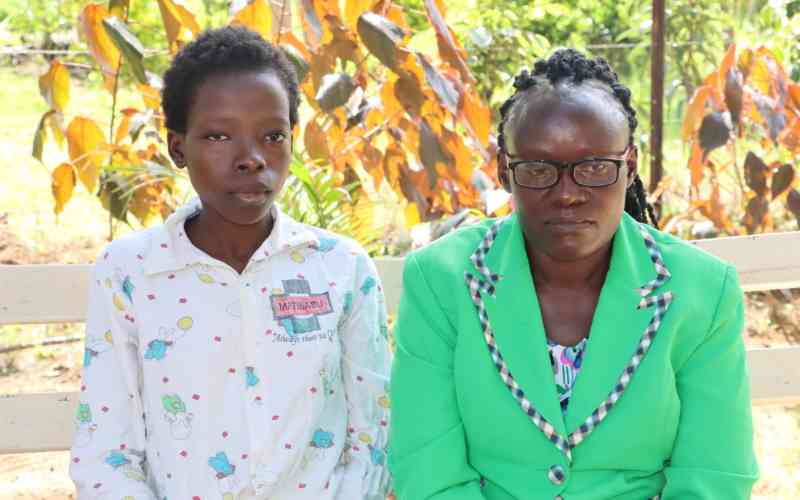
Judith Adongo and her daughter Hope Rehema, 18, at Matibabu Foundation Hospital, Ukwala Siaya County. [Maryann Muganda, Standard]
Her voice is faint and shaky. 18-year-old Hope Rehema sits quietly in the compound of Matibabu Foundation Hospital in Ukwala, Siaya County, her body frail and her skin stretched over fragile bones. Yellow-tinged eyes glisten with tears, while a drip line runs into her right hand.
Beside her sits her mother, Judith Adongo, 39. They are recovering from yet another painful crisis, one of many that have defined Hope’s life since childhood.
“I started getting sick when I was about to join high school from Class Eight,” Hope recalls. “Growing up, I was told that when I reach a certain age, I will die. I did not understand why I was always sick.”
School became a place of isolation rather than learning.
“I used to sit alone. When I fell sick, other students would laugh at me. I would go home and only return during exams. Some would say I only come back for exams. They did not understand my situation,” she says.
Even then, she pushed through. “Not all of them left me. Some still sat with me,” she adds. Hope completed her secondary education in 2025.
- Living with sickle cell: Families' pain as awareness and treatment lag
- How Kenyan teen nearly lost her life after wrong diagnosis
- Researchers find malaria's weak point, offer hope for world children
- Explainer: Nipah virus: What is it?
Keep Reading
“Since I came to Matibabu Hospital, I have been feeling better,” she says.
For her mother, Judith, the journey began with confusion.
“My child was born healthy until she reached 12 years old. She started complaining of back pain. Doctors kept saying it was malaria, but she was still in pain,” she says.
At one point, she was told it was rheumatic fever, leading to monthly injections that brought no relief.
When sickle cell disease was finally confirmed, it came as a shock.

Roselyne Akinyi Ouko, mother of 13-year-old William Ochieng', who was initially misdiagnosed. [Maryann Muganda, Standard]
“It was hard for me to accept because neither her father nor I has sickle cell. I did not understand how my child could have it until doctors explained,” she says.
According to the World Health Organisation (WHO), about 14,000 babies are born with sickle cell disease annually in Kenya. Across sub-Saharan Africa, the burden is significantly higher, accounting for more than 70 per cent of global cases, where many children die before age five due to delayed diagnosis and limited access to care.
High-burden regions include Western, Nyanza, and Coastal Kenya, where malaria historically drove the survival advantage of the sickle cell trait.
In some counties such as Kisumu, Siaya, and Homa Bay, carrier rates can reach 20–30 per cent, increasing the likelihood of children being born with the disease.
Medical experts explain that sickle cell is inherited. According to the US Centers for Disease Control and Prevention (CDC), when both parents carry the sickle cell trait, there is a 25 per cent chance a child will have the disease.
But for many families in Kenya, the science is overshadowed by cultural beliefs.
“Most people told me my child was bewitched,” Judith says. “They said I should take her to priests, pastors, even witchdoctors. They said it was spirits or demons.”
For families in Siaya County, access to treatment remains a major challenge.
“The challenge I faced was lack of medication,” Judith says. “Sometimes I would go to a chemist and find no drugs, or they were too expensive. My child would go two weeks without treatment.”
She eventually found relief at Matibabu Foundation Hospital.
“Since 2021, access has been easier and cheaper. I now get hydroxyurea for just Sh20,” she says.

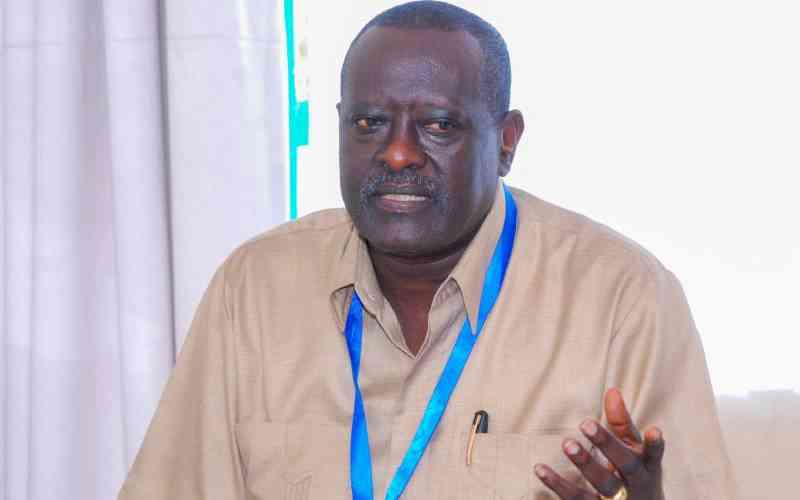
Dr Edwin Oyugi, Chief Medical Officer at Matibabu Foundation Hospital, says sickle cell is part of a broader group of non-communicable diseases. [Maryann Muganda, Standard]
For other families, the journey is even longer.
Roselyne Akinyi Ouko, mother of 13-year-old William, recalls years of misdiagnosis.
“At seven months, his breathing changed. His chest seemed blocked,” she says. “Doctors thought it was ENT problems. We went from hospital to hospital.”
At first, even diagnosis was rejected at home.
“My mother refused to accept it. She threw away the medication. She said no one in our family has that disease,” she says.
Later, belief in traditional healing worsened his condition.
“We took him to herbalists who massaged him when he had swollen limbs. We did not know we were hurting him,” she says.
It was not until 2015 in Busia that sickle cell was confirmed.
“People said it was a curse or marine spirits when I was in Mombasa. Some even told me to leave,” she adds.
At Matibabu Foundation, clinicians say such cases are common.
Dr Edwin Oyugi, Chief Medical Officer, says sickle cell is part of a broader group of non-communicable diseases.
“We see patients mostly when they are in crisis,” he says. “Many arrive with vaso-occlusive crises severe pain or acute chest syndrome requiring oxygen.”
He notes that about 90 per cent of admitted patients require blood transfusion, often due to severe anaemia.
“If managed well, patients can live into adulthood. We even have patients in their 30s,” he says.
However, financial barriers remain a major challenge.
“Since the shift from NHIF to SHA, outpatient services are no longer fully covered. Patients must pay out of pocket,” he explains.
At Matibabu Foundation families now find a rare form of continuity in care.
For years, however, access to medication was a major barrier.
That gap is what led to a critical partnership between Matibabu Foundation and Novartis Pharmaceutical Company.
Matibabu Foundation Founder and CEO Dan Ogola, explains the decision.
The partnership, he says, was not incidental but a response to a pressing gap in care.
“It was started later 2021 as we were approaching 2022,” Ogola explains. “We partnered with Novartis because Novartis is a global leader in access to medicines, providing quality assured hydroxyurea and technical support for sustainable sickle cell care in underserved settings.”
He adds that Matibabu’s model played a key role in how the partnership was structured.
“Matibabu, using our hospital-community model, ensures last-mile delivery, safe use and strong patient follow-up through community health providers, promoters and outreach systems.”
According to Ogola, the decision was driven by both burden and geography.
“It was necessary because the region where we operate within Siaya County is a high sickle cell burden area with rural access gaps, making it a high-impact setting aligned with Ministry of Health priorities.”
Before this intervention, families faced repeated cycles of pain and referral without resolution.
“Before the partnership, we used to manage their pain, but getting the medication was out of reach for them,” he says. “We used to refer them, and they would get stranded because there was no facility around providing hydroxyurea.”
Even referrals, he notes, did little to ease access. “And even if we were to refer them, hydroxyurea was not readily stocked in the surrounding chemists.”
This reality pushed the facility to rethink its approach beyond clinical care and into supply systems.
“That one was our source of motivation to bring the drugs,” Ogola says. “But because the drugs were expensive for rural poor people, we saw the need to approach suppliers like Novartis and negotiate on behalf of the community to reduce the cost.”
At the time, the price of treatment placed it far beyond the reach of many households.
“Then it used to be more than a hundred shillings per drug. Right now it is at 20 shillings.”
The shift, he notes, has changed adherence and access significantly.
“That has made sickle cell warriors easier in access to medication… Matibabu is becoming a hub for provision of quality sickle cell disease intervention in the area.”
Lucy Lavenda Akinyi, sickle cell coordinator at Matibabu, says most patients arrive too late.
“By the time we diagnose them, many already have organ damage or repeated infections,” she says.
She cites severe cases: “We recently had a stroke patient affected on both sides of the body. Another 17-year-old has hip damage and may need replacement surgery.
She adds that stigma delays care. “Some parents stop follow-up and try traditional treatment. By the time they return, complications affect the liver and kidneys.”
She estimates that since January, the facility has seen 29–32 patients, lower than previous years due to reduced affordability.
According to WHO, hydroxyurea can reduce sickle cell crises by up to 50 per cent, improve haemoglobin levels, and significantly reduce hospital admissions.
However, access remains uneven. “We still have patients who cannot afford even clinic visits,” she says.
Diagnosis remains a major gap. “We do sickling tests, but confirmatory testing costs about Sh9,000,” she explains.
Samples are sent to Kisumu and Nairobi for haemoglobin electrophoresis. “In Kisumu, newborn screening is happening, but in Siaya we are not there yet,” she says.
Health modelling from Kenya’s NHI and MoH pilot screening programmes shows that early newborn screening can reduce sickle cell mortality by up to 70 per cent when combined with early intervention and prophylaxis.
“In this region, one in 20 children is born with sickle cell,” she adds. Beyond treatment, stigma remains a major challenge.
Ephy Akinyi, a social worker, says families often struggle emotionally after diagnosis.
“Some believe it is a taboo or curse. Others fear community rejection,” she says.
She counsels families to accept and support children. “When they understand the disease, they begin to adhere to treatment,” she says.
She adds that linking families to survivors brings hope. “We show them people who have gone to university and are living well. It gives them strength.”
Wendy Owino, clinical nutritionist, says anaemia is common among patients due to poor nutrition.
“Most patients are anaemic because of iron deficiency,” she says. But affordability limits dietary choices.
“Red meat is expensive, so families rely on cheaper foods that lack essential nutrients,” she says. She advises balanced meals, fruits, vegetables, and small, frequent meals.
“Even small dietary changes help reduce complications,” she says.
Despite challenges, clinicians insist there is hope. “We encourage early testing, awareness and consistent treatment,” says Dr Oyugi.
Akinyi adds, “This is not a curse. It is a medical condition that can be managed.”
The facility is now rolling out the Red Thread Initiative, aimed at strengthening community awareness and reducing stigma, particularly in schools and local communities.
Matibabu is also pushing for improved diagnostic capacity, including access to confirmatory testing tools such as electrophoresis machines, to ensure earlier and more accurate diagnosis of sickle cell disease in the region.








 join
join