
 The Standard Group Plc is a multi-media organization with investments in media
platforms spanning newspaper print
operations, television, radio broadcasting, digital and online services. The
Standard Group is recognized as a
leading multi-media house in Kenya with a key influence in matters of national
and international interest.

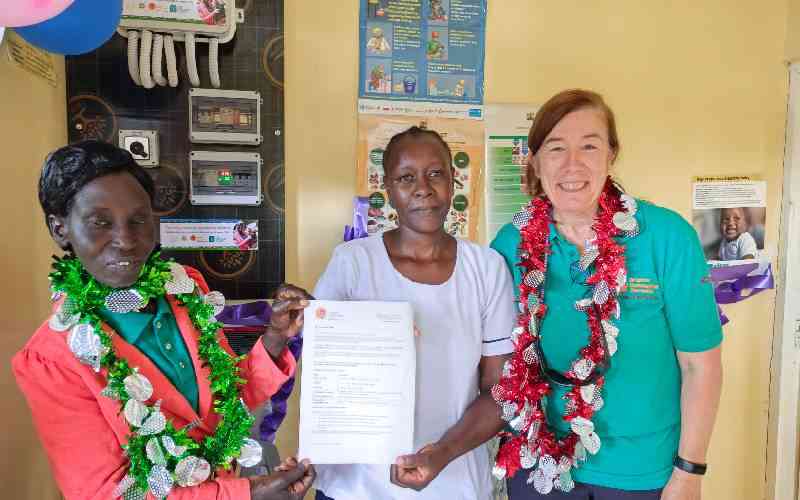
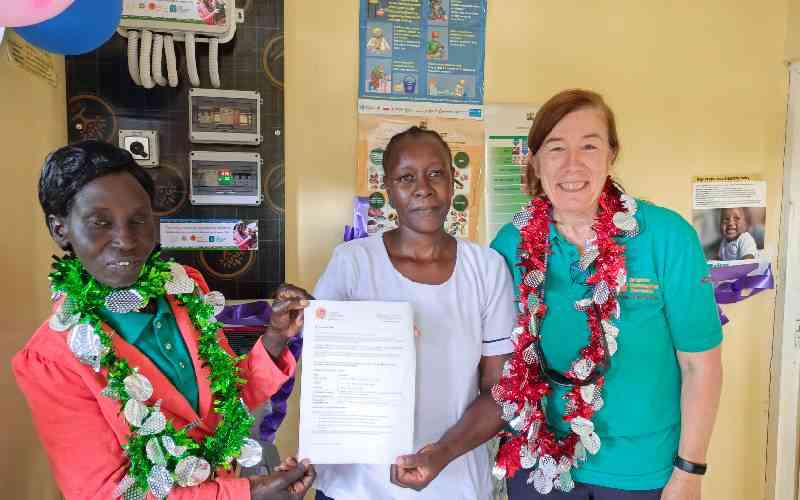
A solar power project targeting 22 health facilities in Kericho County is expected to help safeguard vaccines, reduce disruptions caused by power outages and strengthen the delivery of essential healthcare services.
The project, implemented by Brighter Communities Worldwide (BCW), aims to ensure that health facilities have a reliable electricity supply to preserve vaccines and support services that depend on uninterrupted power.
Speaking at Chepkosilen Dispensary in Belgut Constituency during the launch of a solar power project for the facility, BCW chief executive officer Maria Kidney said the project was ultimately about protecting children and ensuring communities have access to reliable healthcare.
The solar installation at Chepkosilen is part of a wider programme that will see 22 health facilities across Kericho County benefit from solar power.
Other facilities include Londiani Sub-County Hospital, Ndubusat Clinic and other health centres across the county.
The installations are expected to be completed by the end of December.
Kidney said the initiative was the result of about 12 months of work to expand access to reliable and sustainable energy in healthcare facilities.
“This is about so much more than solar panels. The solar systems will support critical services including vaccine refrigeration, trauma care, borehole operations, lighting and other medical services,” she said.
- Why the rising healthcare spending has failed to heal a country on its sickbed
- Kenya's healthcare training evolves with career choices
- MPs call for overhaul of cancer treatment access and funding
- Calls grow to integrate indigenous medicine into Kenya's healthcare system
Keep Reading
About 30,000 children in Kericho County depend on routine immunisation every year, making a reliable power supply critical to maintaining the conditions required for vaccine storage.
Frequent power interruptions have in the past forced health workers to seek alternative facilities for vaccine storage, increasing operational costs and creating a risk of disruption to immunisation services.
Kidney said that protecting vaccines was one of the most important benefits of the project because power interruptions can compromise their storage conditions and ultimately expose children to preventable diseases.
The solar installations will provide a more dependable source of electricity for vaccine refrigerators, monitoring equipment and lighting, while allowing health workers to continue attending to mothers, babies and other patients during the day and at night.
Caroline Koskei, a health officer at Brighter Communities Worldwide, said electricity failures had repeatedly affected immunisation services at some facilities.
She said that even where facilities had refrigerators, vaccine carriers and outreach programmes in place, a lack of reliable electricity could interfere with the safe storage of vaccines.
“When there is no power, staff are forced to move vaccines to other facilities,” Koskei said, noting that this consumed time and resources and increased the risk of vaccines being compromised.
“The solar power will ensure that our mothers, our babies will have reliable services. They’ll get them whenever they need. It will also cut the cost,” she said.
The project is also expected to protect expensive medical equipment from damage caused by power fluctuations.
Koskei said power surges had destroyed several refrigerators, with three fridges damaged at one facility alone, placing additional pressure on already limited resources.
At Chepkosilen Dispensary, Dr Linda Siele, the Belgut Sub-County Health Officer, said frequent power outages had created serious challenges for vaccine storage.
“We have had challenges with power outages at Chepkosilen Dispensary, and the facility in charge has had to keep running around. Whenever there is a power outage, she has to look for somewhere where she can keep the vaccines,” Dr Siele said.
She described the solar installation as a major relief to the facility and thanked Brighter Communities Worldwide for its support.
“So, this is a great relief for us, and we are really grateful to Brighter Communities. You have been a valued partner for us, not only for this project but also in several other activities. You have really supported us, and we want to sincerely appreciate you,” she said.
Dr Siele said the facility would make full use of the new infrastructure to improve services to residents.
“We will utilise this infrastructure to ensure that our community receives the services that they require,” she said.
Kericho County Clinical Officer Moses Ngetich said vaccination coverage was an important indicator of a community's health and urged health workers to continue prioritising immunisation.
“Remember, vaccination shows the health status of the community. If children are immunised up to 100 per cent, this shows that the community is healthy,” he said.
Ngetich said the government took vaccination seriously because immunisation was critical in protecting children from preventable diseases.
“As a government, we take vaccination seriously because it is key in preventing our children from diseases,” he said.
Ngetich added that reliable electricity would enable the dispensary to provide other essential health services.
“Once the solar system is in place, it also enables us to provide other services. There are antenatal mothers who come to the clinic, and there are also those who are sick who come to the clinic for medical examination,” he said.
The solar initiative highlights the growing role of renewable energy in strengthening healthcare infrastructure, particularly in rural communities where unreliable electricity can directly affect critical medical services






 join
