
 The Standard Group Plc is a multi-media organization with investments in media
platforms spanning newspaper print
operations, television, radio broadcasting, digital and online services. The
Standard Group is recognized as a
leading multi-media house in Kenya with a key influence in matters of national
and international interest.

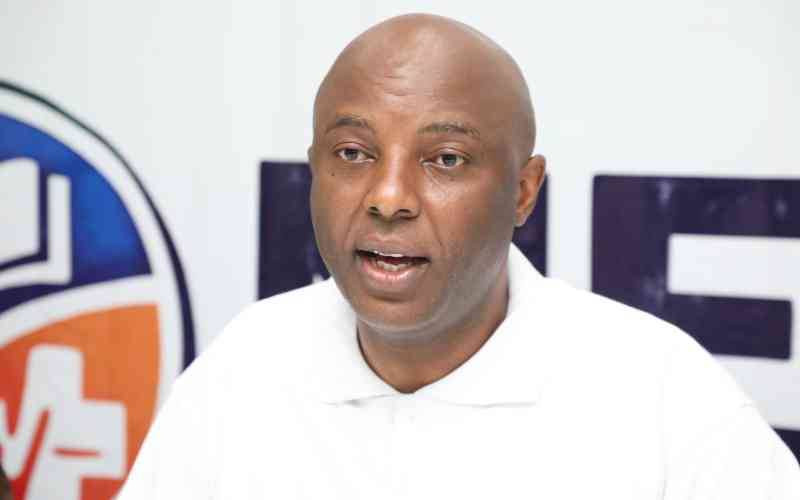
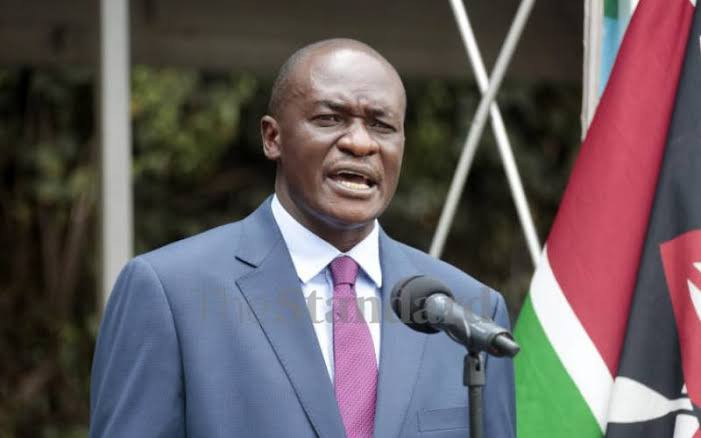
Murang’a Governor Irungu Kang’ata has accused the national government of disrupting healthcare services and putting patients at risk through its digital health system transition.
Speaking during an interview on Citizen TV’s JKLive on Wednesday, November 4, Kang’ata accused Health Cabinet Secretary Aden Duale and senior ministry officials of ordering the deactivation of the county's digital health platform, which had been used to manage hospital operations.
He described the move as immoral and inhumane, arguing that the county had proposed integrating its system with the national government's Taifa Care platform rather than having it switched off.
“It's immoral, it is inhumane. Why are they forcing us to join a privately owned system when the one we were using was working for our people?” he posed.
Kang’ata said Murang’a had spent four years developing and improving AfyaKE to address its healthcare needs, particularly in telemedicine and teleradiology, which he claimed were not adequately supported by the national system.
He said the shutdown had affected telemedicine services that served nearly 30,000 elderly patients.
The county had deployed close to 20 clinicians to provide remote consultations alongside 35 others working in dedicated telemedicine centres.
The governor also raised concerns over patients' inability to retrieve medical histories accumulated over the four years the county had used the platform, warning that this could compromise continuity of care.
- Government defends Taifa Care digital fee amid claims row
- SHA begins verification of Sh10m-plus NHIF legacy claims
Keep Reading
He said health workers had been forced to rely on manual records, increasing the time spent retrieving patients' medical information and slowing down hospital operations.
Kang’ata warned that the disruption could also affect revenue collection in public hospitals and their ability to purchase medicines and other medical supplies.
Defending the county's investment in the system, he claimed AfyaKE had helped increase annual revenue collection in health facilities from about Sh80 million to Sh800 million.
He questioned why counties were being pushed to adopt a system that would require payments to private developers using public funds, arguing that the money could instead be directed towards medicines and other healthcare needs.
The disagreement comes amid the national government's efforts to establish a standardised digital health infrastructure under the Digital Health Act, 2023.
The law established the Digital Health Agency (DHA), which is responsible for developing and maintaining an integrated health information system, setting standards for digital health services and facilitating the secure exchange of patient information.
The framework is intended to connect health facilities and providers through interoperable systems, allowing patient records to be accessed across different points of care while safeguarding personal health information.
Under the Taifa Care programme, the Ministry of Health has been pushing the transition to the Social Health Authority Health Management Information System (SHA HMIS), which is designed to integrate healthcare delivery, patient verification and insurance claims management.
In June 2026, Duale held consultations with healthcare providers on the transition, saying the integrated system would support electronic claims processing, provider authentication and secure health information exchange.
The Ministry has maintained that digital health systems used by public and private facilities must meet national certification and interoperability standards before integration into the country's digital health infrastructure.
However, the transition has triggered a dispute over AfyaKE, which Murang’a says was already supporting hospital operations across the county.
The platform was adopted in 2023 and had been used to manage patient records, prescriptions, laboratory requests, clinical services, hospital billing and claims submitted to the SHA.
According to court documents cited in earlier reports, the county's telemedicine programme attended to 76,185 patients between January and June 2026 through 36 health facilities.
The county also argued that the alternative national system did not have the telemedicine functions available on AfyaKE and could not guarantee the preservation and transfer of historical patient records.
The Ministry, however, denied shutting down the platform.
In a statement on October 15, Duale described AfyaKE as a private arrangement between the Murang’a County Government and its developers, saying the Ministry neither owned nor controlled it and did not have access to its source code.
He also denied that the DHA had refused to certify the platform, saying neither the county nor its developers had submitted an application for certification.
Duale subsequently gave a different account of the platform's origins, saying it had been developed by the National Intelligence Service (NIS) under former President Uhuru Kenyatta's administration and had also been used in Makueni and Tharaka Nithi counties.
He maintained that the issue was its certification and integration into the national digital health infrastructure.
The disagreement moved to court after Murang’a County sued the Ministry of Health, DHA, SHA, Duale and the Attorney-General, seeking restoration of access to the system and protection of patient records.
On October 23, the High Court issued interim orders directing the national government to restore access to AfyaKE and restraining the respondents from interfering with its operations pending determination of the case.
Justice Dorah Chepkwony also directed the respondents to preserve patient records, maintain access to SHA claims services and protect the platform's telemedicine functions.
The court orders cover more than 170 public health facilities that the county says depend on the system for healthcare administration and patient information.
The matter is scheduled for mention on November 18 to confirm compliance with the orders.
Kang’ata maintained that Murang’a was not opposed to adopting the national digital health infrastructure but wanted AfyaKE integrated into it to preserve services such as telemedicine and teleradiology.
“We don't mind joining them, except it lacks the module of telemedicine,” he said.








 join
