
 The Standard Group Plc is a multi-media organization with investments in media
platforms spanning newspaper print
operations, television, radio broadcasting, digital and online services. The
Standard Group is recognized as a
leading multi-media house in Kenya with a key influence in matters of national
and international interest.
The Standard Group Plc is a multi-media organization with investments in media
platforms spanning newspaper print
operations, television, radio broadcasting, digital and online services. The
Standard Group is recognized as a
leading multi-media house in Kenya with a key influence in matters of national
and international interest.


The Council of Governors has called on nurses across the country to end the ongoing industrial strike, saying it is illegal.
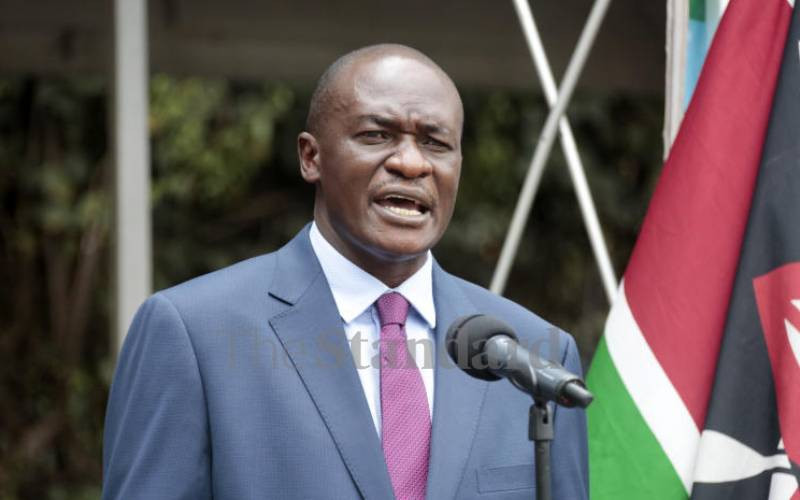
Chairperson Ahmed Abdullahi on Monday directed individual governors and county public service boards to take action against health workers who have defied court orders to return to work.
Speaking during an Intergovernmental Budget and Economic Council (IBEC) meeting chaired by Deputy President Kithure Kindiki, Abdullahi said the dispute stems from a Collective Bargaining Agreement (CBA) signed in the run-up to the 2017 General Election.
According to him, the agreement signed under duress has never been fully implemented and was not financially sustainable.
“We have tried to negotiate with nurses, and it is still ongoing. They called a strike; the court has said it is illegal, but they are still insisting,” said Abdullahi.
He said the Council was seeking to resolve the dispute through negotiations, including engaging the Salaries and Remuneration Commission (SRC), which has also raised concerns over the sustainability of the CBA.
- Hospitals struggle to cope as nurses strike disrupts services
- Nurses' strike enters crucial week as SRC, CoG meetings offer possible breakthrough
- Gynecologists have raised alarm over nurses strike as maternal care suffers
- High Court orders striking nurses back to work
Keep Reading
“We want to ask nurses to go back to work as we negotiate this matter. As the leadership of the Council, we offered a deal, and we are hoping that if there is an agreement, we could go to SRC together,” added the CoG chair.
However, he left individual governors and county public service boards to determine how to deal with nurses who have remained absent from work.
“The position we have taken as a Council is that every governor and Public Service Board deals with the issue of not responding to court orders in accordance with established HR procedures,” he said.
Abdullahi warned that disciplinary action could trigger another dispute, with dismissed nurses likely to seek reinstatement.
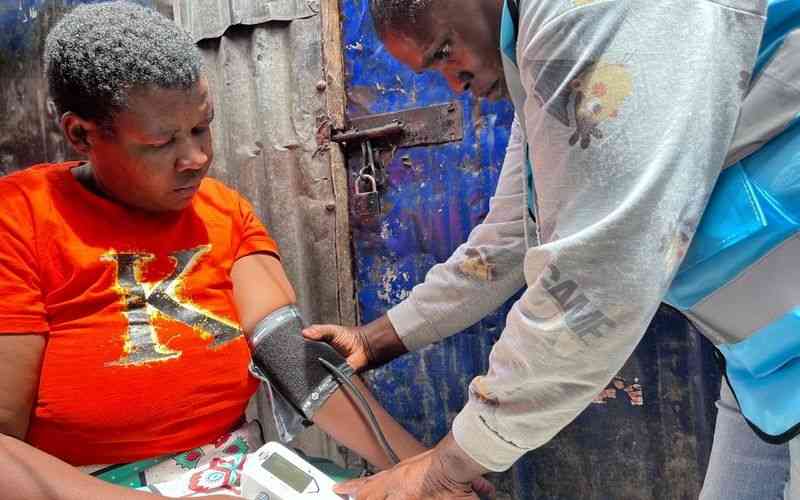
As the standoff deepens, patients across the country continue to bear the brunt of disrupted health services, with nurses remaining away from their stations despite repeated calls to call off the strike.
Abdullahi also called for a closed-door engagement with SRC, arguing that counties were facing different payroll pressures while various health worker cadres continued to negotiate salary increases through their unions.
“This has come after the budgeting process has been completed,” he said.
The CoG chair added that counties needed a broader discussion with SRC on the financial implications of the agreements.
The nurses’ strike is unfolding alongside another dispute over the financing and payroll management of Universal Health Coverage (UHC) staff, further piling pressure on county health systems.
Abdullahi said the UHC payroll dispute was largely caused by a mismatch between the workers’ permanent and pensionable terms and the conditional grant mechanism through which Treasury funding was provided.
According to Abdullahi said the recruitment of UHC staff during an emergency period had also not been equitable across counties.
“When the money is put into DORA, there shall be counties that gain and those that lose, because recruitment itself was not equitable and aligned to DORA. This has pitted governors against each other and caused misunderstanding between ourselves and the ministry,” he said.
The Council, he said, wanted to continue with the conditional grant arrangement but raised concerns about the continued management of the payroll at the national level.
He argued that this had created supervisory challenges for counties and could contribute to staff absenteeism, given that their salaries are controlled elsewhere.
The governors also raised concerns over delays in the remittance of Social Health Authority (SHA) premiums, saying the problem had persisted for months.
Abdullahi said delays in disbursement and payment meant counties sometimes failed to remit premiums to SHA by the ninth of each month, resulting in staff being locked out of the system.
He said governors had proposed allowing counties up to 21 days to remit premiums, but noted that the proposal would require a change in the law.
The teething multiple disputes have left county health systems under growing pressure.












 join
join