
 The Standard Group Plc is a multi-media organization with investments in media
platforms spanning newspaper print
operations, television, radio broadcasting, digital and online services. The
Standard Group is recognized as a
leading multi-media house in Kenya with a key influence in matters of national
and international interest.
The Standard Group Plc is a multi-media organization with investments in media
platforms spanning newspaper print
operations, television, radio broadcasting, digital and online services. The
Standard Group is recognized as a
leading multi-media house in Kenya with a key influence in matters of national
and international interest.


Kenya is facing a critical shortage of family planning commodities across the country, and there is an urgent need to ring-fence family planning funds, the Senate was told yesterday.
It was argued that family planning is a critical component of the reproductive health sector and is directly linked to the right to the highest attainable standard of health as provided under Article 43(1) of the Constitution.
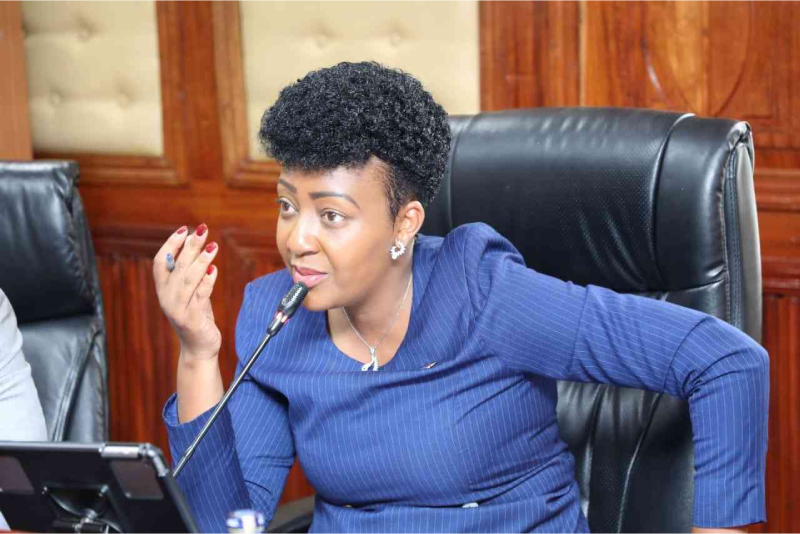
Nominated Senator Tabitha Mutinda, who sought a statement on the floor of the house, said it also affects maternal health, the welfare of our young people, household planning, access to information, and the broader realisation of universal health coverage.
Mutinda said the statement was informed by a stakeholder consultative meeting held on March 26, 2026. It was attended by members of the Kenya Young Parliamentarians Association, the National Council for Population and Development, and the Ministry of Health.
Also, there were United Nations platforms, United Nations Population Fund (UNFPA) Kenya, Population Services Kenya, Kenya Plan International, Jhpiego, Health NGOs’ Network (HENNET) and civil society organisations.
"Kenya is currently experiencing a severe shortage of family planning commodities. The Ministry of Health has reported that several commodities are at zero stock nationally, including combined oral contraceptives, three-month injectables, progesterone-only pills, emergency contraceptive pills and cycle beads," Mutinda told the house.
The Nominated Senator said that other commodities include implants, male condoms, Subcutaneous Depot Medroxyprogesterone Acetate (DMPA-SC) injections, Copper Intrauterine Devices (IUDs), and Levonorgestrel Intrauterine Device (LNG-IUD), which remain at critically lower levels or below the optimal supply pipeline.
- Fear and risk: How Kenyan women fight to survive in labour rooms
- Experts warn as C-Section rate surpasses WHO guidelines
- Preventable deaths persist as 15 mothers, 92 newborns die daily
- Sh6.8b programme to help reduce maternal, infant deaths
Keep Reading
Mutinda told the house that the total estimated funding requirement for family planning commodity standards stands at approximately Sh3 billion. However, in the current Financial Year 2025/2026, only Sh500 million was allocated.
Out of that amount, only Sh250 million has been disbursed to the Kenya Medical Supplies Agency (KEMSA), leaving an outstanding balance of Sh50 million, despite valid authorities to incur expenditure having been incurred.
She told the house that this delay is particularly concerning because of the current procurement lead time for family planning commodities, which is approximately 13 months from the date of receipt of funds; every delay in disbursements directly translates into prolonged stockouts at health facilities and limited access to essential reproductive health services.
"The consequences of inaction are grave. The Ministry of Health has projected that the current stockouts could result in increased unintended pregnancies, unsafe abortions, maternal deaths and additional health care costs attributed to unmet family planning needs. This would reverse the gains Kenya has made in reproductive health and undermine the country's universal health coverage objectives," Mutinda told the house.
She told the house that Kenya also risks failing to meet its commitments under the impact with UNFPA, under which the Government is required to procure family planning commodities using domestic funds as a condition for receiving matching contributions. Continued non-disbursement, therefore, exposes the country to the risk of losing future compact support and falling behind comparable countries in the region.
The Nominated Senator called on the National Treasury to urgently disburse the outstanding Sh250 million to the Kenya Medical Supplies Agency (KEMSA) to facilitate the timely procurement of family planning commodities.
Mutinda asked the Ministry of Health and KEMSA to provide Parliament with a comprehensive and current report on the stock status of all family planning commodities, including the procurement pipeline and expected delivery timelines.
" I am requesting the relevant parliamentary committees to inquire into the persistent non-disbursement of allocated family planning funds and identify the administrative or financial bottlenecks causing these delays, " Mutinda told the house.
The Nominated Senator asked the National Treasury and the Ministry of Health to develop a clear mechanism for ring-fencing family planning funds within the national budget so as to prevent diversion, delays or reprogramming of these allocations.
She sought to have the Ministry of Health work in collaboration with the county governments, development partners and civil society organisations in order to strengthen public information awareness on family planning services, particularly among young people, women and underserved communities.
The Nominated Senator sought to have Parliament prioritise the ring-fencing of family planning funds during the consideration of the budget estimates for Financial Year 2026/2027. Family planning is not merely a health matter, but it is a governance issue, a development imperative and a constitutional obligation.
"The failure to disburse funds already allocated for family planning commodities undermines the right to reproductive health care and weakens public finance accountability," Mutinda told the house.
The Nominated Senator urged the House to support decisive actions to ensure that allocated funds are released, commodities are procured and distributed, and the reproductive health rights for women, girls and families across the country are protected.









 join
join