×

The Standard e-Paper
Join Thousands Daily
 The Standard Group Plc is a
multi-media organization with investments in media platforms spanning newspaper
print operations, television, radio broadcasting, digital and online services. The
Standard Group is recognized as a leading multi-media house in Kenya with a key
influence in matters of national and international interest.

Audio By Vocalize
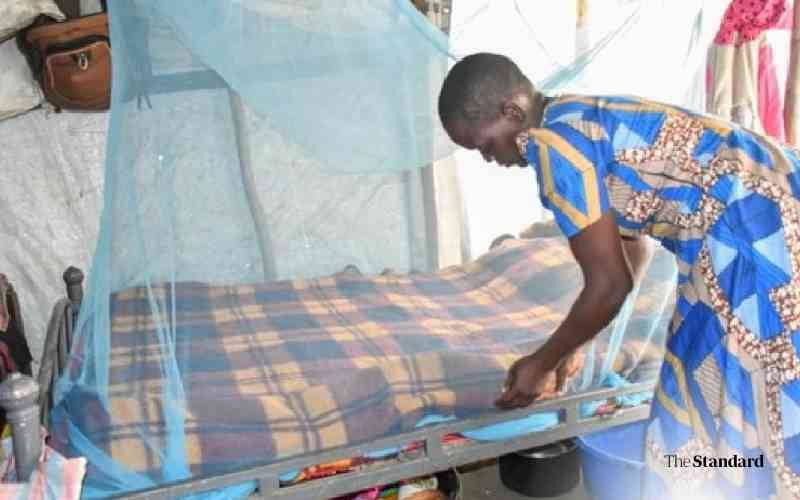
For many families living in malaria-endemic regions, a child developing a fever in the middle of the night is a familiar and worrying experience. What follows may be an unexpected visit to a health facility, missed school days, lost working hours and additional household expenditure. Yet many of these experiences can be prevented through a simple but effective practice: sleeping under an insecticide-treated mosquito net every night.
As a country, we have invested considerably in malaria prevention and control. However, one of the most important conversations we need to have is about our attitudes towards prevention and the choices we make in our homes.
The ongoing distribution of nearly 10.8 million insecticide-treated mosquito nets across 18 malaria-endemic counties offers an opportunity to renew this conversation. While the campaign seeks to expand access to mosquito nets, its ultimate objective is to prevent infections, protect vulnerable populations and save lives.
Malaria remains a serious public health concern despite being preventable and treatable. In 2024, there were an estimated 282 million malaria cases and 610,000 malaria deaths globally. The WHO African Region accounted for 94 per cent of cases and 95 per cent of deaths. These figures are a stark reminder that we cannot afford to relax our prevention efforts.
Kenya has made encouraging progress, with confirmed malaria cases declining by 34 per cent, from 5.54 million in 2023 to 3.64 million in 2026. Equally encouraging is the 39 per cent decline in malaria incidence among children under five, from 194 to 119 cases per 1,000 population. These gains must be protected through sustained investment and greater community participation in malaria prevention.
An important challenge, however, is ensuring that mosquito nets distributed to households are used for their intended purpose. A net used for fishing, fencing a kitchen garden or covering poultry protects no one. Collecting a mosquito net during a distribution campaign is only the beginning. Its protective value lies in its correct and consistent use.
Too often, malaria prevention is influenced by seasonal perceptions of risk. Some people associate malaria with the rainy season and abandon their mosquito nets when the weather becomes hot or dry. Others assume that because they cannot see or hear mosquitoes, they are not at risk of infection. Such perceptions can undermine years of progress in malaria control.
We must therefore cultivate a culture in which sleeping under a mosquito net is not determined by the weather, the presence of mosquitoes or whether a family member has recently suffered from malaria. It must become an everyday practice.
Changing behaviour, however, requires more than repeatedly telling people what to do. We must listen to communities and understand the practical challenges that prevent households from using mosquito nets consistently. Concerns about heat, misconceptions about insecticides and difficulties in hanging nets require practical solutions and sustained engagement. Simple steps help: airing a new net in the shade for a day before first use, tucking its edges firmly under the mattress, and tying it up during the day so that it is ready to lower at bedtime.
Community Health Promoters have an important role in bridging this gap. Through household visits, they can demonstrate how to hang and use mosquito nets correctly, address misconceptions and encourage families to prioritise malaria prevention. Religious leaders, teachers and local administrators can reinforce these messages through their regular interactions with communities.
Parents and caregivers must also take an active role in protecting children. Children under five and pregnant women are particularly vulnerable to severe malaria and its complications. Ensuring that they sleep under insecticide-treated mosquito nets every night is an essential preventive measure. That said, every member of the household needs protection.
The deployment of next-generation mosquito nets in areas experiencing insecticide resistance is a significant investment in strengthening malaria prevention. These nets combine a standard insecticide with an additional active ingredient, giving improved protection against resistant mosquitoes. Their effectiveness, however, depends on people sleeping under them.
As we advance Universal Health Coverage, we must recognise that protecting health begins long before a patient walks into a health facility. Preventing malaria reduces the financial burden on families, keeps children in school, protects livelihoods and allows healthcare resources to be directed towards other pressing health needs.
The mosquito nets being distributed under the national campaign are free of charge. Distribution began on 19 November across 99 sub-counties. I urge eligible households to collect their allocated nets, hang them correctly and ensure that every family member sleeps under one every night. Anyone experiencing fever or other suspected malaria symptoms should seek prompt testing and treatment.
Our ambition to eliminate malaria must be reflected in the daily practices of our communities. The success of this campaign will ultimately be measured not by the millions of mosquito nets distributed, but by the infections prevented, the families protected and the lives saved.
Stay informed. Subscribe to our newsletter
Let us make sleeping under a mosquito net an everyday commitment to our health and the wellbeing of those we love.
- Mary Muthoni, Principal Secretary, State Department for Public Health and Professional Standards








Subscribe to our newsletter and stay updated on the latest developments and special offers!