×

The Standard e-Paper
Join Thousands of Readers
 The Standard Group Plc is a multi-media organization with investments in media
platforms spanning newspaper print operations, television, radio broadcasting,
digital and online services. The Standard Group is recognized as a leading
multi-media house in Kenya with a key influence in matters of national and
international interest.
The Standard Group Plc is a multi-media organization with investments in media
platforms spanning newspaper print operations, television, radio broadcasting,
digital and online services. The Standard Group is recognized as a leading
multi-media house in Kenya with a key influence in matters of national and
international interest.

Audio By Vocalize
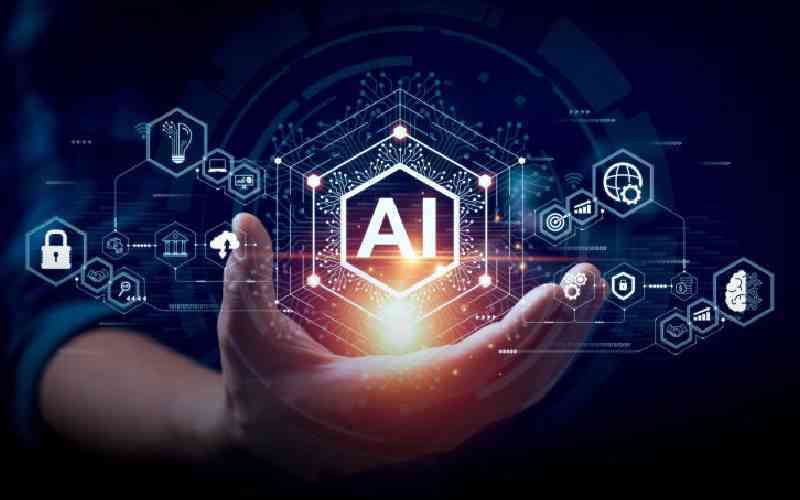
Kenyan researchers want African governments to use Chinese open-source AI models as a foundation for homegrown systems, rather than simply importing technology built elsewhere.
Chinese companies, including Alibaba, Baidu and ByteDance, have released or backed open-source large language models that let developers download model weights, deploy systems on local servers and retrain them with their own data, according to China Daily.
Wu Chenglin, founder and chief executive of Xiamen-based DeepWisdom, said the approach cuts the cost and technical barriers of building AI tools, opening the field to entrepreneurs and small businesses in markets such as Africa.
In Kenya, a company has already built on the model. It used DeepWisdom's Atoms system to develop Yotu Health, a mobile AI copilot that helps users track blood sugar levels and manage medication schedules.
Lawrence Nderu, a research fellow in the Department of Computing at Jomo Kenyatta University of Agriculture and Technology, said open-weight models give African teams a level of control that closed systems do not.
"With open-weight models, African teams can host systems locally, reduce dependency, protect sensitive data, fine-tune domain-specific datasets and build solutions that reflect African priorities rather than simply consuming AI products designed for other markets," explained Nderu.
He noted that the stakes are highest in healthcare, education, finance, agriculture and public administration, where regulatory compliance and long-term sustainability matter most.
"We are now talking about AI sovereignty, which is part of our AI strategy in Kenya," observed Nderu.
Rather than treating Chinese technology as an end product, Nderu argued African institutions should treat it as scaffolding.
"We should use these models as scaffolding to train our researchers, build our datasets, develop African language benchmarks, create domain-specific models and ultimately produce AI systems that are owned, governed and sustained by African institutions," he added.
He cautioned that governments must still scrutinise open-source technologies carefully, particularly around data protection.
Harun Katusya, a Kenyan data scientist, said the continent has become a proving ground in a broader contest between US firms such as OpenAI and Anthropic and Chinese developers behind models like DeepSeek.
"Africa sits at the centre of this emerging contest because it is a massive untapped digital market, and many institutions are rapidly digitising without strong AI governance frameworks," noted Katusya.
The African Development Bank Group estimates artificial intelligence could add as much as $1 trillion to Africa's combined GDP by 2035 if it is developed and deployed inclusively, representing close to a third of the continent's current economic output.
Stay informed. Subscribe to our newsletter
Subscribe to our newsletter and stay updated on the latest developments and special offers!











 join
join