×

The Standard e-Paper
Informed Minds Prefer The Standard
 The Standard Group Plc is a multi-media organization with investments in media
platforms spanning newspaper print operations, television, radio broadcasting,
digital and online services. The Standard Group is recognized as a leading
multi-media house in Kenya with a key influence in matters of national and
international interest.
The Standard Group Plc is a multi-media organization with investments in media
platforms spanning newspaper print operations, television, radio broadcasting,
digital and online services. The Standard Group is recognized as a leading
multi-media house in Kenya with a key influence in matters of national and
international interest.

Audio By Vocalize

The Ministry of Labour and Social Protection’s State Department for Labour and Skills Development will on Monday certify 3,727 informal sector workers under the Recognition of Prior Learning (RPL) initiative at the National Industrial Training Authority (NITA), Athi River campus.
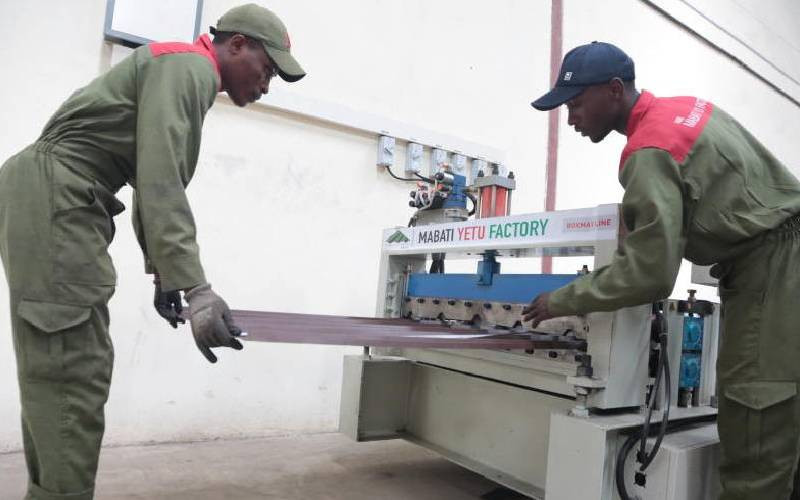
The upcoming event represents the largest single RPL graduating cohort to date. Supported by the World Bank under the National Youth Opportunities Towards Advancement (NYOTA) project, the certification drive seeks to formally integrate unaccredited artisans and technicians into the mainstream economy by verifying skills acquired through workplace experience rather than traditional academic channels.
"This is not the first graduation for RPL. We've had similar graduations before, but it is a major event this time round because of the numbers. This is the highest number of RPL graduates that we will be issuing certificates to on September 7, 2026. This is an indicator that going forward, we're going to be more aggressive as we get more resources for nearly 4,000 young people,” said the Principal Secretary in the State Department for Labour and Skills Development, Shadrack Mwadime.
The initiative addresses a critical credential gap within Kenya's expansive informal economy, which currently absorbs roughly 18 million workers.
Under the World Bank-backed framework, the State Department aims to scale the RPL certification pipeline significantly over the next one to two years to reach a target of 20,000 certified youth nationwide.
The current graduating class of 3,727 comprises 2,165 male candidates and 1,566 female candidates drawn from across all 47 counties and spanning 48 distinct technical trades.
Assessments conducted by NITA highlighted notable strides in gender parity across traditionally male-dominated manual trades, certifying 46 female plumbers, 17 female masons, and 15 female light vehicle mechanics.
The graduands will receive official credentials across multiple qualification tiers, ranging from Master Class Persons down to Grade Test Exam Levels 1, 2, and 3.
To maximise the economic value of these qualifications, the government is coupling the certification drive with immediate local and international market interventions.
On the global front, the Ministry, in collaboration with the World Bank and the Canadian government, is executing a pilot programme to facilitate international labour placement for 100 RPL-certified graduates into the Canadian job market.
Locally, the Ministry will launch a digital work-matching platform dubbed Fundi Locator App during the graduation.
The mobile platform will connect certified technicians directly with prospective consumers, with the credentials of all listed artisans undergoing preliminary verification through either NITA or the Kenya National Qualifications Authority (KNQA).
In combination with the skills certification, the National Social Security Fund (NSSF) will officially launch Haba Haba, a revamped mobile app and USSD-based digital savings platform designed to bring informal workers into the pension fold.
The initiative forms part of NSSF's broader strategy to expand total asset reserves to Sh1 trillion by the close of the 2026/2027 financial year.
Stay informed. Subscribe to our newsletter
The Haba Haba platform, which is already recording traction with over 300,000 active members during its ongoing pilot phase, carries a 12-month target to onboard three million additional informal sector savers.
The digital structure allows workers to contribute flexible micro-amounts starting at Sh25 per day, with NSSF targeting an average monthly savings volume between Sh750 and Sh1,000 per member per month.
While NSSF invests the remaining 70 per cent in high-yielding long-term retirement portfolios, the fund structure allows members to withdraw up to 30 per cent of their accumulated savings on demand for emergency needs to accommodate cash-flow fluctuations typical of the informal economy, with reported member profits of 11 per cent in the financial year (FY) 2022/23 and 17 per cent in FY 2023/24.
"And you can access about 30 per cent of the savings anytime. Of course, for the remaining balance, we want to ensure that we invest on behalf of our clients so that they can benefit from what they have saved in the long run. But 30 per cent of what you have saved, you can access anytime."


Subscribe to our newsletter and stay updated on the latest developments and special offers!











 join
join