×

The Standard e-Paper
Stay Informed, Even Offline
 The Standard Group Plc is a
multi-media organization with investments in media platforms spanning newspaper
print operations, television, radio broadcasting, digital and online services. The
Standard Group is recognized as a leading multi-media house in Kenya with a key
influence in matters of national and international interest.
The Standard Group Plc is a
multi-media organization with investments in media platforms spanning newspaper
print operations, television, radio broadcasting, digital and online services. The
Standard Group is recognized as a leading multi-media house in Kenya with a key
influence in matters of national and international interest.

Audio By Vocalize
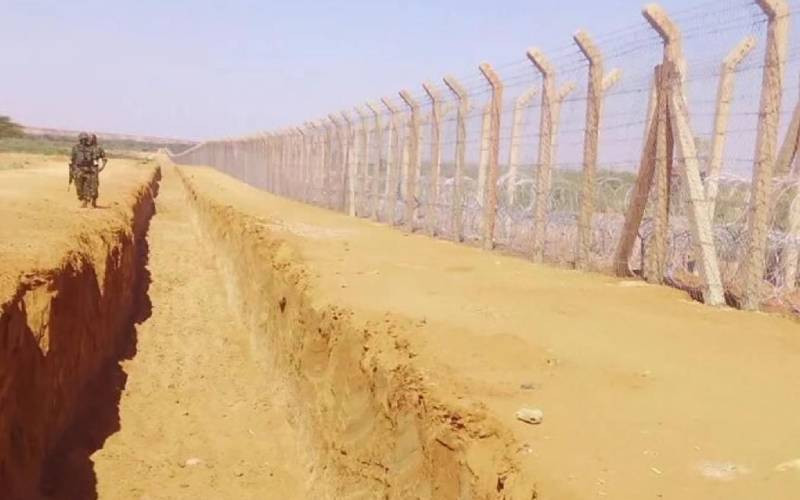
President William Ruto has defended Kenya’s decision to keep the Kenya–Somalia border closed, citing renewed instability in Somalia and escalating regional security concerns that have derailed earlier plans to reopen the crossing.
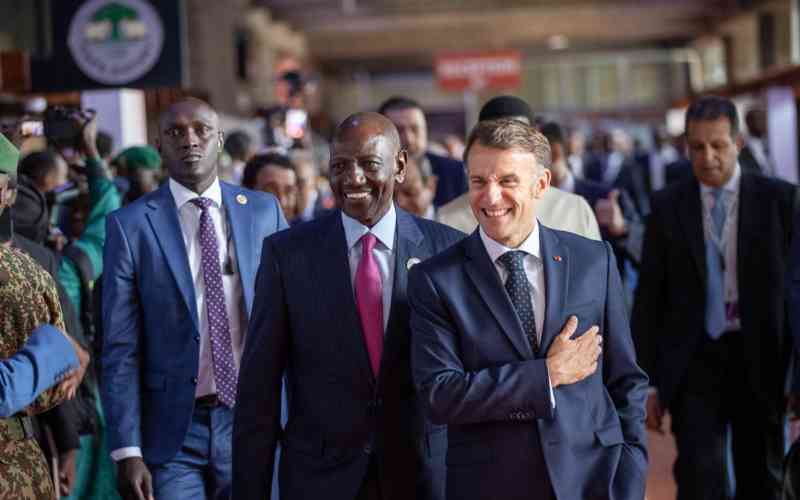
Speaking during an interview with France 24 on the sidelines of the Africa Forward Summit in Nairobi, President Ruto said Kenya had made significant progress toward reopening the border before fresh fighting erupted between Somalia’s Federal Government and regional forces near the frontier.
“We were moving very well until there was a huge disagreement between the government in Mogadishu and the states,” Ruto said.
He explained that clashes involving the Somali National Army and Jubaland forces along the border area worsened the security situation, forcing Kenya to intervene to prevent further escalation.
“In fact, at that point, some of the Somali National Army were actually pushed into Kenya. We had to support members of the Somali National Army, fly them, assist them, so that we could pacify and reduce the war,” he revealed.
The President said the situation, which initially showed signs of improvement, deteriorated again due to political uncertainty in Somalia, including the expiry of key constitutional timelines for the presidency and parliament.
“Today, we have even a much more complicated situation because the term of parliament there expired. The term of the president is expiring, and nobody knows where it is going,” Ruto said.
He added that Kenya, alongside Ethiopia and Djibouti, has been engaged in mediation efforts between Somalia’s federal government and regional administrations, but without success so far.
“We have tried to broker an engagement between the states and the government in Somalia. We have not been very successful,” he said.
The Kenya–Somalia border has been partially closed since 2011 due to security threats linked to Al-Shabaab insurgents.
Although the government had announced plans for phased reopening in 2024 and 2026, renewed insecurity has stalled implementation, with only limited trade exemptions such as miraa exports being allowed.
President Ruto also addressed ongoing conflicts in Sudan and the Democratic Republic of Congo (DRC), firmly denying allegations that Kenya is siding with any armed groups.
Responding to claims that Kenya supports Sudan’s Rapid Support Forces (RSF), Ruto dismissed the accusations as baseless.
“[Siding with RSF] is completely untrue. These are allegations made left, right and centre. They have no basis,” he said.
He argued that both the Sudan Armed Forces (SAF) and RSF are responsible for the country’s collapse, describing them as products of the same political breakdown.
Stay informed. Subscribe to our newsletter
“My position on Sudan is that both SAF and RSF are cut from the same cloth. They have taken the country to the dogs,” Ruto said.
The President warned that Sudan’s humanitarian crisis had reached unprecedented levels, with millions displaced and in urgent need of aid.
“The humanitarian suffering, loss of lives, displacement in Sudan is on a scale that is unprecedented,” he said, calling for urgent diplomatic intervention.
On the DRC conflict, Ruto said Kenya had previously deployed troops under the East African Community force but withdrew after Kinshasa requested their exit.
He added that peace efforts, including recent ceasefire frameworks, had not yet translated into stability on the ground.
“There is no predictable peace there. The situation is still in flux,” he said.
Ruto emphasized that Kenya remains committed to regional mediation efforts, insisting that instability in Somalia, Sudan, and DRC has direct economic and humanitarian consequences for East Africa.
“As leaders, whether we like each other or not, we have a bigger role to play because these conflicts affect our region and our economies,” he said.
The President reiterated that Kenya will continue engaging diplomatic partners to push for lasting peace across the Horn of Africa and the Great Lakes region.

Subscribe to our newsletter and stay updated on the latest developments and special offers!







 join
join