×

The Standard e-Paper
Home To Bold Columnists
 The Standard Group Plc is a
multi-media organization with investments in media platforms spanning newspaper
print operations, television, radio broadcasting, digital and online services. The
Standard Group is recognized as a leading multi-media house in Kenya with a key
influence in matters of national and international interest.
The Standard Group Plc is a
multi-media organization with investments in media platforms spanning newspaper
print operations, television, radio broadcasting, digital and online services. The
Standard Group is recognized as a leading multi-media house in Kenya with a key
influence in matters of national and international interest.

Audio By Vocalize
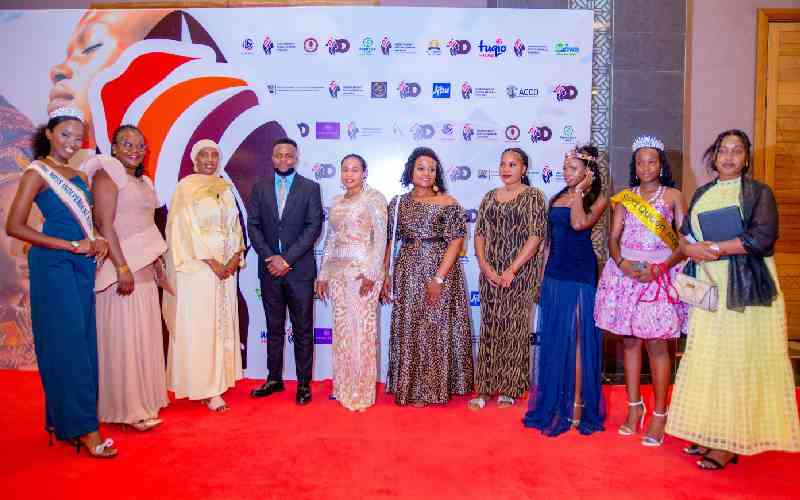
From third left: Marsabit County First Lady, Alamitu Jattani, IKWA CEO Benard Simantu and other contestants during the Independent Kenya Women of Awards awards gala at Southfield Mall in Nairobi. [James Wanzala, Standard]
Women are now calling for economic empowerment to avoid staying in abusive relationships and gender -based violence (GBV).
They also want functional facilities at counties and multi-sectoral approach in solving GBV cases in the country.
They said this during the Independent Kenya Women of Awards (IKWA) awards gala and sixth summit, at Southfield Mall.
The event was attended by Kilifi County Deputy Governor Flora Chibule, who won County Leadership and Inclusive Governance Excellence Award and Dr Ezekiel Mutua, chief executive officer of Music Copyright Society of Kenya (MCSK).
“I think it’s about economic empowerment. Most of the genders either way, when you are not empowered, and are abused or in a relationship that is abusive, you will hardly go out and start your own life because you fear where you will get your needs met,” said Rebecca Bor, an environmentalist, sustainability advocate and community development leader, during a panel discussion before the awards ceremony.
“The situation is worse if maybe the person who is abusing you has high social standing in the society politically, financially or spiritually and if they victims want to speak up, they could somehow affect their personal life,” she added.
“So, the woman or the person who is being abused tend to be suppressive and they will not want to speak up but choose to keep quiet and therefore there is a need for equal empowerment so that if it is the woman, they are not afraid that if they leave this abusive relationship, life will be so difficult.”
Ms Bor, who won the Excellence in Environmental Leadership & National Ecosystem Restoration Award, also encouraged women to take advantage of opportunities provided by the government, including tenders and funds for the women and youth to be empowered.
Catherine Menganyi, a reproductive health and GBV coordinator in Migori County, said breaking the silence requires that men speak up against GBV of all kinds to boys, girls, men and women.
“And how do we do it, by men taking up the role to speak up. And also we want the men to take up actively the role of being present partners. If the partner is present, the men won't beat up the girls and we become a good society. And so, I want to ask the men here to speak up and not normalise the bad behaviour, whereby the inappropriate language is sometimes used for instance and you are not doing anything about it,” she said.
Ms Menganyi, who won Health & Social Impact Leadership Award, called for survivor-friendly and functional facilities in the counties saying lack of this will discourage victims from seeking help.
She also said there is need for multi-sectoral approach while seeking justice for victims.
“At the health department, we also have a responsibility to strengthen multi-sectoral collaboration. In this segment, a survivor needs to get justice and so you have to work closely with the police,” said Ms Mengany.
Stay informed. Subscribe to our newsletter
She added: “A survivor needs somebody to visit them, so they need to work closely with their social counsellor, somebody to take them through the court justice process, and so you have to work closely with the judiciary and the police department to ensure that there is justice. As a county, we really strengthen multi-sectoral collaboration and ensure that the survivors are helped.”
Ms Mengany discouraged people from recording GBV incidents and sharing on social media accounts, instead of helping the survivor to get to the hospital for treatment.
“For us, we ensure that all survivor's cases are going to the health facility, are reported and then followed up to get justice,” she said.
Dr Ruth Masha, a psychiatrist and chief executive member for Gender, Sports, of Kilifi County called for investment in adequate functional facilities, saying there is need to ensure availability of information on GBV trickles down from the county level to the grassroots just.
“For as a county, we have enhanced. We have the authorities we are making this information available to all and this has come home because we have a champion for GBV at the county and ward level and ensured that we have a GBV board, there's also operational safe spaces, so the county enforcement officer such that when they get in, we push at the ground up there,” said Dr Masha, who won Public Leadership and Social Impact Excellence Award in Kenya.
“So to enhance the quality of care, we have collaborated with the police’s gender desk through Policare programme and made these female and male police champions known to everyone, they do not dress in official uniform, are friendly and we have trained them on how to ask questions,” she added.
For interventions to be successful, Jilo Fugicha, founder of Inua Dada Mashinani, said inclusivity is key.
“Intervention can become more inclusive when people are not discriminated based on their gender, ability, age or education and we as an organisation that inclusivity is an important. It improves the progress of the community. But what can be done better is that we must involve more communities so that they know what they want,” said Ms Fugicha.
Ms Bor said there is need to ensure that all people get equal opportunities, including training and education funding without discrimination, to make them ready for the job market.
The panelists also called for the establishment of special courts, involvement of young people in breaking the silence, by giving them a voice through various platforms, assignments and equal opportunities while engaging men as allies.
“During the December holidays, in conjunction with other departments, we will always put young people together and have them taken through their life skills as part of the discussion, and then have an opportunity to listen to them on the best way they can end triple threat in the county,” said Ms Menganyi.
Deputy Governor Chibule pushed for allocation of more resources by counties towards fighting GBV, engaging men and using boda bodas, which she said has proven successful in Kilifi.
Dr Mutua said there is need for practical measures and increased speed in handling GBV.
“There is also a need to increase conversations everywhere in social media, boardrooms, churches, and workspaces and not leave it to the government or law enforcers. Let us not promote stereotypes that promote women as sexual objects,” he said and called for empowerment of the boy child.

Subscribe to our newsletter and stay updated on the latest developments and special offers!










 join
join