
 The Standard Group Plc is a multi-media organization with investments in media
platforms spanning newspaper print
operations, television, radio broadcasting, digital and online services. The
Standard Group is recognized as a
leading multi-media house in Kenya with a key influence in matters of national
and international interest.
The Standard Group Plc is a multi-media organization with investments in media
platforms spanning newspaper print
operations, television, radio broadcasting, digital and online services. The
Standard Group is recognized as a
leading multi-media house in Kenya with a key influence in matters of national
and international interest.

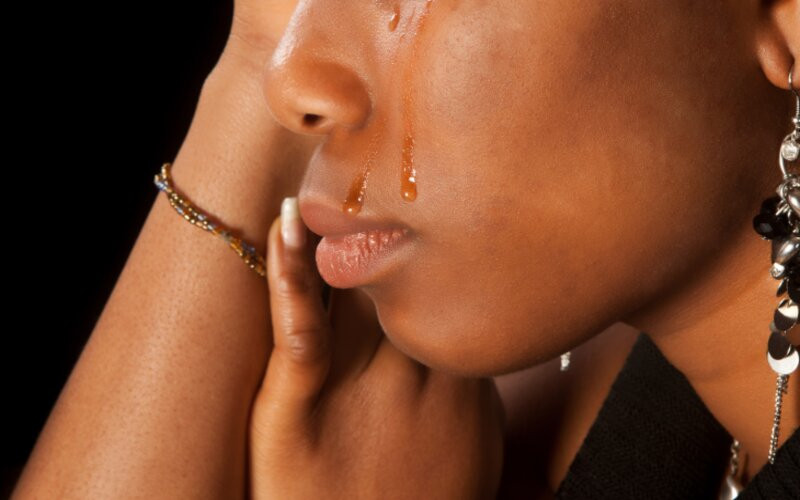
Five years after governments committed to ending gender-based violence, women across Africa are still being killed by intimate partners, family members and other perpetrators, with activists warning that commitments made to protect women have yet to translate into lasting action.
According to UN Women and the UN Office on Drugs and Crime (UNODC), In 2024, about 22,600 women and girls in Africa were killed by intimate partners or family members. Africa had the highest rate of such killings at three victims per 100,000 women and girls.
For Jackline Ng’ang’a, a policy researcher with Akili Dada, the figures point to a crisis that can no longer be treated as a problem affecting individual countries.
“It’s not just an East African problem, it’s not a one-country problem, that femicide is becoming an African problem,” she says.
Nganga says governments must take the safety of women seriously, particularly as violence continues in homes, workplaces and public spaces. Her concerns come as African countries grapple with rising public attention on femicide and persistent gaps in how violence against women is prevented, reported and prosecuted.
In Kenya, Data compiled by Africa Uncensored, Odipo Dev and Africa Data Hub shows that 1,069 women were killed in Kenya between 2016 and 2025. Of these, 78 per cent were classified as femicide under the methodology used by the database. In 2025 alone, 102 women were killed. The crisis became particularly visible in 2024.
A previous analysis by Africa Uncensored documented 170 female murder cases in 2024, making it the deadliest year for women in the period examined and more than twice the annual average recorded between 2016 and 2023.
The database also found that where the perpetrator was known, 87 per cent of victims were killed by someone known to them, while 80 per cent of perpetrators were current or former intimate partners.
- Calls grow for youth inclusion as HIV, GBV cases rise
- Rising GBV cases stretch shelters, support services to the limit
Keep Reading
For Nganga, Kenya must now account for commitments it made under the Generation Equality framework. “We were supposed to have government shelters; we still don’t have that,” she says.
The Generation Equality action period end in 2026, but the violence that the commitments sought to address has not ended with it.
South Africa continues to confront its own femicide crisis. Police statistics for the first quarter of the 2026/27 financial year show that 569 women were murdered between April and June. During the same period, 1,052 women survived attempted murder.
Police also recorded 9,201 rape cases, of which 8,814 involved women and children.
Preventing violence
For gender rights advocates, however, preventing such violence cannot begin only after a woman has been killed.
Nokuzola Ndwandwe, Menstrual Health rights activist from South Africa, says the work must start within families.
“It really needs to start in the household, in the home, in the way that parents model their behaviour,” she says.
This, she argues, requires challenging the attitudes and behaviours that normalise control and violence against women from an early age.
The crisis is also being felt in Central Africa.In Cameroon, Government data presented in 2025 indicated that more than half of women aged 15 and above had experienced some form of violence.
But, as in other African countries, documenting the deaths is only one part of the challenge.
Maureen Wagubi, CEO of Uganda’s Institute for Social Transformation, says violence affects women across different areas of their lives, including their ability to work, participate in public life and access economic opportunities.
“GBV is real because it affects the work that we do and the beneficiaries that we work with in all angles,” she says.
While many African countries have laws addressing gender-based violence, implementation remains a major challenge. “The laws are there, but when it gets to implementation is where we find a challenge as well,” Wagubi says.
She argues that governments must put resources behind their commitments rather than relying on policies and legislation alone.
For Josephine Comfort Mukwendi of Sonke Gender Justice and MenEngage, addressing the crisis requires moving beyond the response that comes after a woman has already been harmed.
“Preventing violence requires more than responding after harm has occurred. It requires transforming the social norms and power dynamics that enable violence in the first place,” she says.
She also places responsibility on men and boys. “Men and boys are not only part of the problem that we seek to address, but they must also be part of the solution.”






 join
join