
 The Standard Group Plc is a multi-media organization with investments in media
platforms spanning newspaper print
operations, television, radio broadcasting, digital and online services. The
Standard Group is recognized as a
leading multi-media house in Kenya with a key influence in matters of national
and international interest.
The Standard Group Plc is a multi-media organization with investments in media
platforms spanning newspaper print
operations, television, radio broadcasting, digital and online services. The
Standard Group is recognized as a
leading multi-media house in Kenya with a key influence in matters of national
and international interest.

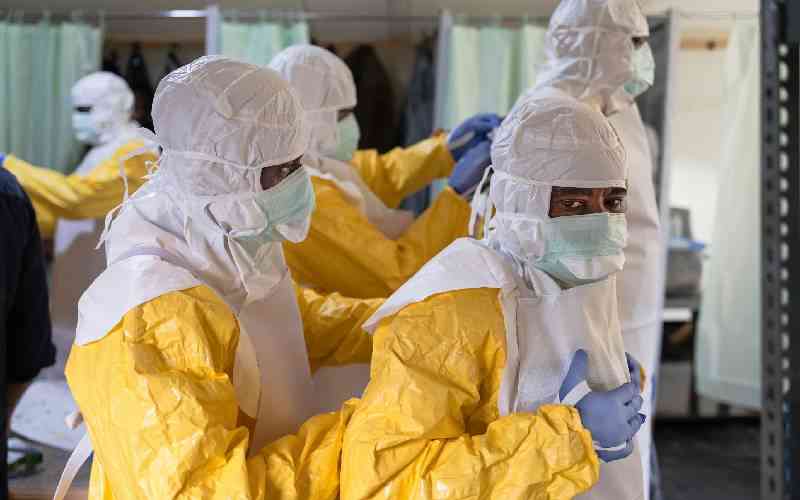
Health workers during a training by Médecins Sans Frontières (MSF) to reinforce regional emergency response capacity for Ebola in the DRC at Ongata Rongai, Kajiado County in Kenya on July 10, 2026. [AFP]
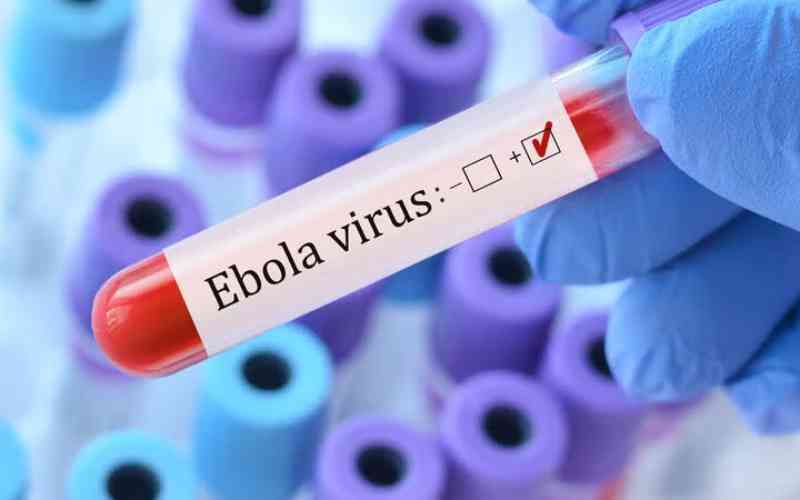
The World Health Organisation (WHO) has confirmed that a second American infected with the Bundibugyo strain of Ebola has been transferred to Germany for treatment, ending speculation that Kenya's Nanyuki facility would receive Ebola patients.
In a fresh update, WHO Director-General Tedros Adhanom Ghebreyesus said the organisation provided clinical care to the US humanitarian worker who was diagnosed with Ebola in Bunia, Ituri Province, in the eastern Democratic Republic of Congo, before arranging a medical evacuation to Germany.
"WHO has provided clinical care and close monitoring to a second US citizen a humanitarian worker in eastern DRC's Ituri provincial capital of Bunia who has been confirmed with Ebola Bundibugyo virus disease. The patient has been safely transferred to Germany for continued follow-up care."
The announcement effectively puts to rest claims linking Kenya's Ebola preparedness facility in Nanyuki to the treatment of infected foreign patients.
Earlier, the US Centers for Disease Control and Prevention (CDC) had confirmed the humanitarian worker had contracted Ebola but did not disclose where the patient would be transferred, prompting widespread speculation over the destination.
WHO has now publicly identified Germany, not Kenya, as the receiving country.
- Immunisation still our strongest protection, though gaps persist
- WHO declares international emergency as Ebola kills over 80 in DR Congo
- Dread and denial at heart of deadly DR Congo Ebola outbreak
- Busia county government sets up Ebola isolation centre
Keep Reading
The clarification comes despite the United States having invested heavily in Kenya's public health system over the years, supporting disease surveillance, laboratory networks, emergency preparedness and epidemic response through long-standing partnerships with the Kenyan government. Kenyan authorities have repeatedly maintained that no Ebola patients have been transferred into the country, stressing that the Nanyuki facility is part of Kenya's preparedness strategy should a case ever be detected locally.
Tedros warned that the outbreak is accelerating and called for a stronger international response.
"As the outbreak escalates, an accelerated response from local, national, and international partners is urgently needed."
He also acknowledged the growing risks facing frontline responders.
"As infections among response personnel are not unexpected in an outbreak of this scale, protecting frontline responders must remain a top priority."
Praising health workers battling the virus, he added:
"We are deeply grateful for the courage and commitment of all health workers working to end this outbreak."
The response is also being hampered by insecurity and misinformation. Four Red Cross volunteers were recently attacked in eastern DRC amid a surge in false claims about Ebola, underscoring the growing dangers facing responders.
Since mid-May, the outbreak has infected more than 1,947 people and claimed over 700 lives.
Reports indicate 12 reported incidents of community resistance to Ebola control measures, with seven verified through social media, highlighting how misinformation is undermining efforts to contain the disease.
Germany has emerged as one of the leading international supporters of the Ebola response, committing €18 million (about KSh2.7 billion) to strengthen surveillance, laboratory capacity, treatment, infection prevention and emergency operations in the DRC and neighbouring countries as WHO, Africa CDC and the Congolese government work to bring the outbreak under control.






 join
join