
 The Standard Group Plc is a multi-media organization with investments in media
platforms spanning newspaper print
operations, television, radio broadcasting, digital and online services. The
Standard Group is recognized as a
leading multi-media house in Kenya with a key influence in matters of national
and international interest.
The Standard Group Plc is a multi-media organization with investments in media
platforms spanning newspaper print
operations, television, radio broadcasting, digital and online services. The
Standard Group is recognized as a
leading multi-media house in Kenya with a key influence in matters of national
and international interest.

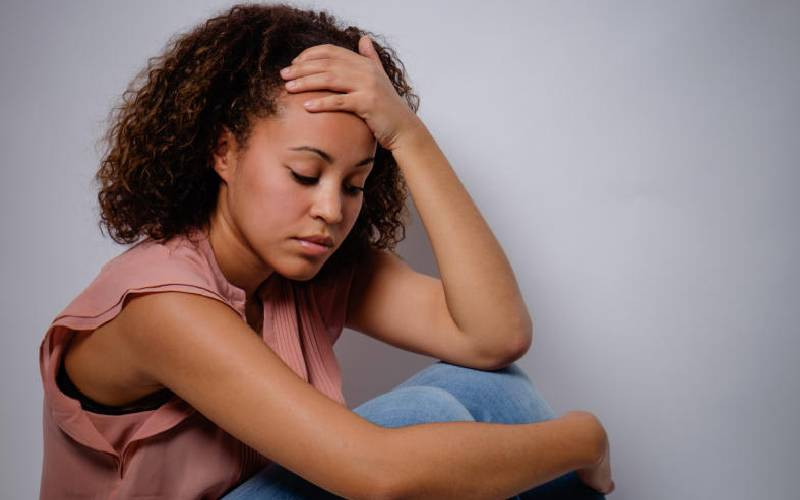
For many girls in Kenya, menstruation does not arrive as a natural milestone of growth. Instead, it enters their lives as a season of fear, confusion and deep shame.
The first bleed often comes wrapped in secrecy, physical discomfort, cultural stigma and conflicting guidance from adults who themselves were raised in silence. With accurate information scarce, girls are forced to navigate puberty guided by myths whispered among peers, half-truths passed down by relatives and an overwhelming sense that the changes in their bodies must be hidden.
This is the reality for many, including 23-year-old Thinji Wanjiku, who grew up in rural central Kenya and now lives in Kasarani. Her menstrual education, she says, was "confusing, shame-filled and grossly inadequate."
Her experience mirrors the larger gaps in Kenya's sexual and reproductive health rights landscape gaps evident in homes, schools, community norms and national policies.
"My first interaction with menstrual education wasn't even real education," she recalls. "In primary school, we were simply lined up, boys chased away and given a packet of pads without anyone asking whether we had even started our periods."
The pads, supplied under a women Member of Parliament's' programme, came with a single instruction delivered in a tone she describes as belittling: "Put it inside your panty. And don't bring us mood swings here. Starting your period doesn't make you special." Thinji had not even begun menstruating.
That moment taught her shame not dignity. Rather than learning about biology, self-care, or hygiene, the girls were warned that periods made them "smelly, moody and violent," shaping how they perceived their own bodies and each other.
- Why all Kenyans must unite to stop cervical cancer
Keep Reading
Some, she says, were barred from school or church during their periods. Others were isolated from male relatives because menstruation was viewed as impurity.
When she finally began menstruating at 15, Thinji learned more from peers than from adults. Embarrassment followed her everywhere. "I was too embarrassed to buy pads from our village shops. I'd walk to the next village so that nobody would see me," she says. She did not experience severe cramps, but only learned what cramps were later-online, not in school or at home.
Her peers faced even harsher struggles. "Most could not afford pads. They used tissue paper because it was 15 shillings. Others used soft leaves, or tore pieces of old mattresses and blankets." Some girls turned to boyfriends for pads, a desperate exchange that opened the door to early sexual activity and exploitation.
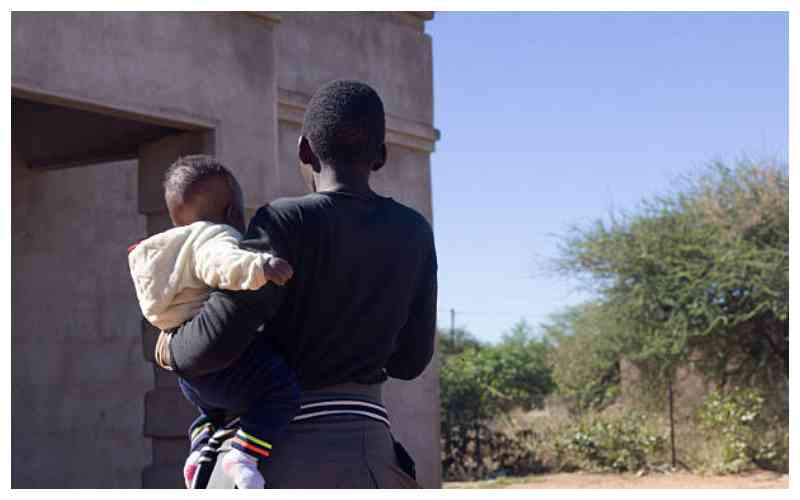
For 23-year-old mother of one, Agnes Wambui, her menstrual journey began at 14 and was marked by fear, loneliness and a lack of support from home. "I couldn't talk to my mum," she says. "She didn't even know I'd started menstruating. She had many children and she was often sick." Without pads, Agnes improvised. "There was a time I took one of my mum's handkerchiefs, folded it and used it as a pad."
Cramps forced her out of class, yet adults around her dismissed her suffering as normal. At home, menstruation was still tied to purity codes. "My mother was a strict church woman. When she believed I was on my period, she would not allow me to go to church."
At 15, unable to afford pads, Agnes approached a 24-year-old man for help. The exploitation led to pregnancy. "I had to drop out of school and go live with him because my mum couldn't support me," she says."But he became violent. That's how I miscarried." Her story is a stark reminder of how menstrual poverty feeds into early pregnancy, school dropout and cycles of abuse.
In Kakamega, 19-year-old Miriam Nyamkola remembers crying during her first period. Most of the information she received came from foreign volunteers, leaving her with myths rather than facts.
"We were told that when you start your period, you'll get a small pimple around your nose. We were told to avoid eating chocolate. And the most damaging: not to sit in big groups during our periods... because apparently, you will smell."
No one explained the biology behind menstruation or the meaning of cramps, breast tenderness, or hormonal changes. "You decide most things on your own," she says, "because the information we were given was never enough."
In Eldoret, 29-year-old biology teacher Jackline Owino says menstrual taboos are far from new. She grew up with a father who openly discussed these issues with his daughters. "I was told that it is just a natural process. Once you have periods, you can attend any function, there's nothing wrong with that. You should keep your body clean and change frequently," she says.
Yet even with that support, she noticed widespread silence among her peers' families. "Most parents are not free to talk about these things with their children," she observes. Now a mother of three boys, she deliberately raises them to understand menstruation and respect girls. "I talk to my boys the same way my dad taught us. I want them to know that girls are equal and menstrual discrimination exists."
As a teacher, she sees daily how poor communication from adults leaves girls confused and ashamed. She also notes that reliance on crude materials remains common in rural areas. "From what I was seeing, you could just tell when somebody is menstruating. Most were missing basic things."
According to obstetrician-gynecologist and endometriosis specialist Dr Yamal Patel, the silence surrounding menstruation is widespread and harmful. "It is true that many girls are not comfortable discussing their bodies as they grow up," he says. "Because they do not receive accurate information, they experience a lot of fear and confusion." This silence can cause girls to miss early signs of medical problems and can worsen psychological distress.
Dr Patel stresses that menstrual pain should never be dismissed. "Pain is the body's warning that something is not right. No pain should be taken as normal," he says. Normalising extreme cramps, he warns, allows serious conditions such as endometriosis to go undiagnosed for years. Dr Patel is deeply concerned about the unsafe materials girls use when pads are unavailable.
"These practices are medically unsafe," he warns. "Mattress foam is not sterilised and harbours bacteria and chemicals. It can cause skin irritation, long-term dermatological issues around the vulva, and even lead to pelvic infections affecting fertility." Plastics, he adds, trap moisture and heat, increasing infection risk. "None of these should ever be condoned."
Despite policy progress, national data reveal wide gaps. The 2022 Kenya Demographic and Health Survey (KDHS) shows that while privacy and use of appropriate materials are high nationally, access to pads remains uneven. Rural-urban disparities are stark: 65 per cent of rural girls struggle to access sanitary products, compared to 52 per cent in urban areas. A 2025 UNFPA study in Siaya County found that some girls engage in transactional relationships to obtain pads, increasing exploitation risks.
KNBS data show that 45.6 percent of girls struggle to obtain menstrual products, and 22.5 per cent cannot access preferred options. Though 64.1 per cent receive menstrual education in school, information is often inadequate. More than eight in ten girls (85.8 per cent) report little to no privacy when changing sanitary products at school.
Only 45.3 per cent have water and soap in washrooms, and 35.1 per cent say they are still viewed as "unclean." Counties such as West Pokot (43.8 percent), Homa Bay (40.8 percent), and Kwale (38.9 per cent) have particularly high levels of difficulty accessing pads. Disposable pads remain the most commonly used product (92.5%), but access to reusable or preferred products is lower in rural and low-income areas
These challenges mirror those in other parts of the Global South. In Nepal, menstruation is widely treated as impurity. Dr Radha Paudel, founder of the Global South Coalition for Dignified Menstruation (GSCDM), recalls watching her mother face monthly discrimination.
"I used to pray to change my sex or stop menstruating. I was shocked and traumatised," she says. Her experiences propelled her into lifelong activism, promoting a "decolonised, holistic, human rights-based framework" for dignified menstruation.
Kenyan advocates echo these concerns. Synthia Asienwa, founder of Tuongee Foundation, says menstrual discrimination persists due to cultural taboos, insufficient education, limited access to products, and unsupportive school or community environments. While Kenya has made strides in recognising menstrual dignity as a rights issue, implementation remains uneven.
The Menstrual Hygiene Management Policy (2019-2030) recognises menstruation as a human rights issue linked to health, dignity, and equality. The Constitution safeguards these rights through Articles 43, 28, and 27, yet enforcement remains inconsistent.
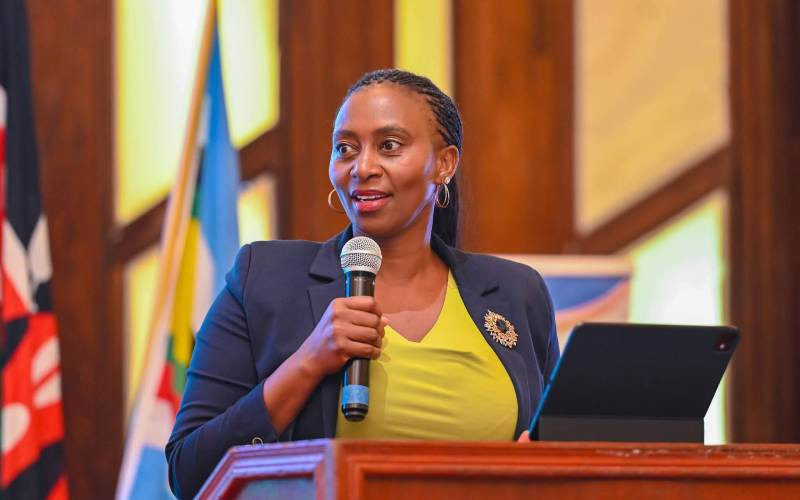
Catherine Namulanda, associate legal counsel at KELIN, notes that Kenya lacks strong legislation to enforce menstrual health obligations. "Without a binding policy, there is no regulatory framework for menstrual products. There are no strict quality controls, no enforcement mechanisms, and no accountability for harmful or substandard pads."
International agencies emphasise the human rights dimension. UNFPA notes that poor menstrual health undermines education, health and social participation, increasing infection risks. Globally, 1.8 billion people menstruate monthly, many without dignified conditions.





 join
join