×

The Standard e-Paper
Join Thousands Daily
 The Standard Group Plc is a
multi-media organization with investments in media platforms spanning newspaper
print operations, television, radio broadcasting, digital and online services. The
Standard Group is recognized as a leading multi-media house in Kenya with a key
influence in matters of national and international interest.

Audio By Vocalize
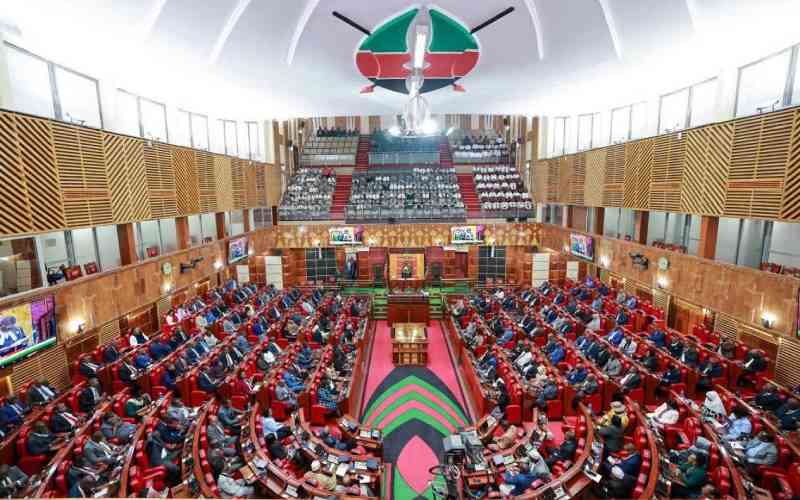
Kenyans struggling to clear hospital bills could soon be spared the indignity of having discharged relatives detained in hospitals or loved ones' bodies withheld in mortuaries over unpaid debts after the National Assembly passed a Bill seeking to outlaw the practice.
The Health (Amendment) Bill, 2024, sponsored by Kirinyaga County Woman Representative Jane Njeri Maina, seeks to guarantee emergency medical treatment regardless of a patient's ability to pay while criminalising the detention of patients and human remains as a means of recovering outstanding medical bills.
The proposed legislation, passed by MPs during its Third Reading on Wednesday, November 11, 2026, also seeks to prohibit healthcare facilities from demanding upfront payments, insurance verification or proof of financial ability before attending to patients requiring emergency care.
The Bill proposes fines of up to Sh3 million for public healthcare facilities that demand prepayment before providing emergency treatment, while public officers who authorise or facilitate the detention of bodies over unpaid bills could face fines of up to Sh2 million.
Moving the Bill during its Second Reading on February 11, 2026, Maina told Parliament that the proposed amendments addressed two persistent injustices in Kenya's healthcare system: denial of emergency treatment because of financial constraints and the withholding of deceased persons as collateral for unpaid hospital bills.
"The Health Amendment Bill seeks to make it illegal to detain dead bodies in hospitals or mortuary facilities. It also seeks to make it illegal to demand any prepayment prior to the provision of emergency treatment," she said.
One particularly distressing case involved Kelvin, a former medical student who turned to the boda boda business after struggling to secure employment. Following a fatal road accident, his body was reportedly detained at a funeral home for nearly a year over an outstanding bill of Sh1.42 million.
Having offered the family pro bono legal assistance, Maina said she witnessed the anguish of a mother who could not give her son a dignified burial.
She argued that detaining bodies does not resolve hospitals' financial challenges but instead compounds the suffering of families already dealing with bereavement.
"This Bill is not mere rhetoric or politics. It is a crucial step towards addressing the profound suffering faced by many Kenyans," she said.
The debate exposed the human cost of hospital debt, with Maina also citing the case of Maimuna Omwaya, who was detained with her newborn at Pumwani Maternity Hospital for nearly a month in 2015 over a Sh6,000 discharge bill.
She argued that the proposed amendments would reinforce existing court decisions that medical debts should be recovered through lawful mechanisms rather than by restricting patients' freedom or denying families access to deceased relatives.
MPs linking the reforms to constitutional protections under Article 43, which guarantees the right to healthcare, including emergency medical treatment.
Dagoretti South MP John Kiarie criticised healthcare facilities for placing financial considerations ahead of medical priorities, warning that patients could lose their lives while administrators establish their ability to pay.
He argued that hospitals should first establish a patient's medical condition rather than begin by assessing their financial capacity.
Stay informed. Subscribe to our newsletter
Funyula MP Dr Ojiambo Oundo supported the Bill's intentions but cautioned that it could address symptoms without resolving deeper problems affecting healthcare financing, insurance coverage and hospital operations.
He cited the case of a patient, Devero, reportedly detained at St Mary's Hospital in Lang'ata since January over a bill of approximately Sh300,000, despite his family having raised about Sh200,000.
Kangundo MP Fabian Chule cautioned against creating legislation that could undermine hospital operations, arguing that healthcare providers must also be protected because they incur costs when treating patients.
"We cannot just make laws about the patient. We have understood that the patient came to a facility and before the bill came medicine was used, there was somebody who put energy there. We must take care of both the patients and the facilities," he said.
Imenti North MP Dawood Rahim, however, argued that withholding deceased persons over unpaid bills subjected grieving families to additional trauma.
"Retaining a body of a deceased person is a double jeopardy. The family has lost a member and they are unable to pay. It is taking them through another trauma. It doesn't matter if it is in private or public, it should cut across," he said.
Nyatike MP Tom Odege also criticised the practice of detaining discharged patients, warning that keeping them in hospital wards over unpaid bills only increases their financial burden without helping facilities recover their money.
"Retaining a patient in the ward after the discharge and that also is incurring a bill on a person who is unable to pay is wrong," he said.
Odege urged hospitals to negotiate payment arrangements with patients rather than continue accumulating debts through prolonged detention.
"Let the facility reach agreement on how their debt can be paid and release the patient to go so that you don't accumulate debt when you cannot afford what you already owe. If you cannot pay for seven days and we retain you for two months to accumulate the debt, it is not helping the hospital nor the patient," he added.
The Bill also provides for structured payment arrangements, offering hospitals a lawful avenue to recover outstanding medical expenses without subjecting patients and bereaved families to harassment or detention.
With the National Assembly's approval at Third Reading, the proposed amendments now move to the Senate for consideration before they can be presented to President William Ruto for assent.
Subscribe to our newsletter and stay updated on the latest developments and special offers!


 Prefer the Standard on Google