×

The Standard e-Paper
Smart Minds Choose Us
 The Standard Group Plc is a
multi-media organization with investments in media platforms spanning newspaper
print operations, television, radio broadcasting, digital and online services. The
Standard Group is recognized as a leading multi-media house in Kenya with a key
influence in matters of national and international interest.
The Standard Group Plc is a
multi-media organization with investments in media platforms spanning newspaper
print operations, television, radio broadcasting, digital and online services. The
Standard Group is recognized as a leading multi-media house in Kenya with a key
influence in matters of national and international interest.

Audio By Vocalize
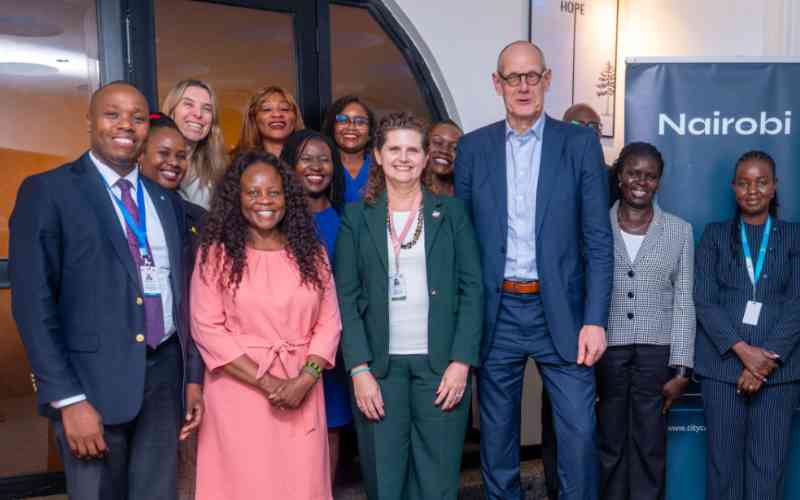
Late-stage cancer diagnoses are increasingly straining care capacity in Nairobi, exposing critical gaps in screening, referral systems, and access to treatment despite the availability of effective early detection tools.
Across hospitals and clinics in the city, clinicians report a consistent pattern of patients arriving with advanced disease, where treatment options are limited and outcomes significantly poorer.
Speaking during the World Health Summit Regional Meeting, Tisha Boatman, Executive Vice President of External Affairs and Healthcare Access at Siemens Healthineers, pointed to persistent barriers within the health system.
“Awareness, acceptability and affordability are still the biggest barriers today.” She said.
Boatman added that many of the challenges are not technological but structural, driven by gaps between diagnosis and access to care.
Health experts say the pattern reflects systemic delays rather than clinical limitations, with patients often entering the healthcare system too late for optimal treatment.
Cervical and breast cancers remain the leading causes of cancer-related deaths among Kenyan women, despite being highly treatable when detected early.
Only 48 percent of eligible women in Kenya have ever been screened for cervical cancer, a gap that continues to drive late detection. According to Boatman, this is where the system begins to fail.
“Awareness, acceptability and affordability are still the biggest barriers today,” she reiterated, noting that many patients either do not know when to seek screening or face barriers that prevent early access.
The result is a steady flow of patients presenting with advanced cancers, where treatment is more complex, more expensive, and less likely to succeed.
Health specialists warn that without stronger early detection systems, oncology services will remain under growing pressure.
Efforts to address these gaps are being coordinated through the City Cancer Challenge (C/Can), which has been working with Nairobi since 2022 to assess and strengthen cancer care systems.
She said that more than 100 stakeholders, including clinicians, policymakers, civil society actors and patients, have contributed to the process, resulting in 11 locally developed project plans aimed at improving early diagnosis, treatment pathways, and system coordination.
However, Boatman noted that alignment among stakeholders has improved significantly.
“What has changed is alignment. Stakeholders are now working from a shared understanding of the gaps and the direction of travel,” she said adding that this shift is crucial in moving from fragmented interventions to coordinated system reform.
Stay informed. Subscribe to our newsletter
Cancer care in Kenya has long been characterised by fragmentation across public and private providers, levels of care, and geography.
Patients often move between multiple facilities before receiving a diagnosis, losing valuable time in the process.
According to Boatman, the reform model being implemented in Nairobi seeks to address this fragmentation by strengthening coordination and accountability within the system.
“City Cancer Challenge doesn’t choose cities; cities apply.It’s about the willingness and capacity to drive meaningful change,” she said.
The approach, she noted, places responsibility on local institutions to define priorities and implement reforms rather than relying on externally imposed solutions.
The weakest point in the system, experts say, remains primary healthcare.
“Early diagnosis is still a major challenge,” Boatman warned.
She explained that many frontline facilities lack the resources, training, or structured referral pathways needed to detect cancer early.
As a result, patients often reach specialised care when the disease has already progressed significantly.
Beyond clinical gaps, social factors also play a role in delayed care. Household decision-making, financial constraints, and lack of awareness often determine when patients seek help.
“It’s not just about targeting women. Awareness has to extend to the entire family,she said emphasizing that community-level understanding is essential in improving early screening uptake.
Digital health tools are increasingly being introduced as part of the solution, but their effectiveness depends on integration across the entire care pathway.
“Digital tools cannot sit in isolation. They must run across the continuum of care, from screening to diagnosis to treatment, if they are to deliver real patient benefit,” she noted.
Without such integration, she warned, technology risks becoming another fragmented layer rather than a unifying system.
Kenya’s cancer control efforts are also evolving at policy level, with growing alignment to global frameworks and expanded investment in workforce training.
However, implementation remains uneven, particularly at county and primary care levels where most patients first interact with the health system.
Boatman pointed to emerging partnerships and programmes aimed at bridging these gaps, including initiatives focused on women’s cancer detection and care.
She said the increasing collaboration between public and private actors signals a shift in approach.
“The environment is evolving. There is increasing space for collaboration. That’s essential for sustainability,” she said.
Despite these efforts, the pressure on Nairobi’s cancer care system continues to grow.
Health experts warn that if early detection does not improve, the city will face rising treatment costs, higher patient loads, and worsening outcomes.
However, they also note that the trajectory is not fixed. Strengthening primary care, improving screening coverage, and improving coordination could significantly reduce late-stage diagnoses.
For now, Nairobi’s reforms remain in transition, shaped by planning, pilot programmes, and gradual system alignment.

Subscribe to our newsletter and stay updated on the latest developments and special offers!









 join
join