 The Standard Group Plc is a multi-media organization with investments in media
platforms spanning newspaper print
operations, television, radio broadcasting, digital and online services. The
Standard Group is recognized as a
leading multi-media house in Kenya with a key influence in matters of national and
international interest.
The Standard Group Plc is a multi-media organization with investments in media
platforms spanning newspaper print
operations, television, radio broadcasting, digital and online services. The
Standard Group is recognized as a
leading multi-media house in Kenya with a key influence in matters of national and
international interest.

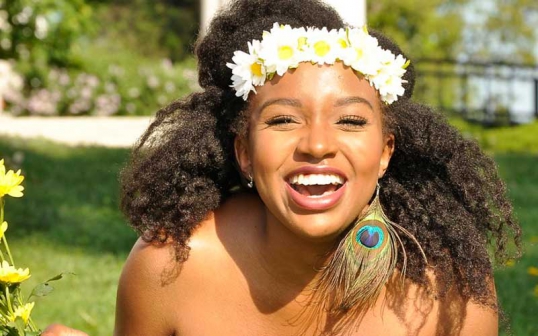
My phone pings, it’s Gmail. Just as I unlock the screen and try to read the new email, I hear footsteps, they are of heels. Soon after, a confident voice calls out my name. Tabitha Tongoi greets, laughs, smiles and gives me a warm, hearty hug all at once.
It takes me a minute to register what is happening. Tabitha’s energy is exuberant. And contagious. And infectious. Defining her as bubbly would be a grave understatement.
Impeccably dressed in a black top, black pants and a crisp white blazer, Tabitha exclaims: “Yvonne! You look like such a journalist!”
I smile. I don’t know what that means. I say as much, “I don’t what that means. What does that mean?”
Tabitha bursts out in laughter. “Oh, you know…”
“No, not really. What do journalists look like? And is looking like one a compliment?”
She laughs out even louder as she makes her order for a Dawa. In answer to my question, Tabitha tries to explain, she says something about dressing and conduct and composure and speech and eloquence.
I didn’t understand, (I still don’t), but I chose to take it as a compliment. Tabitha laughs, again.
At the rate Tabitha and I are already enjoying each other’s company, we, for a moment, get worried, this session might go on until midnight.
Meeting at ABC Place’s Seven Seafood & Grill, I get us started. I ask Tabitha about her upbringing, education, extensive travels, life, and the business of blogging. As she tells me about these, we delve into more topics on mental health, racism, love, self-awareness and fame.
Tabitha runs Craving Yellow, a natural-hair blog catered to women of colour. It has done so well, so much so that it now has a consistent YouTube channel, a significant Instagram following, and more notably, an offline masterclass that has seen classes fill up fast.
As she answers my questions, narrates what her journey has been like, and tells me of her dreams, Tabitha’s energy, for the most part, remains constant; upbeat.
There are very few moments when I see her become somber. This happens when she tells me about a friend she once had, who is now gone, courtesy of suicide. Here, is where I see pain in Tabitha’s eyes.
Another similar moment is when Tabitha talks to me about a boy. A love she once had. She got past it, and is now dating someone who makes her vivacious personality spring right back up.
Tabitha speaks her mind a lot, and articulates her thoughts honestly. For instance, as Alicia Keys’ ‘Fallin’ instrumental rendition plays smoothly in the background, Tabitha tells me how the night before, she and some of her girlfriends had been at a popular cafe having Sangrias. It was at this very sitting, that she found out the Sangrias are usually made of Safari Cane.
“What’s wrong with Safari Cane?”
“It’s Safari Cane!” Tabitha exclaims. “They can’t use Safari Cane and charge us what they charge us! Ah! Surely!”
I stay silent.
“I notice these things,” she says. “Every single thing. You can’t con me, since I got back to the country, I’m very aware. Even if chicken wings prices were to be increased by only Kshs 15, I would know.”
Here’s more on Tabitha, more easily and fondly known to her fans as, “Craving Yellow.”
***
Where did you attend high school?
I went to the Kenya High School.
Look at you.
(Laughs) Yeah, I was a top student, to be quite honest. I can’t even pretend otherwise. After high school I attended the African Leadership Academy in South Africa, before travelling to the West, I ended up studying in five different countries. I have a Master’s degree in Political Science.
That’s a lot of travel.
It is. It really is. And I’m thankful everyday for having had such great opportunities. The exposure was priceless.
What’s your favourite destination among all the countries you’ve been to?
They certainly all have their advantages, but for now, it has to be Kenya.
I came back and was received so warmly. I didn’t have the slightest idea that all these things I’m experiencing now would happen when I started the blog. No idea!
Craving Yellow, let’s talk about that. How did it start?
When you study abroad, there can be so many issues to deal with. And for me, like any other growing person, I began to understand things around me. I was young, female and black. These things started to matter everywhere I went.
There were also the usual things I could see people around me dealing with: school, work, loneliness, racism.
I, however, found that everywhere I would go, hair was always a unifying topic of discussion, the differences didn’t matter any more. So I decided to start a blog that would document my natural hair journey as well as give people something positive to talk about and help create a sense of inclusion.
The blog has evolved into an incredible entity.
It has! It’s unimaginable what it has become. Just to try and quantify it’s intensity, I could say, when I look at my phone now, the kind of people who I could call upon for an event I’m having and they would show up is insane. I can’t believe I have this kind of access.
The blog has done that, it has made me get in contact with fans, potential business partners, and even celebrities.
You realise you, too, are a celebrity now, right?
(Laughs) Yeah. It was strange at first. I remember walking into a supermarket, dressed in casual clothes, no make up, and being suddenly surrounded by these young girls wanting selfies. I was like, “What is happening!” (Laughs again)
Now I’m more aware of it. I’m trying to get used to it, although I think there’s a way to be a Kenyan celebrity. There’s a Kenyan way of being a celebrity.
How so?
I don’t know how to explain it, there’s just a certain kind of way to behave, to conduct yourself, to interact with people. For example, to be friendly but not to be too friendly; to attend events, but to just pose for the cameras; to be close with the fans but not too close.
I don’t know if I’m articulating it efficiently, but there’s a way I keep seeing celebrities here conduct themselves, I’m still trying to understand the whole game.
Once you understand it, will you also be the Kenyan kind of celebrity?
I don’t know. I struggle with it to be quite honest. I’m naturally so warm and welcoming and generous and want to engage everyone who follows my blog and who is around me. But I also understand the need for boundaries, they are important too. Let’s just take it a day at a time and see how it goes.
Blogging as a business, is it hard?
Not really. Not for me, mainly because I enjoy it so much that it doesn’t quite seem like a job.
What’s one of your biggest challenges running a digital business?
For me, I sometimes wonder if I really want to take the blog that seriously. (Laughs) I think about it a lot, because in Australia, I had a 9-5, was in the corporate setting, loved that kind of culture to bits and the blog was just a passion on the side. But now, here I am, it’s all different now.
You were actually a digital marketer for some huge brands and corporations while in Australia, how was that?
It was phenomenal!
How did you get the jobs?
Ha. Funny thing. As with the typical diaspora life, I needed a job while in Australia to cater to my upkeep and daily needs. I had been applying for jobs in political science and nothing was happening.
The blog, at this time, had been running for about one year and six months; it was doing okay, so I decided to look in that direction. I had been seeing all these ‘digital marketer,’ ‘social media managerial,’ ‘content creator’ jobs while I was in Melbourne. I remember thinking, “What jobs are these exactly?”
So I switched up my CV, included all my blog details, and applied for 15 jobs, on a Tuesday. I got seven call-backs on Wednesday, and on the following Monday, I had two job offers.
Wow. The power of the internet, huh?
Yes, Yvonne! Yes! Almost anything is doable now. One just has to be strategic and very proactive. That’s when my career shifted towards branding and marketing.
Have you had any unpleasant business experiences during your time in Kenya so far?
How much time do you have? (Bursts out laughing) There have a number, but, these experiences have made me very aware of my surroundings and have taught me how to be assertive when I need to be. I can’t be easily swindled. It’s actually almost impossible.
You are naturally so bubbly, what are some of the things that sadden you?
Mental health struggles. Those are hard. And I especially don’t like seeing the stigma that comes with it. It’s okay, for instance, for people to feel depressed, to be clinically depressed even, it’s totally okay. This shouldn’t be treated with shock and horror and avoidance and secrecy.
These reactions are the kind that silently drive people who suffer from mental health struggles over the edge.
Have you had to deal with a mental health struggle yourself?
I have, there was a time I was feeling really depressed, for a number of reasons. I was living in the US, in the north east, it would snow eight months of the year, it was a rural town, very isolated, and I ended up living like I was full-blown hibernating. That was a very tough time.
How did you manage to get yourself out of the depression?
I think I would attribute it to being a very self-aware person. I would say, as a personal trait, I have great resilience and I know how to survive when required. That’s what really worked for me.
You can now imagine what it would be like for someone who doesn’t have such traits, it would be even more difficult to deal with depression or manage it.
Do you know of people who struggle with the same?
I know someone who committed suicide. She was a close friend of mine, she was brilliant and talented. I still think that wasn’t how she needed to end her life. I just wish she talked to someone, I wish she said something, I wish we knew she was struggling. When I found out she was gone, I cried. I really, really, cried. I was devastated.
Do you think we, as a global society, still have a long way to go in terms of understanding the mental health space?
Yes. Especially when one is brilliant, there’s a lot of ignorance in that sense. Because people think you have money, you have a car, a house, a good job, a great family, and they’re like, “Why are you sad? What do you have to be sad about?”
I think that’s a very simplistic way of looking at it. There needs to be more education on mental health and more systems in place, to keep victims from taking their lives for as long as possible.
As a young, hard working, ambitious, woman, what do you think of “sponsors”?
Oh dear! I have to tell you, the social dynamics in Kenya are quite something. But I’m never one to judge. I think it has a lot to do with the economy. There are generally no jobs, and the jobs that exist sometimes pay too little to survive on. That’s why young girls are looking to sponsors. It’s an unfortunate reality, but it is what it is.
Do you have any advice for the women who partake in the game, “sponsees” we could call them?
(Thinks) It’s your life to live, but, be very careful. Maybe you are meant to live for a very long time, maybe you are meant to live until you get to 80, you need to have an agenda for your life.
Because one decision, one exciting weekend away to, let’s say Nanyuki, could have you involved in a road accident, have you contract a viral disease, or even have you end up with a physical or emotional scar that you have to deal with for the rest of your life.
Temporary excitement needs to be put into context. It’s a dangerous game, your life could be completely altered because of that one choice. Be careful.
And for those who are feeling terrible for not having gone away for the weekend?
Sit with your sadness. Sit with it! (Laughs heartily). Don’t even be in denial about it. Feel bad that you don’t have a sponsor who can take you for weekend getaways, have some black tea, look for some bread and sit with it. (Laughs again)
You’ll be okay in a matter of hours, because that semi-sadness is a fleeting emotion. What may happen to you while you are in Nanyuki, might, on the other hand, not be a fleeting result. Be different, and if you can, stay different.
What do friendships mean to you?
Friendships are such a beautiful thing. When I’m one’s friend, I’m a friend all the way. When there are some disagreements of sorts, I believe in sitting down and figuring it out. But if there’s some distance and some silence on the other end and I don’t know why, I let it be.
So many people walk around with smiles and yet they are dealing with huge amounts of heaviness and turmoil in their homes and personal spaces. I’ve learnt not to take any of it personally.
What would you tell someone who is abroad and is thinking of moving back to Kenya?
Wow. You know, my experience was a bit unique because I was coming back as a public figure. And looking at all the positive things that have happened, I have to acknowledge that the universe has held me. But what I’d say is, if you really want to, just take the plunge, you’ll learn as you go.
What would be your one request to God today?
Gosh, that’s a deep question. (Takes a long pause) I would ask God to make me content, to keep me satisfied in knowing that what I have is enough. So that should, my loved ones, for instance, God-forbid, pass away soon, I may stay knowing the time I had with them was enough. I’d like to have that kind of contentment with life and with everything.
Any last words?
Just keep going.
Yvonne Aoll is a writer who is keen on telling people's stories. You can read more of her work at http://www.yvonneaoll.com/
My phone pings, it’s Gmail. Just as I unlock the screen and try to read the new email, I hear footsteps, they are of heels. Soon after, a confident voice calls out my name. Tabitha Tongoi greets, laughs, smiles and gives me a warm, hearty hug all at once.
It takes me a minute to register what is happening. Tabitha’s energy is exuberant. And contagious. And infectious. Defining her as bubbly would be a grave understatement.
Impeccably dressed in a black top, black pants and a crisp white blazer, Tabitha exclaims: “Yvonne! You look like such a journalist!”
I smile. I don’t know what that means. I say as much, “I don’t what that means. What does that mean?”
Tabitha bursts out in laughter. “Oh, you know…”
“No, not really. What do journalists look like? And is looking like one a compliment?”
She laughs out even louder as she makes her order for a Dawa. In answer to my question, Tabitha tries to explain, she says something about dressing and conduct and composure and speech and eloquence.
I didn’t understand, (I still don’t), but I chose to take it as a compliment. Tabitha laughs, again.
At the rate Tabitha and I are already enjoying each other’s company, we, for a moment, get worried, this session might go on until midnight.
Meeting at ABC Place’s Seven Seafood & Grill, I get us started. I ask Tabitha about her upbringing, education, extensive travels, life, and the business of blogging. As she tells me about these, we delve into more topics on mental health, racism, love, self-awareness and fame.
Tabitha runs Craving Yellow, a natural-hair blog catered to women of colour. It has done so well, so much so that it now has a consistent YouTube channel, a significant Instagram following, and more notably, an offline masterclass that has seen classes fill up fast.
As she answers my questions, narrates what her journey has been like, and tells me of her dreams, Tabitha’s energy, for the most part, remains constant; upbeat.
There are very few moments when I see her become somber. This happens when she tells me about a friend she once had, who is now gone, courtesy of suicide. Here, is where I see pain in Tabitha’s eyes.
Another similar moment is when Tabitha talks to me about a boy. A love she once had. She got past it, and is now dating someone who makes her vivacious personality spring right back up.
Tabitha speaks her mind a lot, and articulates her thoughts honestly. For instance, as Alicia Keys’ ‘Fallin’ instrumental rendition plays smoothly in the background, Tabitha tells me how the night before, she and some of her girlfriends had been at a popular cafe having Sangrias. It was at this very sitting, that she found out the Sangrias are usually made of Safari Cane.
“What’s wrong with Safari Cane?”
“It’s Safari Cane!” Tabitha exclaims. “They can’t use Safari Cane and charge us what they charge us! Ah! Surely!”
I stay silent.
“I notice these things,” she says. “Every single thing. You can’t con me, since I got back to the country, I’m very aware. Even if chicken wings prices were to be increased by only Kshs 15, I would know.”
Here’s more on Tabitha, more easily and fondly known to her fans as, “Craving Yellow.”
***
Where did you attend high school?
I went to the Kenya High School.
Look at you.
(Laughs) Yeah, I was a top student, to be quite honest. I can’t even pretend otherwise. After high school I attended the African Leadership Academy in South Africa, before travelling to the West, I ended up studying in five different countries. I have a Master’s degree in Political Science.
That’s a lot of travel.
It is. It really is. And I’m thankful everyday for having had such great opportunities. The exposure was priceless.
What’s your favourite destination among all the countries you’ve been to?
They certainly all have their advantages, but for now, it has to be Kenya.
I came back and was received so warmly. I didn’t have the slightest idea that all these things I’m experiencing now would happen when I started the blog. No idea!
Craving Yellow, let’s talk about that. How did it start?
When you study abroad, there can be so many issues to deal with. And for me, like any other growing person, I began to understand things around me. I was young, female and black. These things started to matter everywhere I went.
There were also the usual things I could see people around me dealing with: school, work, loneliness, racism.
I, however, found that everywhere I would go, hair was always a unifying topic of discussion, the differences didn’t matter any more. So I decided to start a blog that would document my natural hair journey as well as give people something positive to talk about and help create a sense of inclusion.
The blog has evolved into an incredible entity.
It has! It’s unimaginable what it has become. Just to try and quantify it’s intensity, I could say, when I look at my phone now, the kind of people who I could call upon for an event I’m having and they would show up is insane. I can’t believe I have this kind of access.
The blog has done that, it has made me get in contact with fans, potential business partners, and even celebrities.
You realise you, too, are a celebrity now, right?
(Laughs) Yeah. It was strange at first. I remember walking into a supermarket, dressed in casual clothes, no make up, and being suddenly surrounded by these young girls wanting selfies. I was like, “What is happening!” (Laughs again)
Now I’m more aware of it. I’m trying to get used to it, although I think there’s a way to be a Kenyan celebrity. There’s a Kenyan way of being a celebrity.
How so?
I don’t know how to explain it, there’s just a certain kind of way to behave, to conduct yourself, to interact with people. For example, to be friendly but not to be too friendly; to attend events, but to just pose for the cameras; to be close with the fans but not too close.
I don’t know if I’m articulating it efficiently, but there’s a way I keep seeing celebrities here conduct themselves, I’m still trying to understand the whole game.
Once you understand it, will you also be the Kenyan kind of celebrity?
I don’t know. I struggle with it to be quite honest. I’m naturally so warm and welcoming and generous and want to engage everyone who follows my blog and who is around me. But I also understand the need for boundaries, they are important too. Let’s just take it a day at a time and see how it goes.
Blogging as a business, is it hard?
Not really. Not for me, mainly because I enjoy it so much that it doesn’t quite seem like a job.
What’s one of your biggest challenges running a digital business?
For me, I sometimes wonder if I really want to take the blog that seriously. (Laughs) I think about it a lot, because in Australia, I had a 9-5, was in the corporate setting, loved that kind of culture to bits and the blog was just a passion on the side. But now, here I am, it’s all different now.
You were actually a digital marketer for some huge brands and corporations while in Australia, how was that?
It was phenomenal!
How did you get the jobs?
Ha. Funny thing. As with the typical diaspora life, I needed a job while in Australia to cater to my upkeep and daily needs. I had been applying for jobs in political science and nothing was happening.
The blog, at this time, had been running for about one year and six months; it was doing okay, so I decided to look in that direction. I had been seeing all these ‘digital marketer,’ ‘social media managerial,’ ‘content creator’ jobs while I was in Melbourne. I remember thinking, “What jobs are these exactly?”
So I switched up my CV, included all my blog details, and applied for 15 jobs, on a Tuesday. I got seven call-backs on Wednesday, and on the following Monday, I had two job offers.
Wow. The power of the internet, huh?
Yes, Yvonne! Yes! Almost anything is doable now. One just has to be strategic and very proactive. That’s when my career shifted towards branding and marketing.
Have you had any unpleasant business experiences during your time in Kenya so far?
How much time do you have? (Bursts out laughing) There have a number, but, these experiences have made me very aware of my surroundings and have taught me how to be assertive when I need to be. I can’t be easily swindled. It’s actually almost impossible.
You are naturally so bubbly, what are some of the things that sadden you?
Mental health struggles. Those are hard. And I especially don’t like seeing the stigma that comes with it. It’s okay, for instance, for people to feel depressed, to be clinically depressed even, it’s totally okay. This shouldn’t be treated with shock and horror and avoidance and secrecy.
These reactions are the kind that silently drive people who suffer from mental health struggles over the edge.
Have you had to deal with a mental health struggle yourself?
I have, there was a time I was feeling really depressed, for a number of reasons. I was living in the US, in the north east, it would snow eight months of the year, it was a rural town, very isolated, and I ended up living like I was full-blown hibernating. That was a very tough time.
How did you manage to get yourself out of the depression?
I think I would attribute it to being a very self-aware person. I would say, as a personal trait, I have great resilience and I know how to survive when required. That’s what really worked for me.
You can now imagine what it would be like for someone who doesn’t have such traits, it would be even more difficult to deal with depression or manage it.
Do you know of people who struggle with the same?
I know someone who committed suicide. She was a close friend of mine, she was brilliant and talented. I still think that wasn’t how she needed to end her life. I just wish she talked to someone, I wish she said something, I wish we knew she was struggling. When I found out she was gone, I cried. I really, really, cried. I was devastated.
Do you think we, as a global society, still have a long way to go in terms of understanding the mental health space?
Yes. Especially when one is brilliant, there’s a lot of ignorance in that sense. Because people think you have money, you have a car, a house, a good job, a great family, and they’re like, “Why are you sad? What do you have to be sad about?”
I think that’s a very simplistic way of looking at it. There needs to be more education on mental health and more systems in place, to keep victims from taking their lives for as long as possible.
As a young, hard working, ambitious, woman, what do you think of “sponsors”?
Oh dear! I have to tell you, the social dynamics in Kenya are quite something. But I’m never one to judge. I think it has a lot to do with the economy. There are generally no jobs, and the jobs that exist sometimes pay too little to survive on. That’s why young girls are looking to sponsors. It’s an unfortunate reality, but it is what it is.
Do you have any advice for the women who partake in the game, “sponsees” we could call them?
(Thinks) It’s your life to live, but, be very careful. Maybe you are meant to live for a very long time, maybe you are meant to live until you get to 80, you need to have an agenda for your life.
Because one decision, one exciting weekend away to, let’s say Nanyuki, could have you involved in a road accident, have you contract a viral disease, or even have you end up with a physical or emotional scar that you have to deal with for the rest of your life.
Temporary excitement needs to be put into context. It’s a dangerous game, your life could be completely altered because of that one choice. Be careful.
And for those who are feeling terrible for not having gone away for the weekend?
Sit with your sadness. Sit with it! (Laughs heartily). Don’t even be in denial about it. Feel bad that you don’t have a sponsor who can take you for weekend getaways, have some black tea, look for some bread and sit with it. (Laughs again)
You’ll be okay in a matter of hours, because that semi-sadness is a fleeting emotion. What may happen to you while you are in Nanyuki, might, on the other hand, not be a fleeting result. Be different, and if you can, stay different.
What do friendships mean to you?
Friendships are such a beautiful thing. When I’m one’s friend, I’m a friend all the way. When there are some disagreements of sorts, I believe in sitting down and figuring it out. But if there’s some distance and some silence on the other end and I don’t know why, I let it be.
So many people walk around with smiles and yet they are dealing with huge amounts of heaviness and turmoil in their homes and personal spaces. I’ve learnt not to take any of it personally.
What would you tell someone who is abroad and is thinking of moving back to Kenya?
Wow. You know, my experience was a bit unique because I was coming back as a public figure. And looking at all the positive things that have happened, I have to acknowledge that the universe has held me. But what I’d say is, if you really want to, just take the plunge, you’ll learn as you go.
What would be your one request to God today?
Gosh, that’s a deep question. (Takes a long pause) I would ask God to make me content, to keep me satisfied in knowing that what I have is enough. So that should, my loved ones, for instance, God-forbid, pass away soon, I may stay knowing the time I had with them was enough. I’d like to have that kind of contentment with life and with everything.
Any last words?
Just keep going.
Yvonne Aoll is a writer who is keen on telling people's stories. You can read more of her work at http://www.yvonneaoll.com/




