 The Standard Group Plc is a multi-media organization with investments in media
platforms spanning newspaper print
operations, television, radio broadcasting, digital and online services. The
Standard Group is recognized as a
leading multi-media house in Kenya with a key influence in matters of national and
international interest.
The Standard Group Plc is a multi-media organization with investments in media
platforms spanning newspaper print
operations, television, radio broadcasting, digital and online services. The
Standard Group is recognized as a
leading multi-media house in Kenya with a key influence in matters of national and
international interest.

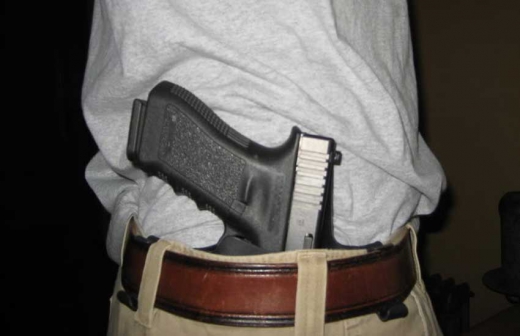
Gabriel Mwangi Orasa, known to friends simply as Gabs, received a call from a strange number. The caller's voice was hushed and urgent.
"Niko na mzigo nataka kuleta," – he told Gabriel he had a 'cargo' he wished to get rid of.
A few days prior, Gabriel had given a talk on giving up crime and violence at a community forum in Kibera, his neighbourhood.
His talk had included a call for criminals to surrender arms to the authorities. He remembered that he had given out his number at the forum.
He wondered what kind of 'cargo' the young man, who had only identified himself as Kevo, might be talking about. Nervous, he asked Kevo to meet him by the roadside.
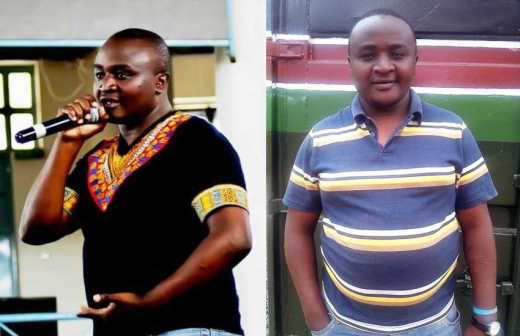
"I was so nervous that I asked my mum to call me at five-minute intervals. I was scared that I might be walking into a trap," Gabriel says.
But when the young man identified himself from across the street and Gabriel saw that he was carrying a baby in his arms, his tension was somewhat relieved. Beneath one of Kevo's arms was a package wrapped in a black polythene bag.
"I asked him to come home with me where we could have some privacy. On getting there he gave me the package. I unwrapped it to find two guns nestled against each other. I was shocked although I pretended to be unfazed.
I just called my mum and gave her the guns to take inside the house. Kevo told me that he wanted to reform from a life of crime. He wanted to become a construction labourer," Gabriel recalls.
Gabriel congratulated the young man on his brave decision to surrender the guns and his desire to reform.
They talked for a while about Kevo's decision and Gabriel assured him that he would make sure that he would be safe. Then Gabriel made calls to Amnesty International, the media, the area chief, and finally the police.
"The OCS came with a large entourage of police officers, which in combination to the media and other authorities caused quite a stir in the neighbourhood. I realised that we were dealing with a very delicate and sensitive matter," he says.
The incident led to the government giving a 30-day amnesty period for criminal gangs in Kibera to surrender arms.
Realising that most of them were scared of the authorities, Gabriel was inspired to start Drop the Gun Initiative, a non-profit organisation which not only encourages and helps criminals surrender their guns, but also aids with reformation. In the last year alone, Gabriel has received 14 guns through the initiative.
Unfortunately, Kevo, the first young man to surrender his guns to Drop the Gun eventually went back to criminal life and was gunned down four months later. Gabriel's eyes cloud over as he talks about it.
"I was convinced that he really wanted to reform but there were no structures in place to help him do so. He is gone now but he is still my inspiration. Almost every night, I watch the video of him being interviewed and it inspires me to press on. All I want is to save lives by getting guns off the streets," he says.
Gabriel is proud of the positive impact Drop the Gun has achieved. But he admits that as a child growing up in Kibera, he never thought that this would be his life. His childhood dream was to become a priest.
"Unlike most of the children in my neighbourhood I attended St Michael's Primary School, a school outside Kibera.
This exposed me to people who didn't live in slums and opened up my mind. I was a good student in school and I also served as an altar boy in church.
While most young men from the slums dropped out of school and got into drugs and crime, I was always considered 'the good boy'. I took it as a challenge that I have to be a role model," he says.
Aha moment
A brush with death ten years ago cemented Gabriel's decision to live an impactful life. At the age of 23, he was involved in a road accident which left him in a coma for three months.
"When I got out of the coma, I was paralysed on the left side. The doctors said that I had a clot in one of the blood vessels on the right side of my brain.
This affected my speech and memory. I remember that I used to look at my mum and sisters without really recognising them. I had to have therapy and medication to reduce the size of the clot," he says.
Battling poor health and uncertainty, Gabriel started thinking deeply about life's purpose. "I wondered why I had been given a second chance in life.
I could have died, never woken up from the coma, but here I was... alive. I spent a lot of time praying and asking God for guidance. I felt like God was asking me to serve, not to waste my life living frivolously," he recalls.
He knew that if he was going to live, he would do something to impact the world around him."I asked God: How can I serve you when half my body is paralysed?"
He believes that God answered his prayer because thanks to physiotherapy which was provided through a Catholic initiative, he started getting better.
"I was paralysed for 19 months. The clot was never removed. The doctors said that removing the clot through surgery would be too risky. It's still in my brain but now it's smaller.
The last time I checked, it had shrunk considerably. I sometimes worry that it might move and give me a stroke all worse, but I try not to dwell on such things." Gabriel says.
Life of service
After healing, at first Gabriel thought of vying for political office. "I wanted to vie for the MCA seat and had already started talking about it. But then the idea for Drop the Gun Initiative came to me and I decided to focus on it exclusively."
Although Kenya has stringent gun laws, there are hundreds of thousands of guns in civilian hands. According to statistics published in 2016 by GunPolicy.org, the estimated number of guns owned by Kenyan civilians (both licit and illicit) is 680,000. This indicates that on average, there is one gun in the hands of every 100 civilians.
There are only 6,500 licensed gun owners in the country, according to Firearms Licensing Board- the body which registers civilian firearms holders, dealers, and manufacturers of firearms.
This means that most of the guns in the country are illicit. The reports showed that there are 673, 500 unlicensed gun holders in the country. Owning a gun without a firearms licence attracts a jail term of not less than seven years and not more than 15 years, according to the Firearm Act.
Most illegal firearms are smuggled into Kenya through from Somalia and Ethiopia. In 2016, the government burnt 5, 250 illicit guns collected all over the country over a period of nine years- an effort which was meant to discourage circulation of illegal weapons.
Gabriel finds these figures disturbing.
"These arms are responsible for a huge percentage of violent crimes in the country and contribute to the deaths of youths in informal settlements. When we are talking about illicit guns, it's important to understand that most of them are to be found in these neighbourhoods.
In areas like Kibera, Mathare, and Kayole, a lot of young men feel that the only option they have is to get into crime.
They kill people in violent attacks and robberies, kill each other in gang wars, and end up being killed by the police. Every day, we are losing our young men. Our mortuaries are full of the bodies of young men," he says.
Gabriel regularly speaks at community forums, a tool he believes is key to reaching his target audience. "I speak to them in their language and let them know that just like them I grew up in the slums.
Hopefully this fosters confidence in them to surrender guns to me. When they want to surrender their guns, they reach out to me," he adds.
Does he ever get scared? "Yes. Dealing with illicit firearms and criminals is a very sensitive thing. But I work together with human rights bodies, the local administration, and the police," he confides.
Once a criminal gives up their gun, Drop the Gun helps rehabilitate them through different programs. However, he admits that this is still a work in progress. "Drop the Gun is only three years old and has had the most impact in 2016.
We are still formulating rehabilitation programs to ensure that after giving up their guns, people don't go back to crime. Reformation isn't an overnight thing. There are many social issues which come into play and pull someone back into that life. We have training and feeding programs which help with that problem."
Gabriel calls on every Kenyan to maintain peace during the election period. "Peace is our collective responsibility. Violence and crime don't pay," he says. "I would also like to see more government focus in informal settlements.
These areas are the hotbeds of crime and violence and would benefit the most from youth-focused programs. I'm also looking for partners and sponsors to help advance Drop the Gun's mission."




