 The Standard Group Plc is a multi-media organization with investments in media
platforms spanning newspaper print
operations, television, radio broadcasting, digital and online services. The
Standard Group is recognized as a
leading multi-media house in Kenya with a key influence in matters of national and
international interest.
The Standard Group Plc is a multi-media organization with investments in media
platforms spanning newspaper print
operations, television, radio broadcasting, digital and online services. The
Standard Group is recognized as a
leading multi-media house in Kenya with a key influence in matters of national and
international interest.

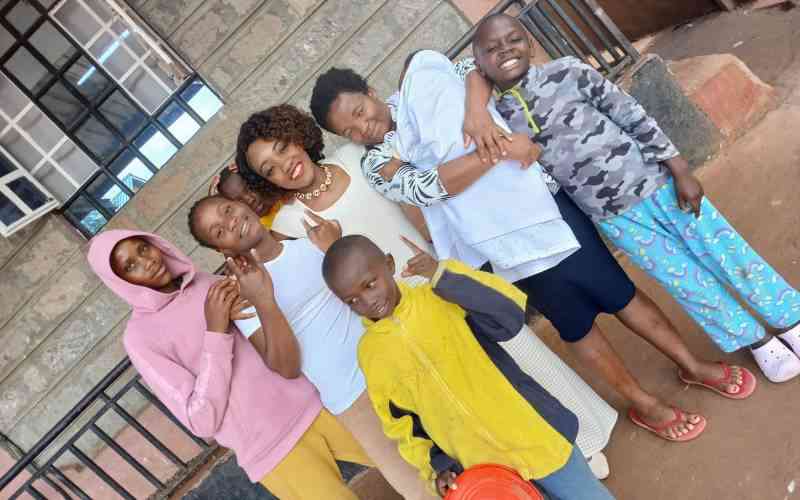
Mercy Hinneh during her visits to orphanages and vulnerable children programmes across East Africa. [File Courtesy]
Growing up in Liberia, many children grapple with mental health challenges rooted in years of civil conflict and widespread poverty. Exposure to violence, displacement and instability has left deep psychological scars, contributing to anxiety, trauma and post-traumatic stress disorder (PTSD) among young people.
Studies indicate that nearly 24 per cent of adolescents in such environments experience mental distress. For Mercy Hinneh, however, her struggles were deeply personal. “My story may sound unbelievable. But the scars I carry today are proof of what I have overcome and what God has done in my life,” she says.
Hinneh, now the CEO of God Blue Prints Foundation and a mother of two, says her childhood was shaped by severe physical abuse and emotional trauma. With her father absent and her mother relocating to the United States in 1997 through a diversity programme, she was left in the care of relatives.

She recalls experiencing intense psychological distress during her formative years, describing an environment marked by fear, coercion and spiritual confusion. “I wanted a different life. I dreamed of becoming a doctor and breaking away from everything around me,” she says.
As pressure and abuse intensified, Hinneh made the difficult decision to leave Liberia and join her mother in the US, a move she believes saved her life.
Years later, after rebuilding her life abroad, Hinneh felt compelled to return to Africa, this time as a humanitarian. Over the past two months, she has travelled across Kenya, Uganda, Tanzania and Rwanda, visiting orphanages, informal settlements and street communities to better understand the challenges facing vulnerable children.
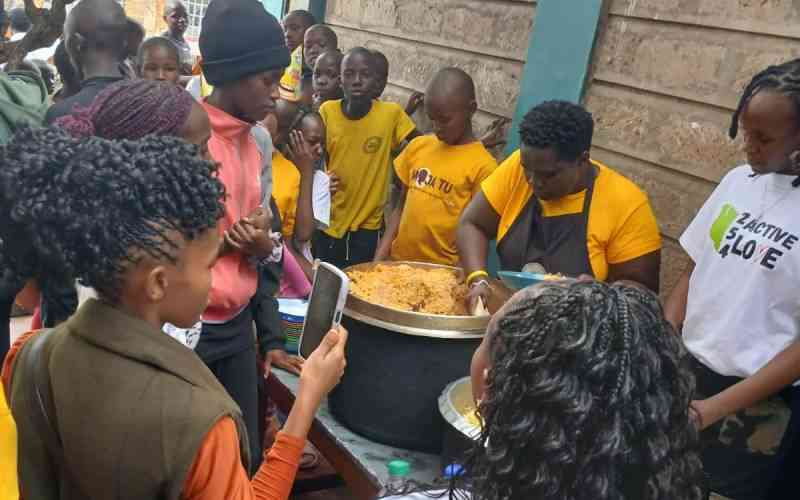
Food being served to children at a care facility supporting vulnerable and orphaned children. [File Courtesy]
Her observations paint a troubling picture. Kenya alone has an estimated 46,639 people living on the streets, according to government statistics. Non-governmental organisations, however, suggest the number of street children and young people could reach as high as 300,000 nationwide. The country also hosts approximately 1,000 orphanages caring for about 45,000 vulnerable children.
Hinneh notes that many children she encountered face significant emotional deprivation stemming from unstable caregiving environments and disrupted family structures.
“One common reality I have seen everywhere is early trauma. Many children grow up without consistent love, routine or a sense of belonging,” she says.
She explains that children raised without strong emotional bonds are at risk of developing conditions such as Reactive Attachment Disorder (RAD) or Disinhibited Social Engagement Disorder, mental health challenges that make it difficult for them to form trust and maintain healthy relationships later in life.
In many orphanages, she observed under-resourced facilities struggling to meet children’s developmental needs. “The buildings are often dilapidated; nutrition is poor and caregivers are overstretched because funding is limited. Children need more than shelter; they need emotional connection, stimulation and individual attention,” she says.
Research supports her observations. Prolonged institutional care without adequate stimulation or nurturing relationships can negatively affect brain development, leading to chronic loneliness, low self-esteem and a lasting sense of abandonment.
Most children entering institutional care have already experienced severe trauma, including parental loss, abandonment, abuse or extreme poverty, resulting in unresolved grief and PTSD, compounded by social stigma.
For street-connected children, the situation is equally complex. Many lack stable family relationships, leaving little opportunity to develop healthy emotional attachments or social skills.
Hinneh believes these realities demand urgent and coordinated intervention. “Emotional neglect and the inability to understand one’s identity because there is no family structure are forms of human rights abuse. This should not be normal for any child,” she says.
She now plans to return to the US to mobilise funding and partnerships aimed at launching structured programmes focused on mental health support, education and social reintegration for vulnerable children across Africa.
Beyond individual experiences, Hinneh argues that broader political conditions continue to shape childhood vulnerability on the continent. “In my opinion, political instability remains one of the main drivers of poverty in developing countries,” she says.
Her travels across Africa, she adds, have revealed similar patterns of trauma linked to conflict, inequality and economic hardship. “Every country has stories of children carrying invisible wounds. If we do not address mental health and family stability, we risk losing an entire generation,” she says.




