×

The Standard e-Paper
Kenya’s Boldest Voice
 The Standard Group Plc is a
multi-media organization with investments in media platforms spanning newspaper
print operations, television, radio broadcasting, digital and online services. The
Standard Group is recognized as a leading multi-media house in Kenya with a key
influence in matters of national and international interest.
The Standard Group Plc is a
multi-media organization with investments in media platforms spanning newspaper
print operations, television, radio broadcasting, digital and online services. The
Standard Group is recognized as a leading multi-media house in Kenya with a key
influence in matters of national and international interest.

Audio By Vocalize
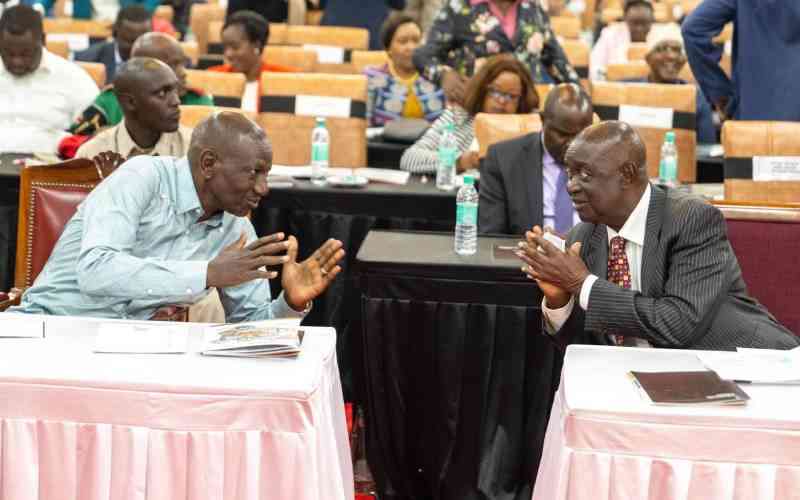
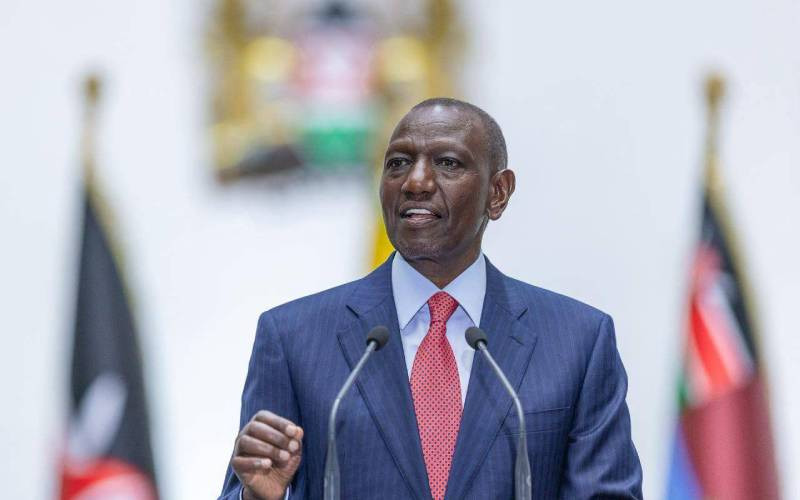
President William Ruto has defended the broad-based government coalition, urging leaders from the different political formations to embrace unity and tolerance as they work together ahead of the next General Election.
Ruto said Kenya has successfully operated political coalitions before, arguing that the current broad-based arrangement should not be viewed as an unusual or impossible political experiment.
“Azimio was a coalition, Kenya Kwanza was a coalition. What is the problem? Broad-based coalition, will it be different? Will it be a miracle?” Ruto posed.
Speaking during the broad-based government meeting, the President challenged leaders to draw lessons from previous political alliances and agree on how they will work together despite their different political backgrounds.
“We shall just do it the way we have been doing and agree on how we are going to work together,” he said.
Ruto acknowledged that sustaining a coalition requires compromise and urged members of the broad-based government to accommodate one another rather than allow political differences to undermine their partnership.
“I ask you with humility, bear with one another. We must bear with one another,” he said.
The President reminded leaders that many of them had previously belonged to competing political formations but had successfully come together under different coalition arrangements.
His remarks come as political leaders within the broad-based government seek to consolidate their working relationship and establish a common political direction ahead of the 2027 elections.
Ruto said the coalition had a combination of experienced politicians and energetic young leaders who could work together to advance the country’s interests.
“We will learn from the wisdom of Mzee Oburu Oginga, the understanding of many leaders here and the energy of many young people and together we are going to make Kenya proud,” he said.
The President also linked the unity of the coalition to the 2027 election, saying he expects the political alliance to secure victory, but insisted that such a victory should be pursued for the benefit of the country rather than for individual politicians.
“The next election we must win by God's grace. Not for your sake but for the country,” Ruto said.
He warned that the political alternative facing Kenyans would be difficult to accept, accusing unnamed opponents of lacking a clear plan, agenda, policy and vision.
“Because the alternative is difficult to fathom, a group of people who have no plan, agenda, policy, vision is too dangerous for Kenya,” he said.
Stay informed. Subscribe to our newsletter
Ruto said the leaders gathered at the meeting therefore had a responsibility to remain united and focus on the country’s future.
“We have no choice as you sit here,” he said.
The President’s remarks placed renewed emphasis on political cooperation within the broad-based government, portraying the coalition as a platform that can bring together leaders who previously competed against one another.
He urged members to overcome disagreements through dialogue and mutual understanding, arguing that coalition politics requires leaders to find common ground.
Ruto also expressed confidence in the political experience within the alliance, using a Kiswahili phrase to underline his belief that the coalition has enough seasoned political operators to organise itself effectively.
“Sisi ni mafundi wa hii maneno na tuko na mafundi wa kutosha tutaunda hii kitu na itakuwa serikali,” he said.
With the 2027 election approaching, Ruto’s message was ultimately a call for the broad-based coalition to remain intact, accommodate its internal differences and build a common political programme centred on Kenya’s interests.
He urged leaders to work together, saying the coalition’s strength would depend on their ability to agree on how to move forward despite their different political histories.





Subscribe to our newsletter and stay updated on the latest developments and special offers!








 join
join