×

The Standard e-Paper
Home To Bold Columnists
 The Standard Group Plc is a
multi-media organization with investments in media platforms spanning newspaper
print operations, television, radio broadcasting, digital and online services. The
Standard Group is recognized as a leading multi-media house in Kenya with a key
influence in matters of national and international interest.
The Standard Group Plc is a
multi-media organization with investments in media platforms spanning newspaper
print operations, television, radio broadcasting, digital and online services. The
Standard Group is recognized as a leading multi-media house in Kenya with a key
influence in matters of national and international interest.

Audio By Vocalize
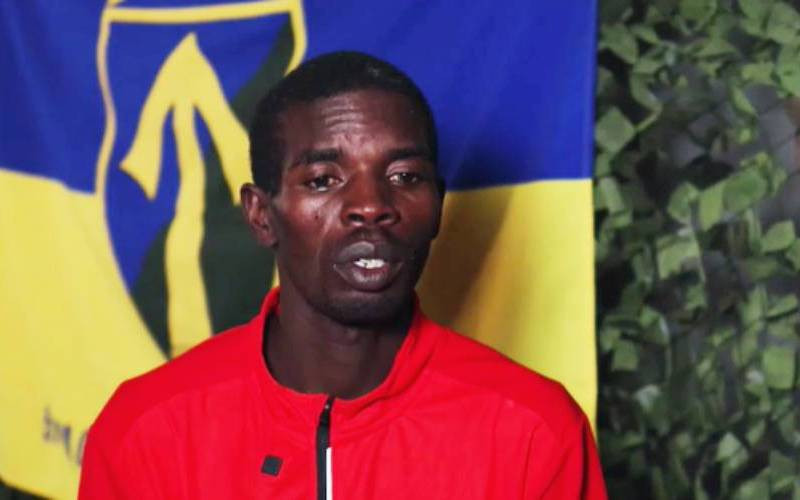
Evans Kibet left Kenya on July 27, 2025, in search of a better future and instead became caught up in the Russia-Ukraine war. [File, Standard]
For families still waiting to learn whether their sons are alive, missing or dead in Russia’s war, the government’s response has raised difficult questions. Some recruits say they travelled to Russia expecting civilian jobs, only to find themselves in military training or facing contracts for military service. Yet as the government promised to address the recruitment of Kenyans into the Russian military, it also invoked a law that can punish citizens for joining a foreign armed force, even as evidence overwhelmingly points to recruitment networks that allegedly lured some of those same Kenyans abroad with promises of civilian employment.
That law is Section 68 of the Penal Code, which makes it an offence for a Kenyan citizen to accept an engagement in a foreign armed force without written presidential authority, punishable by up to 10 years in prison.
The circumstances under which individual Kenyans have ended up in the Russian military have continued to make headlines since 2024, with the latest cases documented by Journalists for Justice (JFJ). Its August 2026 investigation, “The Death Contract: How Russia Recruits Africans to Fight and Die in Ukraine,” records accounts from recruits who said they travelled to Russia expecting civilian employment, only to be confronted with military contracts and subsequently sent to fight in the war.
The report also examines the recruitment networks that facilitated the movement of Kenyans to Russia and the response of Kenyan authorities to those activities, including the government’s reliance on Section 68 when dealing with some of the recruits. The issue, however, is not simply whether Section 68 exists, but whether the law can properly be applied in the same way to a Kenyan who knowingly joins a foreign military and one who says he was recruited through a false job offer and only discovered the military role after reaching Russia.
Observers argue that applying the provision without adequately distinguishing between these circumstances risks placing blame on Kenyans who may themselves have been victims of coercion or deception in their recruitment into the Russian military.
That distinction has become critical because Kenya's own public statements have not treated all recruits as a single category.
In February, Parliament heard allegations that Kenyans had been recruited through promises of civilian jobs and, in some cases, forced to sign military contracts after arriving in Russia. MPs cited cases involving men who had travelled expecting security work and were allegedly compelled to join military service.
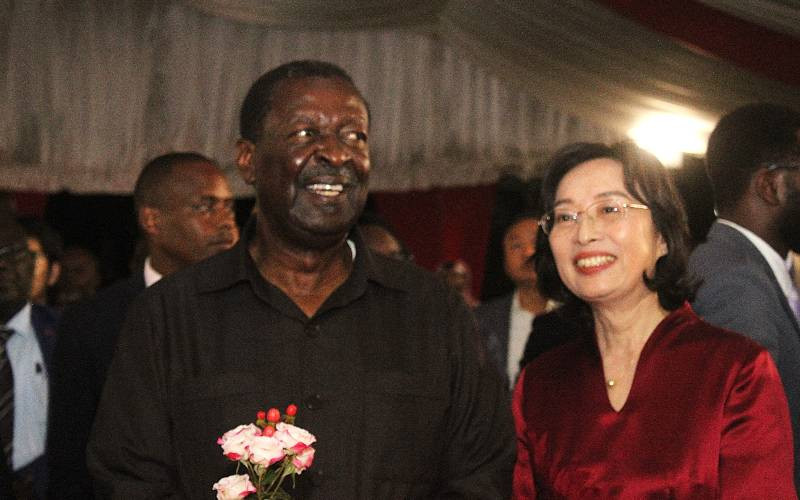
Two months later, however, the government's position presented a more complicated picture. In an April 1 statement to Parliament, Foreign Affairs Cabinet Secretary Musalia Mudavadi said intelligence and diplomatic information indicated that some Kenyans had gone to Russia willingly and knowingly signed contracts for logistics or combat roles. At the same time, he said Kenya and Russia had agreed to expedite compensation for those owed money and strengthen information sharing to combat trafficking and misleading recruitment schemes.
The JFJ report draws a distinction between Kenyans who knowingly joined the Russian military and those who say they were deceived or coerced into doing so. Its legal analysis focuses on the latter group, particularly recruits who were promised civilian jobs before being drawn into Russia’s military system.
JFJ argues that Section 68 has been applied selectively. The report documents cases in which Kenyan recruits were allegedly promised civilian employment, including plant mechanic, security, factory and logistics jobs. According to the investigation, some recruits discovered only after arriving in Russia that they were being placed into military training and were presented with contracts written in Russian.
JFJ says it reviewed recruitment contracts that did not identify Russia or the Russian military as the destination or employer, alongside Russian military contracts presented after the recruits arrived. The investigation says some recruits interviewed did not understand the contracts or the criminal penalties attached to them.
Those findings form the basis of JFJ's argument that a person deceived into military service should not automatically be treated as a voluntary foreign fighter. Though legal experts argue that while it is an important legal argument, it is not a court ruling establishing the position for every Kenyan recruit.
JFJ itself describes its legal chapter as a summary of the issues arising from its reporting rather than a full national or international legal analysis.
Stay informed. Subscribe to our newsletter
The report nevertheless makes an important accountability argument that if Section 68 was available to the government, it applied not only to people who enlisted but also to those who induced or facilitated foreign enlistment. The law itself expressly covers a person who induces another person to accept engagement in a foreign-armed force.
JFJ report questions why recruiters and facilitators identified in its investigation have not been prosecuted under the same foreign-enlistment provision.
One of the most significant pieces of evidence concerns recruitment meetings held at the Kenyatta International Convention Centre (KICC) in Nairobi.
JFJ reports that a licensed Kenyan recruitment agency held mass recruitment events at KICC, “in the heart of the government district.” The report says parliamentary proceedings identified officials from immigration, criminal investigations, intelligence and employment services as having facilitated aspects of the recruitment pipeline. None of the officials named had been prosecuted at the time of the investigation, according to JFJ.
The report says the recruitment pipeline continued to operate through organised departures from Jomo Kenyatta International Airport, even as Parliament was told in February that rogue agencies and individuals were targeting Kenyans seeking work abroad.
JFJ questions how a recruitment operation conducted at a prominent public venue and involving organised departures could continue without being detected or disrupted. It describes the meetings as taking place “within sight of” Parliament, the Office of the President, the Supreme Court and the Nairobi County government offices, raising questions about the level of scrutiny the recruitment activities received.
The documented Kenyan contingent stood at least 873 cases in the JFJ investigation, while its wider dataset identified more than 3,000 African nationals recruited into Russia’s armed forces.
The compensation dispute
It is here that Section 68 becomes more consequential. JFJ reports that Kenya indicated it could deny compensation claims involving dead and wounded recruits by relying on the foreign-enlistment provision. The report says CS Mudavadi and Principal Secretary for Diaspora Affairs Roseline Njogu invoked Section 68 on at least four occasions between March and July 2026.
In April, however, Mudavadi told Parliament that Kenya and Russia had agreed to expedite compensation for Kenyans owed money or other compensation. He also said the two countries would work towards the voluntary disengagement of Kenyans serving in the Russian military and strengthen information sharing to combat trafficking and misleading recruitment.
The two positions applied to different circumstances. The government maintained that unauthorised enlistment in a foreign military was an offence, while also pursuing measures to assist Kenyans caught up in recruitment and trafficking.
JFJ's legal analysis focuses on how that distinction should be applied to individual recruits. Section 68 makes unauthorised foreign enlistment an offence but also provides that, in cases covered by the provision, an accused person may avoid liability by proving that the enlistment was not voluntary.
Whether an individual was knowingly enlisted or was deceived into military service would therefore depend on the evidence surrounding the recruitment and enlistment. A signed Russian military contract, on its own, does not necessarily establish what the recruit understood or whether the enlistment was voluntary.
The contracts reviewed by JFJ add another layer to the dispute. The investigation says some Kenyan recruits were initially offered civilian employment and were later presented with Russian military contracts written in Cyrillic. It says the recruits interviewed did not understand the criminal penalties attached to those contracts and that some had been placed under pressure when signing.
JFJ analysis states that a contract obtained through deception or without informed consent should not automatically be treated as a valid basis for requiring someone to serve in a foreign military. The report presents this as part of its legal analysis rather than as a judicial determination applying to every Kenyan recruit or every Russian military contract.
The circumstances of recruitment varied, according to the report. In its April statement to Parliament, the government said some Kenyans had knowingly signed Russian military contracts after being attracted by salaries, bonuses and the prospect of citizenship. The report examines the circumstances under which individual Kenyans entered the Russian military, including allegations of deception, coercion and trafficking.
The human cost
The consequences of the recruitment process are illustrated by the case of Charles Waithaka Wangari. According to JFJ report, Wangari travelled to Russia after being promised work as a plant mechanic. His mother, Bibiana Wangari Waithaka, told the investigation that her son later said he had been put through military training and made to sign documents he could not read. On December 27, 2025, he called her from Russia while crying. Less than a month later, she learnt through social media that he had died. His body had not been returned to Kenya when JFJ interviewed her.
His case is among those documented by JFJ in which families struggled to obtain reliable information about recruits who had left Kenya expecting civilian employment.
The uncertainty has since become part of a wider parliamentary inquiry. In September, a Senate hearing heard from relatives representing more than 800 affected families, while information presented to the committees indicated that more than 1,000 Kenyans might have been recruited into foreign military service. The hearing was adjourned after senior government officials failed to appear and was scheduled to resume on Tuesday this week.
For families, the immediate concerns remain practical: establishing whether missing relatives are alive, recovering the bodies of those confirmed dead, determining eligibility for compensation and identifying who can provide authoritative information.
JFJ also cites a November 2025 Employment and Labour Relations Court judgment in which a recruitment agency and three directors were ordered to pay Sh5 million to a Kenyan trafficking victim. The case provides a Kenyan judicial example of civil liability arising from deceptive labour recruitment, although it does not establish state liability or determine the status of recruits in the Russia cases.
The Russia recruitment cases now sit between two competing questions: whether individual Kenyans knowingly entered foreign military service, and whether others were deceived or coerced into doing so. The evidence surrounding each recruitment, rather than the existence of a Russian military contract alone, will be central to determining how each case is treated under the law.





Subscribe to our newsletter and stay updated on the latest developments and special offers!






 join
join