×

The Standard e-Paper
Fearless, Trusted News
 The Standard Group Plc is a
multi-media organization with investments in media platforms spanning newspaper
print operations, television, radio broadcasting, digital and online services. The
Standard Group is recognized as a leading multi-media house in Kenya with a key
influence in matters of national and international interest.
The Standard Group Plc is a
multi-media organization with investments in media platforms spanning newspaper
print operations, television, radio broadcasting, digital and online services. The
Standard Group is recognized as a leading multi-media house in Kenya with a key
influence in matters of national and international interest.

Audio By Vocalize
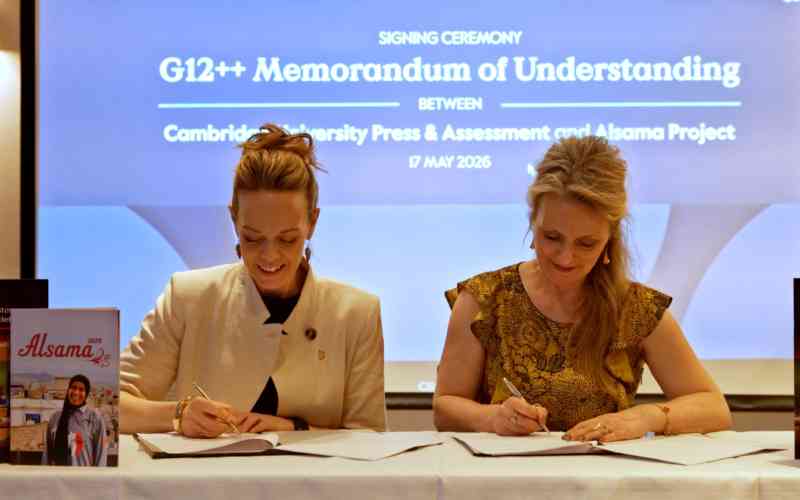
Thousands of refugees living in Kakuma Refugee Camp and Dadaab Refugee Complex could soon access higher education and skilled employment opportunities despite lacking formal secondary school certificates.
This follows the unveiling of a new international qualification pathway, G12++, during the recent Education World Forum held in London.
The programme targets displaced learners whose education was interrupted by war, conflict or forced migration, leaving many without recognised academic documents required for university admission or formal employment.
Under the initiative, refugee learners will undergo a structured learning and assessment programme designed to measure their actual abilities and potential rather than the number of years spent in a classroom.
Instead of relying on traditional national examinations, the G12++ qualification assesses critical thinking, communication skills, problem-solving abilities and practical understanding of real-life situations.
The initiative that mirrors the recently launched Recognition of Prior Learning will also entail assessing a student's proficiency in executing everyday challenges, interpret information, demonstrate teamwork and show how they would apply knowledge in practical settings.
The students will also not be required to follow one specific national education system such as the Kenyan curriculum, British curriculum, or Lebanese curriculum.
This makes it suitable for refugees who often move across countries and learning systems, causing major disruptions in their education journeys.
Once learners complete the programme and pass the assessments, they receive a recognised qualification that can be used to apply for universities, Technical and Vocational Education and Training (TVET) institutions, scholarships and skilled jobs.
The programme was first piloted in Lebanon’s Shatila refugee camp, where several students who had previously struggled with basic literacy and numeracy attained the qualification after undergoing the training and assessment process.
Education stakeholders say the model could significantly benefit Kenya’s refugee population, especially young people in Kakuma and Dadaab camps, where limited access to recognised certification has long locked many out of higher education and employment opportunities.
The partnership between Cambridge University Press & Assessment and Alsama Project will now focus on expanding the qualification globally, while working with governments, universities and employers to ensure the certificate is recognised and accepted internationally.
The policy for the initiative was signed during the Education World Forum held from May 17 to 20 in London, seeks to bridge the gap between disrupted education and access to universities, vocational training and meaningful employment.
Kenya currently hosts more than 954,000 forcibly displaced people, with Dadaab hosting over 420,000 registered refugees and asylum seekers, while Kakuma and the Kalobeyei Integrated Settlement host about 305,000, according to a 2025 report by Kenya’s Department of Refugee Services.
The initiative has previously been put to test at Lebanon’s Shatila refugee camp to help displaced learners whose schooling had been interrupted by conflict and migration.
Stay informed. Subscribe to our newsletter
Jane Mann, Managing Director for Partnership for Education at Cambridge, said the partnership aims to create a credible global pathway for displaced learners.
“Conflict and displacement continue to deny millions of young people access to education, further training, and meaningful employment, not for lack of talent, but recognised qualifications,” Mann said.


Subscribe to our newsletter and stay updated on the latest developments and special offers!






 join
join