×

The Standard e-Paper
Join Thousands Daily
 The Standard Group Plc is a
multi-media organization with investments in media platforms spanning newspaper
print operations, television, radio broadcasting, digital and online services. The
Standard Group is recognized as a leading multi-media house in Kenya with a key
influence in matters of national and international interest.

Audio By Vocalize
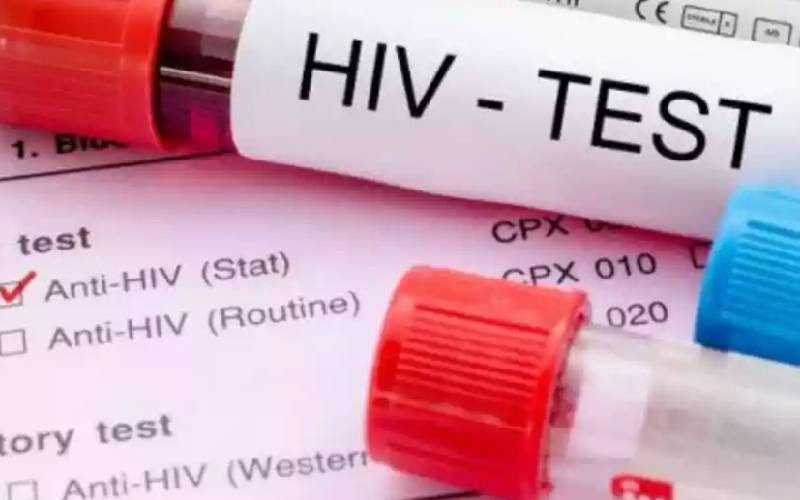
Rachel* was diagnosed with HIV in 2006, when she was just 12 years old.
The young woman, who lives in Huruma estate in Nairobi, was told that she contracted the virus through a razor blade used to shave her after her mother's death.
Her mother had died of AIDS related complications, leaving Rachel and her sister under the care of their grandmother in the village.
Rachel alleges that her uncle shaved her using a razor he had also used on her younger sister, who had acquired HIV from their mother at birth.
A few months later, Rachel started falling sick.
Her grandmother took her to hospital, where she was diagnosed with HIV.
At the time, the young girl from Mwingi, Kitui County, did not understand what the diagnosis meant.
She was started on antiretroviral drugs (ARVs), but struggled to take them consistently and slowly defaulted.
“I was in denial after acquiring HIV. I was told that my mother had died of the disease and had infected my sister. I later got infected through a shave. However, I did not keep up with treatment because of fatigue,” says Rachel.
In 2020, she moved to Nairobi.
After falling sick again, she was advised to enrol for treatment and resume taking her medication.
That same year, she met a man and they started living together.
But she did not disclose her HIV status to him, afraid that he would find out. Rachel stopped taking her medication consistently.
Soon, she became pregnant.
Stay informed. Subscribe to our newsletter
She enrolled for antenatal care (ANC), where health workers advised her on how to prevent transmission of HIV to her unborn baby.
But the advice did not change her behaviour because she feared her partner would discover her status and was unwilling to risk losing the relationship.
She eventually transferred to another health facility for antenatal care, hoping to keep her HIV status secret.
At the new facility, she says, she was not tested for HIV despite attending ANC.
“Picture this: getting into a new relationship, then one day your husband discovers you are taking ARVs We had never tested, and at no cost did I want him to know I was HIV positive,” says Rachel.
When her time to deliver came, she gave birth at home.
The baby, she says, arrived before she could leave for the hospital, forcing her to call a traditional birth attendant to help with the delivery.
The baby did not receive the preventive medicine routinely given to newborns exposed to HIV.
Although health workers later gave her medication for the baby after testing positive, Rachel did not administer it as advised.
She feared her partner would discover that the child was receiving HIV medication.
Sadly, the baby's health began to deteriorate.
The child developed diarrhoea, struggled to grow and became increasingly sick. The baby died in May this year.
“The doctor advised me to suppress my viral load during pregnancy, deliver at hospital, and have my baby put on treatment for two years, as I continued to breastfeed. I defied all these. I delivered at home and continued breastfeeding the baby. I never had her on treatment,” regrets Rachel.
Under the prevention of mother-to-child transmission programme, a pregnant woman living with HIV is expected to take antiretroviral treatment and achieve viral suppression to reduce the risk of passing the virus to their babies.
Newborns exposed to HIV should also receive preventive medication, including nevirapine prophylaxis, soon after birth.
They are then tested and followed up during breastfeeding, with further testing to establish their HIV status.
At two years, a child who tests positive is enrolled on lifelong treatment, while preventive medication is stopped when the child is confirmed HIV-negative and no longer at risk of exposure.
Rachel's experience is not in isolation, but points to the consequences of missed opportunities during pregnancy, delivery and after birth contributing to new paediatric HIV infections and AIDS related deaths.
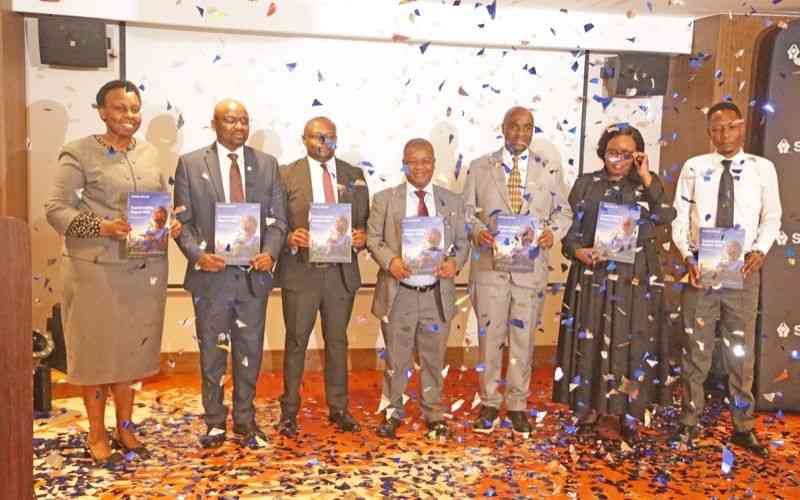
As Kenya prepares to join the rest of the world in marking World AIDS Day on December 1, new data show that children are dying from AIDS related causes at more than twice the rate of adults.
“Children are dying at more than twice the adult rate,” reads a section of the latest HIV estimates by the National Syndemic Diseases Control Council (NSDCC).
The child case-fatality rate rose from 28.9 deaths per 1,000 children in 2020 to 42.8 in 2024, before easing to 32.7 in 2025.
The adult rate stood at 13.8 deaths per 1,000 people, less than half the rate recorded among children.
Kenya recorded 19,434 AIDS related deaths in 2025, of these, 1,507 were children aged zero and four years.
Nairobi County recorded the highest number of paediatric AIDS-related deaths, at 241, followed by Homa Bay with 231 and Kisumu with 174.
Other counties with high numbers included Siaya, Migori, Kakamega and Busia, which recorded 151, 139, 91 and 85 deaths respectively.
The five counties of Nairobi, Homa Bay, Siaya, Migori and Kakamega account for 47 per cent of all paediatric AIDS deaths.
The estimates identify late diagnosis, loss to follow-up after diagnosis, poor adherence to treatment and weak viral-load monitoring as key drivers of child deaths.
The gaps are also evident in the number of children accessing treatment.
Of the estimated 1,481,853 people living with HIV in Kenya, 1,350,783 are on treatment. However, treatment coverage among children remains significantly lower than among adults.
Only 60 per cent of children living with HIV are on antiretroviral treatment, while 52 per cent have achieved viral suppression.
The figures also show that 79 per cent of children living with HIV know their status, meaning that more than one in five remain undiagnosed.
The treatment gaps are particularly worrying among younger children.
Of the 12,912 children aged between zero and four years estimated to be living with HIV, only 5,876 are on treatment.
Among children aged five to nine years, 13,886 of the 21,799 estimated to be living with HIV are receiving treatment.
The report notes that children are often diagnosed when they fall sick, rather than through early testing and routine follow-up.
This means many miss the opportunity to start treatment early, while others are lost between diagnosis and enrolment on antiretroviral therapy.
Even among children who have started treatment, viral suppression remains low, with only about half achieving it.
“Adherence is caregiver-dependent, formulations are limited, and viral load is rarely monitored,” the report adds.
The country is also recording new infections among very young children.
In 2025, an estimated 3,396 children aged between zero and four years acquired HIV. Migori, Nairobi, Homa Bay, Kisumu and Siaya recorded the highest numbers of new child infections.




Subscribe to our newsletter and stay updated on the latest developments and special offers!