×

The Standard e-Paper
Smart Minds Choose Us
 The Standard Group Plc is a
multi-media organization with investments in media platforms spanning newspaper
print operations, television, radio broadcasting, digital and online services. The
Standard Group is recognized as a leading multi-media house in Kenya with a key
influence in matters of national and international interest.
The Standard Group Plc is a
multi-media organization with investments in media platforms spanning newspaper
print operations, television, radio broadcasting, digital and online services. The
Standard Group is recognized as a leading multi-media house in Kenya with a key
influence in matters of national and international interest.

Audio By Vocalize
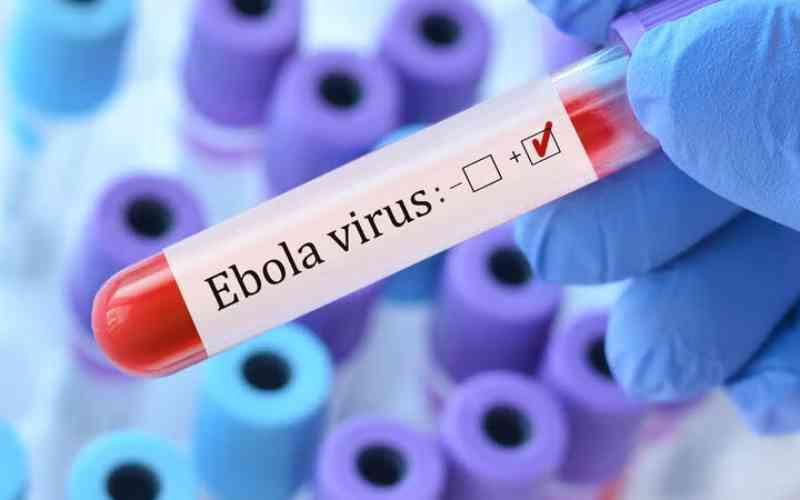
The plan for an Ebola quarantine facility at the Laikipia Air Base to manage Americans exposed to the disease has reignited debate about Kenya's capacity to handle such outbreaks.
Health experts says there is need for the country to demonstrate readiness in handling the disease, in critical areas, including isolation infrastructure, laboratory diagnostic capacity, a well-trained health workforce, surveillance systems, and emergency response logistics.
Prof Matilu Mwau, a senior researcher at the Kenya Medical Research Institute, says the country has considerable human resources expertise, but requires better financing, bespoke research and development, collaborations and partnerships, and technological integration.
Even if all these requirements were in place, he observes they would be insufficient unless there was responsive, capable leadership and governance.
"Ebola is a complex problem requiring a complex response. Some of the challenges it poses can be dealt with at the technical level, requiring a little more money, more skills, bespoke infrastructure,” says Prof Matilu.
He adds that some of the challenges it poses have no technical solution, and the solutions do not lie only in investing in the techniques of the natural sciences, but rather also require a change Kenya’s culture, morals, and attitudes.
As an example, the scientist maintains that a major problem with Ebola is its highly infectious nature.
Prof Omu Anzala, a virologist, says: "The question is not whether we have a health system. The question is how prepared are we as a country?"
"Are our border screening systems effective? Do we have enough quarantine facilities? Are healthcare workers adequately trained to respond if a case is detected?" he adds.
Prof Anzala warns that, a single Ebola case can quickly trigger a public health emergency due to the extensive contact tracing required to contain transmission.
"If we start having confirmed Ebola cases and multiple contacts, how equipped are we to quarantine, monitor and manage them? One Ebola case is already one too many, and even best hospital in Nairobi wont help stop the spread,” observes the researcher.
In an outbreak, there will be well trained responders at all levels, including health care providers and scientists, equipped with Personal Protective Equipment (PPE) who are present and know exactly what to do.
There will also be responders who should not be in that area at all, and if around, will endanger the whole country.
Furthermore, even patients can be situationally unaware, casual, careless or reckless.
Stay informed. Subscribe to our newsletter
“There may be decision makers who, though highly competent in the generic sense, have no perception of the danger, have no knowledge of the vocabulary of the science, and will generally not respond tidily and timeously or even predictably because they need to be briefed or educated first,” observes the scientist.
“In the end, the problems are sufficiently complex to require best and brightest minds. Having skills and training is very good, but it is not enough, being able to think and think quickly, and share high level knowledge, is so very important for an outbreak response,” adds Matilu.
He cautions the country to be extremely careful that it can handle Ebola.
“The fact that we are trained is not enough, we need to live the training not just say it. We must demonstrate the right attitude and situational awareness,” maintains Matilu.
Currently, he says Kenya does not have a laboratory-Biosafety containment Level 4, (BSL4) that tests the most dangerous pathogens such as Ebola, Hantavirus, Lassa virus, Crimean-Congo hemorrhagic fever virus, Nipah Virus, Hendra Virus, Smallpox, Marburg and several other pathogens.
In a BSL4 facility, he explains, when a person is inside the diagnostics facility, he is not in direct contact with pathogens being analysed.
An individual manipulates the pathogens that are presented in a separate chamber.
There is a barrier between the expert and pathogens and even while they conduct tests, the atmospheres in the different rooms are separated.
Further, the researcher dresses up like a spaceman (astronaut), fitted with his own clean air supply.
This ensures nothing escapes from the facility to the outside world because the pathogens are too dangerous.
Whereas Kenya does not have a BSL4 facility, two countries in Africa have operational BSL4 facility namely South Africa and Gabon.
Matilu explains since Ebola is commonly encountered from time to time, affected countries have been forced to improvise existing BSL3 facilities for diagnostics and lineage determination.
“Us in Africa, we feel that Ebola is more or less a BSL3 pathogen, it's dangerous, no doubt, but if we handle it carefully, we shall be fine,” he observes.
Matilu’s sentiments are echoed by Prof Julius Oyugi who adds that globally, there is no country that can handle emerging pathogens at 100 percent, Kenya included.
“Kenya as a country has a very elaborate health system, that is used almost with everyone, there is also infrastructure, but it is never complete,” says Oyugi.
Additionally, Dr Edwin Walong, a pathologist notes that a highly contagious diseases such as Ebola present additional challenges because they require advanced biosafety and containment facilities.







Subscribe to our newsletter and stay updated on the latest developments and special offers!






 join
join