×

The Standard e-Paper
Join Thousands Daily
 The Standard Group Plc is a
multi-media organization with investments in media platforms spanning newspaper
print operations, television, radio broadcasting, digital and online services. The
Standard Group is recognized as a leading multi-media house in Kenya with a key
influence in matters of national and international interest.

Audio By Vocalize

As Americans cast their ballots on Tuesday, a far heavier decision looms over Washington: will President Trump order renewed military strikes on Iran, or rely on economic pressure and diplomacy to break the deadlock?
Trump may have paused the drums of war for negotiations, but the fuse remains lit. With military action still firmly on the table, pressure mounting from Israel for fresh strikes, and his own advisors deadlocked over the strategy, Washington stands on a razor's edge.
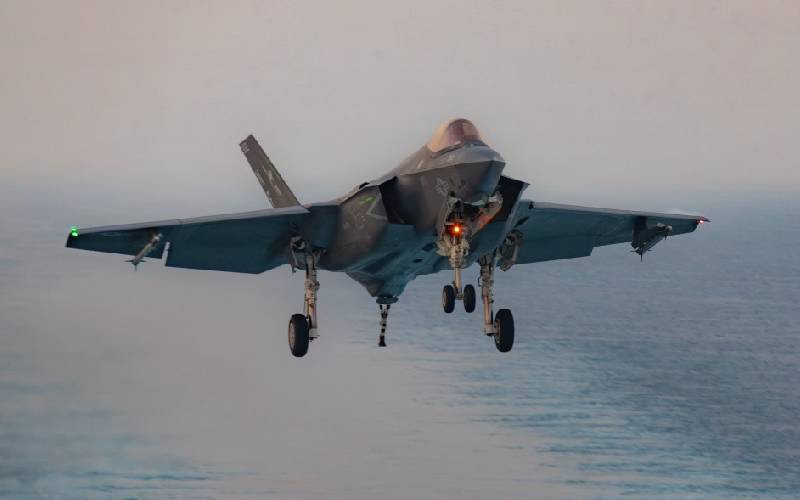
Military option open
In an interview with the Financial Times on Tuesday, Trump said the United States had no immediate plans to strike Iran, suggesting that he was satisfied with the current state of the confrontation.
"We seem to be getting everything we want," he said, describing the situation as "brilliant."
Asked about Israeli Prime Minister Benjamin Netanyahu's hints of a possible attack later this week, Trump said: "I'm ready, we're ready. We're locked and loaded if we need to go, but there may be no reason for it."
He confirmed ongoing indirect talks with Iran focused on its enriched uranium stockpile, a central security concern for Washington, even as the broader diplomatic strategy remains in flux.
Trump said Monday that he was "in no rush" to decide whether to resume military action against Iran.
"One way or the other, we will do something, but there is no rush. We crippled them financially," he said in a phone interview with Axios.
The US midterm elections had been widely seen as a turning point in Trump's decision on whether to launch a major bombing campaign against Iran, Axios reported Monday.
It added that the president had appeared to be pursuing two tracks simultaneously, allowing diplomatic efforts to continue while preparing to resume military action if he determines that a deal is out of reach.
Stay informed. Subscribe to our newsletter
Despite his latest remarks, limited US military operations against Iran have continued.
The Wall Street Journal reported Monday that U.S. forces had attacked targets on Iran's Qeshm Island in the Strait of Hormuz.
The strikes were part of "a series of limited strikes Washington has secretly carried out against the country in recent weeks as President Trump touted the possibility of a diplomatic deal," the report said.
US officials described the latest strikes as defensive measures aimed at protecting American military assets in the Middle East from Iranian threats, rather than a resumption of major combat operations, according to the report.
Divisions over next steps
Israel has been urging Washington to resume military operations against Iran, depicting diplomatic efforts as unlikely to produce a reliable agreement.
In a phone call with Netanyahu on Saturday, Trump said he wanted to give ongoing diplomatic efforts more time to succeed.
Netanyahu, however, pressed for strikes immediately after the US midterm elections, while the Israeli military had prepared attack plans and remained on high alert, according to The Wall Street Journal.
Netanyahu and US Defense Secretary Pete Hegseth are pushing for a resumption of military operations.
They argue that Iran cannot be trusted to reach an agreement, let alone honor one, and that the United States should finish the job militarily, Axios reported.
Israel's push for renewed strikes comes amid differing views within the Trump administration over how to proceed.
According to Axios, Trump has been weighing three possible courses of action: reaching a diplomatic deal, resuming military action, or maintaining maximum economic pressure without a new agreement or renewed hostilities.
US Vice President JD Vance and White House envoy Steve Witkoff are urging Trump to pursue a diplomatic settlement, arguing that renewed hostilities may not necessarily improve the situation.
Meanwhile, Treasury Secretary Scott Bessent, CIA Director John Ratcliffe and Secretary of State Marco Rubio are advising Trump to maintain the current "no war, no deal" status quo and allow the economic pressure campaign to continue, Axios reported.
The competing positions highlight the challenges facing Trump as he weighs pressure from Israel and seeks to balance differing views within his administration over how to secure US objectives while avoiding the costs and risks of another major military campaign.
While Washington and Tel Aviv remain aligned in their opposition to Iran's nuclear ambitions, an allegation Iran denies, differences over the timing and scope of potential military action could complicate coordination between the two allies.
Ongoing mediation vs persisting rifts
Regional countries have stepped up diplomatic efforts to prevent a renewed escalation. Qatari Foreign Ministry spokesperson Majed Al Ansari said Tuesday that Washington and Tehran were reviewing proposals to end the conflict, although differences remained unresolved.
A Qatari delegation returned from Tehran on Monday evening after more than three hours of talks with Iranian officials.
Qatar was relaying proposals in coordination with Pakistan, Gulf Cooperation Council countries and other regional and international partners, he said.
Egyptian President Abdel Fattah El-Sisi also called on the United States and Iran to demonstrate maximum flexibility and seek a political settlement, pledging continued Egyptian efforts to ease tensions.
Iran, however, has reiterated its conditions for ending hostilities and reopening the Strait of Hormuz.
Mohsen Rezaei, secretary of Iran's Supreme National Security Council, said Tuesday that the US response to Iran's demands was not convincing and that Washington must explicitly address and act upon Tehran's seven conditions.
Iran had conveyed a proposal to the United States through mediators on Sept 22, offering to end hostilities and reopen the Strait of Hormuz within seven days if its conditions were met.
Iranian Foreign Ministry spokesperson Esmaeil Baghaei said Monday that Tehran had shortened the implementation period to two days as a gesture of goodwill.
Trump may be holding back on launching new massive strikes for the moment, but peace remains on a razor-thin edge.
With skirmishes continuing, Israel demanding immediate action, and talks stalled over red lines, the threat of full-scale war is far from over.







Subscribe to our newsletter and stay updated on the latest developments and special offers!