×

The Standard e-Paper
Smart Minds Choose Us
 The Standard Group Plc is a
multi-media organization with investments in media platforms spanning newspaper
print operations, television, radio broadcasting, digital and online services. The
Standard Group is recognized as a leading multi-media house in Kenya with a key
influence in matters of national and international interest.
The Standard Group Plc is a
multi-media organization with investments in media platforms spanning newspaper
print operations, television, radio broadcasting, digital and online services. The
Standard Group is recognized as a leading multi-media house in Kenya with a key
influence in matters of national and international interest.

Audio By Vocalize
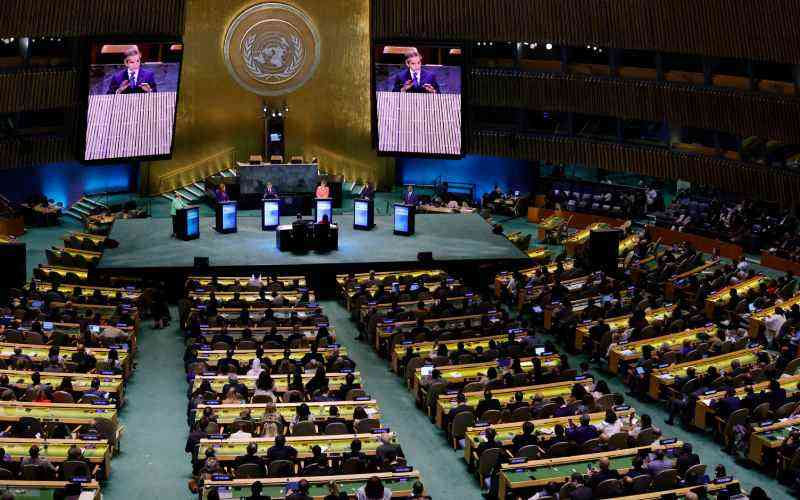
UN General Assembly Hall in New York, on July 23, 2026. [AFP]
The world is not on track to meet its commitments to protect nature, the UN's biodiversity chief warned on Thursday, just weeks before a major conference addressing the subject in Armenia.
Because humans pose an immense threat to Earth's land, seas, animals and plants, almost all countries agreed four years ago to protect 30 percent of the planet by 2030 -- and for wealthier countries to provide poorer ones with $30 billion a year.
National negotiators will meet for the COP17 conference in the Armenian capital Yerevan in October to review how the 196 countries who agreed to these targets are faring.
"Implementation is not yet happening at the pace and scale needed to achieve" these goals, said Astrid Schomaker, executive secretary of the United Nations' Convention on Biological Diversity.
"The task awaiting us in Yerevan in nine weeks will take all the stamina and determination that parties can summon," Schomaker added in a statement issued after nearly three weeks of preparatory talks in Kenya's capital Nairobi.
The "parties recognise the world is not on track to achieve biodiversity targets," the Convention's statement summarised.
While there have been "promising efforts on conservation targets", other areas have been "sluggish, such as resource mobilisation, the repurposing of harmful subsidies or inclusive governance," it added.
The Convention also acknowledged that "differences still remain" in how countries will ramp up their efforts to reach the 2030 targets, including "intense discussions around the Cali Fund".
Established at the COP16 talks in Colombia, this fund is intended to distribute a small share of the immense profits made by companies in rich countries from plants and animals sourced from developing nations.
Almost all UN member states have signed up to the Convention on Biological Diversity, with the most notable exception being the United States.
According to the UN, the world's biodiversity crisis has five human-induced causes, nicknamed the "Five Horsemen of the Apocalypse".
They are habitat destruction, over-exploitation of resources such as water, climate change, pollution and the spread of invasive species.
More than a quarter of all animals and plants are threatened with extinction, according to the International Union for Conservation of Nature.
Stay informed. Subscribe to our newsletter







Subscribe to our newsletter and stay updated on the latest developments and special offers!