×

The Standard e-Paper
Stay Informed, Even Offline
 The Standard Group Plc is a
multi-media organization with investments in media platforms spanning newspaper
print operations, television, radio broadcasting, digital and online services. The
Standard Group is recognized as a leading multi-media house in Kenya with a key
influence in matters of national and international interest.
The Standard Group Plc is a
multi-media organization with investments in media platforms spanning newspaper
print operations, television, radio broadcasting, digital and online services. The
Standard Group is recognized as a leading multi-media house in Kenya with a key
influence in matters of national and international interest.

Audio By Vocalize

President William Ruto has called for a fundamental overhaul of Africa’s health systems, urging the continent to take charge of its healthcare future through innovation, investment, and policy leadership.
The president said, Africa’s health future will depend not just on external support, but on the continent’s ability to lead its own transformation.
Speaking during the opening of the World Health Summit Regional Meeting 2026 in Nairobi on Monday, Ruto said Africa must transition from reliance on foreign aid to becoming a driver of global health solutions.
“This Summit reflects a fundamental shift in the global recognition that Africa is no longer a passive participant in global health, but an active architect of its direction, its priorities, and its outcomes,” he said.
The high-level meeting has brought together policymakers, scientists, and global health leaders at a time when African countries are grappling with deep structural gaps in healthcare systems.
Ruto painted a picture of the imbalance, noting that Africa bears “more than 25 percent of the global disease burden” but accounts for “less than 3 percent of global health expenditure.”
He warned that the continent remains heavily dependent on external supply chains, producing “less than 2 percent” of the medicines and vaccines it consumes.
“This imbalance is neither sustainable nor tenable,” he said, calling for “comprehensive, system-wide transformation.”
Despite these challenges, the President pointed to Africa’s strengths, including a youthful population, expanding digital infrastructure, and a growing innovation ecosystem.
He said these factors position the continent as a source of global health solutions rather than a recipient of aid.
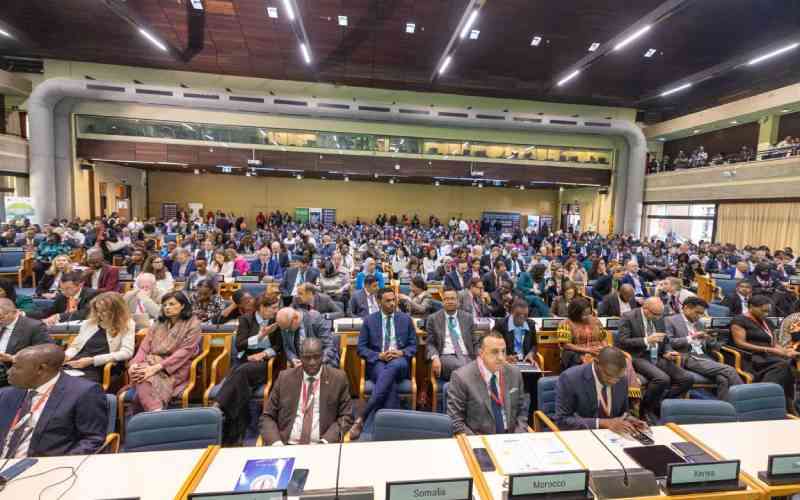
Ruto used the platform to highlight Kenya’s ongoing reforms anchored on Universal Health Coverage (UHC).
He said the government has put in place legal frameworks to ensure continuity and accountability in healthcare delivery.
“Health is at the centre of our national development agenda,” he said, describing it as a key driver of productivity and economic growth.
Through the Social Health Authority, the government has rolled out a unified financing model aimed at reducing out-of-pocket costs and expanding access to care.
According to the President, nearly 30.7 million Kenyans have registered under the new system since its launch in October 2024, up from fewer than 8 million previously insured.
Stay informed. Subscribe to our newsletter
“This means that access to quality healthcare is increasingly determined by need rather than income or geography,” he said.
He added that the government has mobilised Sh169 billion across various health funds, reimbursed facilities Sh124 billion, and deployed more than 100,000 community health promoters to strengthen primary healthcare at the grassroots.
Ruto also called for increased domestic health financing, investment in local pharmaceutical manufacturing, and expanded training for health professionals. He highlighted emerging threats such as non-communicable diseases, mental health conditions, and climate-related health risks.
“The future of Africa’s health systems must be shaped through collective continental action,” he said.
On global partnerships, the President urged a shift from donor dependency to collaborations aligned with Africa’s priorities.
“A healthy Africa is indispensable to global stability, economic growth, and shared prosperity,” he said.
The three-day summit, held under the theme “Reimagining Africa’s Health Systems: Innovation, Integration, and Interdependence,” will also explore the role of traditional medicine.
Experts are expected to examine how regulated and evidence-based integration can expand access, ease pressure on health systems, and strengthen primary care.
In Kenya, the Kenya Medical Research Institute is leading efforts to integrate traditional and herbal medicine into mainstream healthcare, including developing six herbal products targeting cancer.

Subscribe to our newsletter and stay updated on the latest developments and special offers!






 join
join