×

The Standard e-Paper
Home To Bold Columnists
 The Standard Group Plc is a
multi-media organization with investments in media platforms spanning newspaper
print operations, television, radio broadcasting, digital and online services. The
Standard Group is recognized as a leading multi-media house in Kenya with a key
influence in matters of national and international interest.

Audio By Vocalize
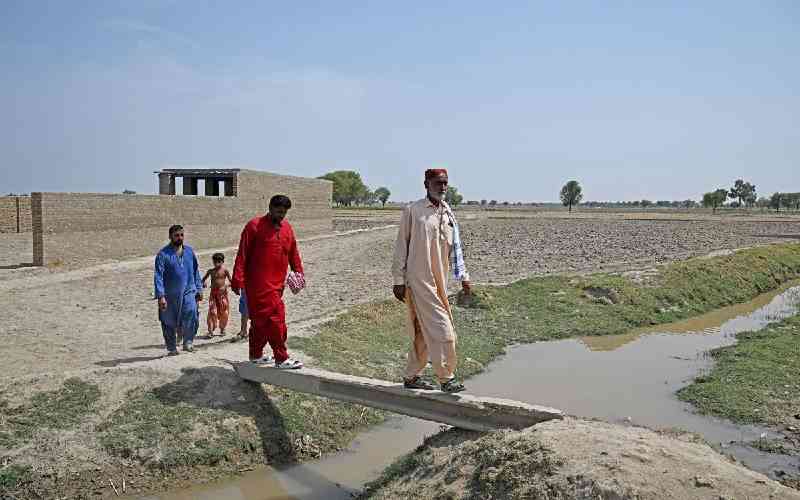
Abdul Khalique Laghari, one of the 39 Pakistani farmers pursuing a climate lawsuit in Heidelberg against German energy firm RWE and cement producer Heidelberg Material at Baid Sharif village in the Dadu district, on July 27, 2026. [AFP]
In a Pakistani village nestled in rice fields, Abdul Hafeez Khoso remembers the vast industrial zones he saw in Germany when he visited to file a pioneering climate legal case.
"They're spreading pollution: up in the sky there are no borders, it can affect anywhere," the 43-year-old said, describing areas far larger than his village of 800 people.
"This is a problem for the whole world -- that is why it should be resolved at the global level."
Khoso and 38 other farmers from Pakistan's southern Sindh province who were devastated by "apocalyptic" flooding in 2022 are suing German energy firm RWE and cement maker Heidelberg Materials in a rare bid to make big polluters pay damages for climate impacts.
The companies are being targeted not over specific operations in Pakistan, but because of their climate-warming emissions. They are headquartered in Germany, where a recent legal case opened the door to such suits.
The litigation argues that the companies' emissions contributed to climate change and turbo-charged rain that wiped out their crops, livestock and homes.
"The year 2022 was an apocalyptic scene -- not even our elders had ever witnessed such weather," Khoso, who lives in the district of Jacobabad with his wife and toddler, told AFP.
"We had nothing left."
Both firms, which the plaintiffs estimate contributed 0.68 percent and 0.12 percent to global industrial emissions respectively, deny wrongdoing.
Khoso's case is backed by Pakistani and European organisations hoping to win compensation and build on nascent but vigorous international efforts to extract climate damages from corporations.
"We always blame natural disasters, and sometimes we blame God, but science tells us that climate change is increasing the risks and intensity of extreme weather events," said Mir Keerio, a development expert at Pakistan's HANDS Welfare Foundation, which mobilised communities for the lawsuit.
"Those who have contributed significantly to this crisis must be held accountable... we realised we must take our fight for climate justice to the major polluters."
Climate litigation is a growing field globally, but action has so far largely targeted governments, with only a handful of firms such as Shell and cement maker Holcim facing suits for climate disaster compensations.
Lawyers say a ruling requiring a company to pay out compensation proportionate to its greenhouse gas emissions would mark a major breakthrough.
Stay informed. Subscribe to our newsletter
Germany's judiciary moved towards that principle last year in a case brought by a Peruvian farmer, also against RWE.
His compensation claim was rejected, but the courts left the door open to holding emitters liable.
Roda Verheyen, a German lawyer involved in both cases, told AFP the Pakistani farmers' lawsuit builds on that ruling and further accuses companies of "wrongful behaviour".
"Large companies knew about the general impacts of climate change since the 1960s," said Verheyen.
"They should have exercised due diligence and actually at least tried to reduce emissions, which they didn't do enough."
The lawsuit also draws on research documenting farmers' losses in the floods, which hit a third of the country, killed 1,700 and affected 30 million Pakistanis.
Munawar Khatoon, a rare female landowner in a conservative area, said the floods struck just before the wheat harvest, submerging seeds and wiping out her family's main source of income.
"We worry about how the next generation will manage to live if this continues," the 43-year-old told AFP in her village Usman Samtio.
"Now when the rainy season comes, we feel fear."
In nearby Dadu district, litigant Abdul Khalique Laghari said the floods affected the region for years.
"To this day, we are unable to repay our debt," said the 55-year-old, who estimates he lost $14,000 in assets including his house, 40 acres (16 hectares) of crops and livestock.
"When we wake in the morning, we start getting calls from the people we owe money to," he said, pointing to crumbling walls and the remnants of flood-damaged houses.
"This has caused us serious mental harm."
RWE and Heidelberg Materials both call the claims in the suit "unfounded".
Heidelberg Materials told AFP its operations were compliant with German laws and that firms could not be expected to retroactively face different standards.
RWE referred AFP to a statement describing the lawsuit as "yet another attempt to shift climate policy demands to German courtrooms".
"It would be a contradiction in terms if the state allowed CO2 emissions, regulated them by law and even demanded them in some cases, but at the same time allowed retroactive civil liability for them," it said.
Even if the case succeeds, an uphill battle remains for millions across Pakistan, ranked among the countries most affected by climate change despite contributing less than one percent of global emissions.
The case will be considered in a civil process likely to take years. But for the litigants, the attempt is worth it.
"This case is for justice," said Khatoon. "We hold these companies responsible for our destruction."
Subscribe to our newsletter and stay updated on the latest developments and special offers!


 Prefer the Standard on Google