×

The Standard e-Paper
Home To Bold Columnists
 The Standard Group Plc is a multi-media organization with investments in media
platforms spanning newspaper print operations, television, radio broadcasting,
digital and online services. The Standard Group is recognized as a leading
multi-media house in Kenya with a key influence in matters of national and
international interest.
The Standard Group Plc is a multi-media organization with investments in media
platforms spanning newspaper print operations, television, radio broadcasting,
digital and online services. The Standard Group is recognized as a leading
multi-media house in Kenya with a key influence in matters of national and
international interest.

Audio By Vocalize
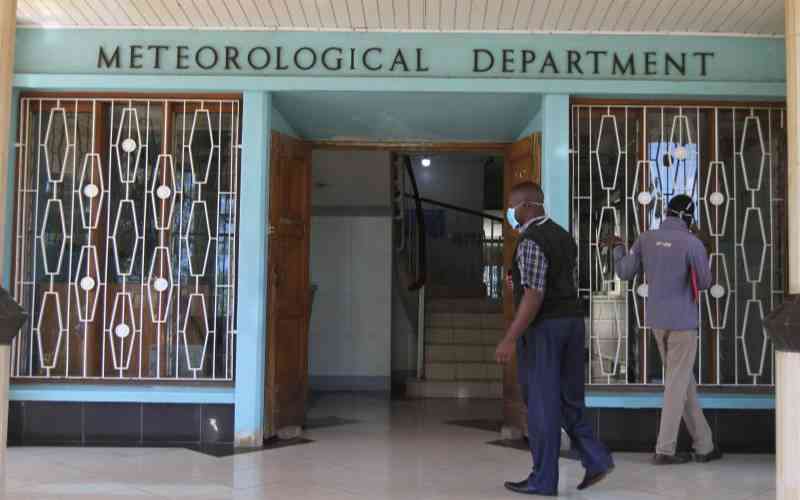
Kenya's weather experts have now put a number on what many had been treating as speculation. The Kenya Meteorological Department estimates an 81 per cent probability of a very strong El Niño this year, bringing above-normal rainfall across most of the country during the October to December short rains, and a 97 per cent chance that the event extends into early 2027.
For finance leaders, that is not just a forecast but a planning assumption. Most people will read this as a story about farming and flood preparedness. They should also read it as a story about finance.
Start with power. A telecommunications network is a large consumer of electricity, with thousands of base stations operating around the clock. When storms bring down power lines, sites switch to batteries and then to diesel generators, the most expensive electricity any operator buys. Those generators must then be refuelled by trucks travelling on roads the same rain has damaged.
Extended cloud cover creates another challenge. At Safaricom, we have converted 2,002 sites to solar power on our journey towards 5,000, and green energy now powers 35 percent of our network.
A heavily overcast quarter reduces the output of those solar panels precisely when the national grid is least reliable, forcing deeper battery cycles and accelerating replacement schedules.
The story, however, does not end with higher costs. Full dams increase hydropower generation and can moderate national electricity prices.
Stronger harvests raise rural incomes, increasing the economic activity and digital transactions that follow.
The risks lie in local infrastructure reliability and physical access; the opportunities lie in stronger national supply and demand. That is why the objective is to model the forecast.
The challenge is that both risks and opportunities eventually arrive in the accounts.
They appear as higher fuel bills, more expensive logistics, earlier maintenance cycles, and insurance renewals.
By the time they become line items in a financial statement, the cheapest opportunity to respond has already passed.
This was the message I shared with finance leaders at the third annual CFO (chief finance officer) East Africa Sustainability Summit.
For generations, the CFO has been the custodian of financial performance, protecting shareholder value, allocating capital and safeguarding an organisation's long-term resilience. Today that responsibility also includes recognising climate risk while it is still weather, rather than waiting until it becomes an accounting entry.
Time is often the cheapest input in the entire calculation. That is why climate-related investments should compete for capital on the same merits as any acquisition or major expansion.
Four questions can guide the decision. Does the investment reduce a material risk? Does it lower costs or improve efficiency?
Stay informed. Subscribe to our newsletter
Does it strengthen the organisation's resilience to future shocks? Will it create value beyond the current reporting period?
Where the answer is yes, the proposal belongs in the capital allocation process.
Capital markets have already moved in this direction. Late last year, Safaricom raised Sh20 billion through green notes, financing that ring-fences proceeds for eligible environmental projects and requires public reporting on how every shilling is used.
The issuance was the first drawdown under a Sh40 billion medium-term note programme and was oversubscribed by 175.7 per cent, demonstrating that investors increasingly recognise environmental resilience as a financial proposition.
That same commitment now appears in our annual report. Our environmental performance is presented alongside the audited financial statements because sustainability is no longer separate from financial performance; it is increasingly one of its drivers.
Ultimately, this is a balance sheet issue. The balance sheet records what a company owns, what it owes and how resilient it is.
Climate exposure appears there as future cost. Investment in people, communities and sound governance strengthens reputation, customer loyalty and the ability to attract talent assets that may not appear explicitly on the balance sheet but invariably influence enterprise value.
October is roughly ninety days away. The forecast is public.
The probabilities have been published.
The financial consequences of this rainy season will be determined not when the first storms arrive, but by the decisions being made today.
The writer is Head of Group Finance Controls, Performance and Investor Relations at Safaricom PLC.
Subscribe to our newsletter and stay updated on the latest developments and special offers!













 join
join