×

The Standard e-Paper
Read Offline Anywhere
 The Standard Group Plc is a multi-media organization with investments in media
platforms spanning newspaper print operations, television, radio broadcasting,
digital and online services. The Standard Group is recognized as a leading
multi-media house in Kenya with a key influence in matters of national and
international interest.

Audio By Vocalize
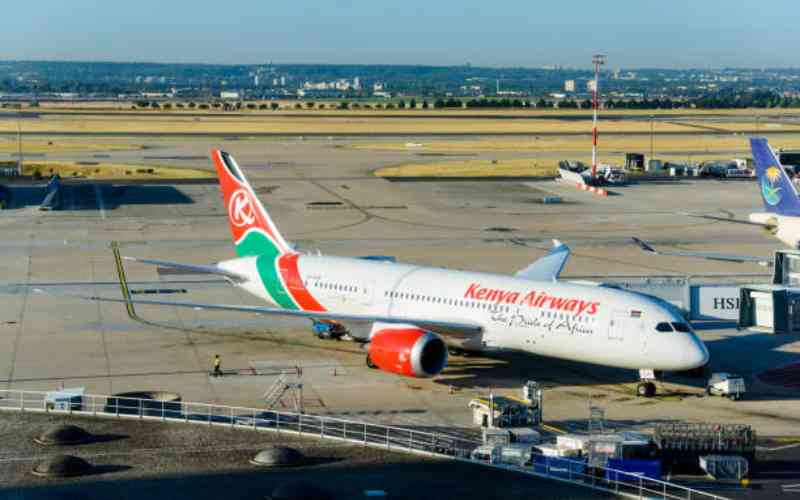
Kenya Airways (KQ) warned on Thursday that its 2026 full-year earnings will be at least 25 per cent lower than the prior year, as soaring fuel costs and global spare-parts shortages sap the troubled carrier's operational reliability and margins.
The profit warning, issued by the board under the Capital Markets regulations, caps a turbulent year for the national airline, which is simultaneously finalising a state-backed recapitalisation and preparing to court strategic investors through an information memorandum.
The board said the forecast, based on group results for the year ending December 31, 2026, reflects "extraordinary industry conditions", citing a surge in fuel costs driven by escalating Middle East conflict and supply-chain constraints that disrupted fleet availability.
"The board brings to the attention of the public that the earnings for the current financial year 2026 are expected to be at least 25 per cent lower than the earnings reported for the same period in financial year 2025," said the board.
The announcement was signed by Chairman Kiprono Kittony.
Jet fuel accounted for roughly 32 per cent of total operating expenses and 52 per cent of direct operating costs in the first half, when fuel costs jumped 32 per cent.
The warning lands as Kenya Airways battles a deepening negative equity position.
As of June 30, 2026, liabilities stood at approximately Sh328.2 billion against assets of Sh180.3 billion, leaving negative equity of Sh147.9 billion.
The airline, popularly known as KQ, reported a first-half loss after tax of Sh16.1 billion, widening from Sh12.2 billion a year earlier, even as revenue rose nine per cent to Sh81 billion on a nine per cent capacity reduction and a four-percentage-point improvement in cabin factor.
The carrier's recent trajectory has been one of persistent losses punctuated by brief optimism.
Its financial year 2025 earnings, against which the 2026 forecast is measured, represented a fragile recovery after years of restructuring under state-backed administration.
But the airline has not posted a sustained full-year profit in more than a decade, and its balance sheet remains weighed down by legacy debt.
The government has approved a $350 million (Sh45.15 billion ) shareholder loan, disbursed in tranches with a repayment period of up to 10 years and potential conversion into equity, alongside an in-principle conversion of about Sh122 billion of existing state loans into an equity-qualifying instrument.
The measures aim to restore positive equity and improve creditworthiness.
Stay informed. Subscribe to our newsletter
Analysts have criticised the plan as a survival exercise rather than a revival strategy, noting it prioritises aircraft maintenance and balance-sheet repair over fleet modernisation.
They said the debt conversion "provides zero liquid cash to fund network expansion". Risk adviser Deepak Dave called it "a paper shuffling exercise that does little to improve the airline's operational leverage".
Chairman Kiprono Kittony said in June the airline is seeking at least $1.5 billion (Sh194.4 billion) in fresh capital, targeting completion by the first quarter of 2027.
Chief Executive Habil Waswani said the company is at "advanced stages" of engaging prospective investors.
For 2027, Kenya Airways said it will focus on restoring its full fleet, cutting costs and conserving cash, while deleveraging and completing capital raising. The airline has said it plans to grow to 60 aircraft by 2030 and 100 by 2035.
"The results reflect extraordinary industry conditions; however, the underlying commercial performance remains encouraging, with strong demand and revenue growth signalling fundamental strength and recovery potential," the board said.

Subscribe to our newsletter and stay updated on the latest developments and special offers!