×

The Standard e-Paper
Truth Without Fear
 The Standard Group Plc is a multi-media organization with investments in media
platforms spanning newspaper print operations, television, radio broadcasting,
digital and online services. The Standard Group is recognized as a leading
multi-media house in Kenya with a key influence in matters of national and
international interest.

Audio By Vocalize
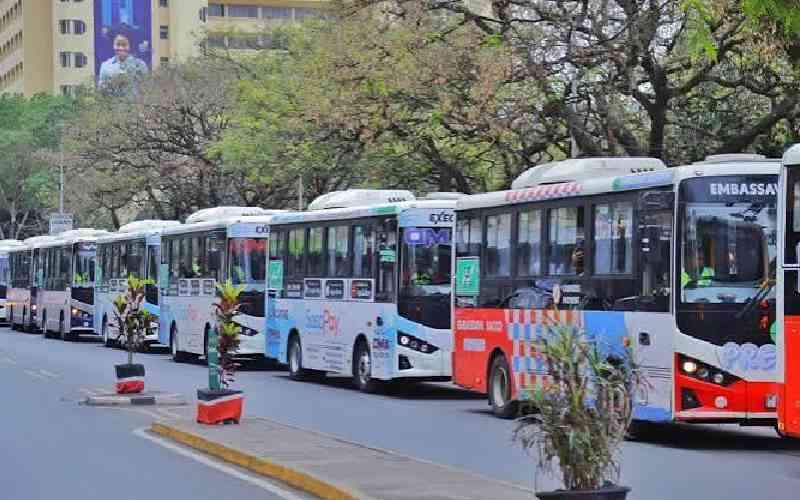
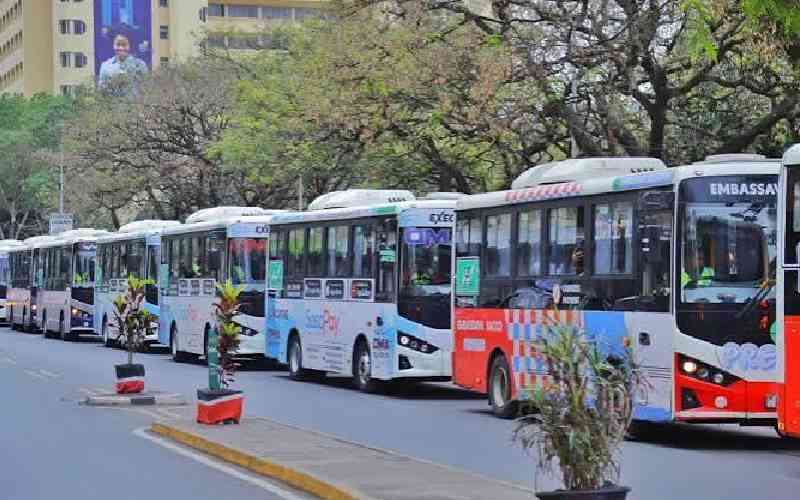
Co-operative Bank of Kenya has announced it has set aside Sh1.5 billion to finance acquisition of electric public service (PSV) vehicle fleets by matatu Saccos.
The bank is offering up to 90 per cent financing of the purchase price at below-market rates intended to break the high upfront cost barrier stalling Africa's green transport shift.
The facility dubbed Co-op Bank E-mobility Financing unveiled on Friday lends directly to PSV Saccos through which matatu operators pool resources and manage routes, rather than to individual owners.
A negotiated lending rate will apply, of one percentage point below KESONIA, the central bank's overnight interbank benchmark rate.
The facility also finances providers of e-mobility services including charging infrastructure and digital fare collection systems.
The first two 16-seater electric vans, supplied by local assembler BasiGo, have been released to Enabled Mashariki Sacco that operates along the Nairobi, Thika and Kitengela transport corridors.
The model targets a structural problem. Kenya registers roughly 2,500 new public service vehicles annually, worth about Sh15 billion, yet only 106 electric buses were registered in 2025.
BasiGo holds more than 1,200 vehicle reservations but had just 136 electric vehicles operating across Kenya and Rwanda as of August, a ratio that shows financing, not vehicle availability, constrains adoption.
Regional peers are deploying similar instruments.
Rwanda has paired fiscal incentives, zero-rated VAT and import duty exemptions on EVs through 2028, with a 300-unit electric bus procurement tied to local assembly by Chery, with deliveries starting in March 2027.
Ethiopia has taken a more radical path, banning imports of fossil-fuel passenger cars in 2024 and pairing the prohibition with tax exemptions for locally assembled electric kits, pushing more than 100,000 EVs onto its roads.
Kenya's National Electric Mobility Policy, launched in February, provides the framework, and the government has exempted the first 100,000 imported EVs from duty.
Electricity consumption from EV charging rose 113-fold between July 2023 and April 2026, according to Kenya Power, though Nairobi accounts for 71 per cent of revenue.
For Saccos, the economics are compelling since operators report 70-80 per cent lower fuel and maintenance costs for electric vans, insulating them from volatile diesel prices that erode margins on fixed-fare routes where revenue per trip is capped.
The 90 per cent loan-to-value ratio, meaning borrowers contribute just a tenth of the vehicle price upfront, lowers the capital entry barrier that has kept electric vehicles a pilot-phase curiosity for most matatu operators.
Stay informed. Subscribe to our newsletter
"The Saccos are already planning for electric, and what they need is financing that works for a whole fleet," said Vincent Marangu, Co-op Bank's director of cooperatives banking. "We are lending to Saccos directly, on stronger terms, so they can buy electric vehicles at the scale their routes demand."
Whether the model scales depend on charging infrastructure keeping pace.
A March study of Nairobi's grid readiness found six priority bus parks along the Thika Road corridor could support a combined 65 bus chargers and 2,530 two-wheeler chargers under existing network conditions, but recommended managed charging and phased deployment.
Co-op Bank's facility includes financing for depot charging installation, a recognition that vehicle lending alone cannot solve the infrastructure deficit.
Kenya's grid, more than 90 per cent renewable, means each electric matatu displaces diesel emissions with geothermal, hydro and wind power.
But the transition's pace will be determined less by environmental ambition than by whether Saccos can service debt from daily fare collections while charging infrastructure keeps pace. Co-op Bank's wager is that fleet-scale lending, not pilot projects, is the unlock.
Basigo CEO Jit Bhattacharya said operators are increasingly turning to electric vehicles to cut running costs, framing the shift around practical daily earnings rather in addition to the environmental appeal.
"What matters most to an operator is what each vehicle earns at the end of the day," he said. "Electric vans cost less to run and maintain than fuel-powered vehicles, and those savings go to the owner. Working with Co-op Bank means more Saccos can access these vehicles, and we look forward to supplying the next ones."
The economics extend beyond maintenance as electric vehicles also shield operators from volatile fuel prices that erode margins on fixed-fare routes.
The shift is backed by the government's National Electric Mobility Policy, which sets out a framework for adoption, supporting infrastructure, investment and incentives.
The scale of the opportunity is significant as Kenya has 974 registered public transport operators running an estimated 7,000 vehicles, with about 2,500 new public service vehicles worth Sh15 billion joining the roads every year.



Subscribe to our newsletter and stay updated on the latest developments and special offers!