×

The Standard e-Paper
Informed Minds Prefer The Standard
 The Standard Group Plc is a multi-media organization with investments in media
platforms spanning newspaper print operations, television, radio broadcasting,
digital and online services. The Standard Group is recognized as a leading
multi-media house in Kenya with a key influence in matters of national and
international interest.

Audio By Vocalize
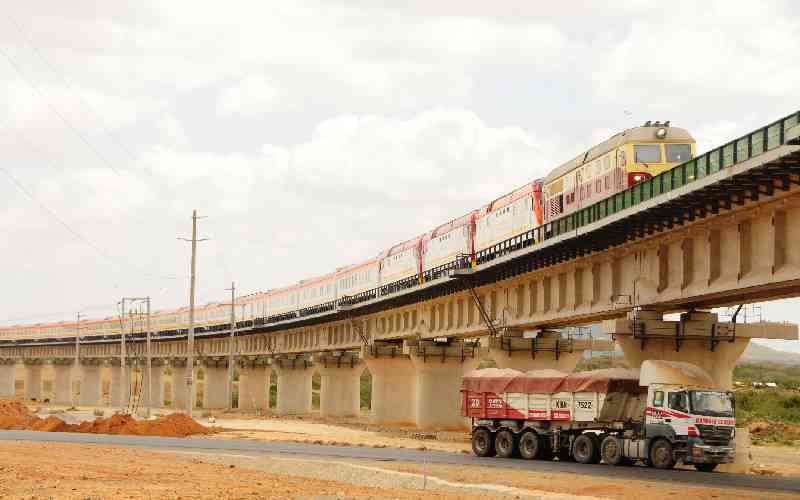
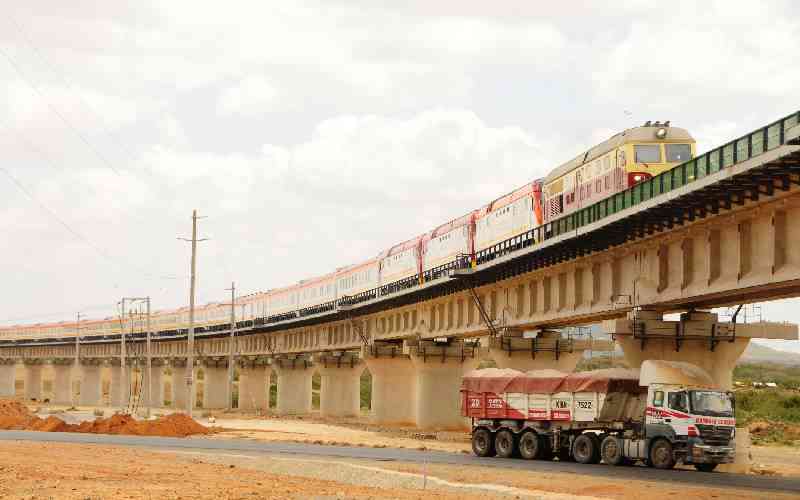
Standard Gauge Railway locomotive train. [File, Standard]
At 6 am at the Kibarani yard, just outside the Port of Mombasa, Hassan Musa sips tea that has been reheated three times. His driving licence, carried since 2007, is in his shirt's chest pocket. There is no car key to go with it.
For 17 years, Mr Musa has been one of the casual drivers hired to drive imported vehicles from the port to Nairobi, Kampala and Kigali. A Toyota Fielder to Nairobi paid him Sh3,000. A Harrier to Kampala paid Sh8,000. On 15 trips a month, he fed his wife and three children in Likoni and his elderly mother in Kwale.
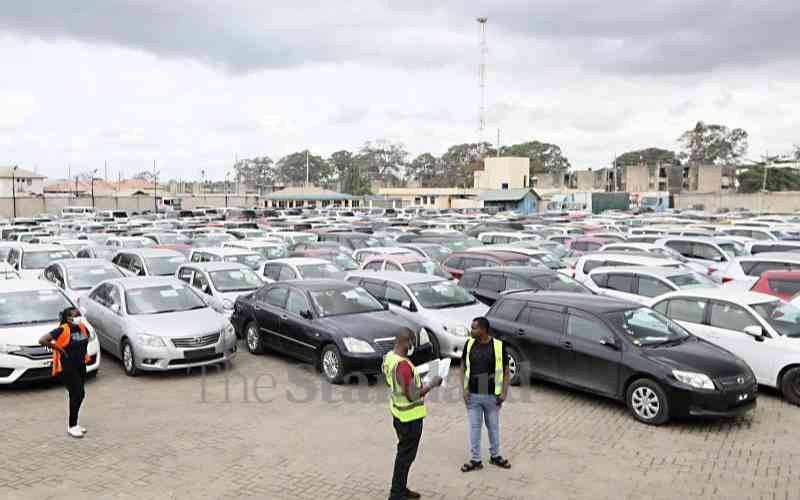
Figures from the Kenya Ports Authority (KPA) indicate that traditionally, Kenya imports between 4,000 and 7,000 used vehicles every month, with volumes rising to about 9,000 units during peak periods. Clearance of cars was one of the few services that remained in Mombasa after most of the port business was moved to Nairobi.
On October 31, 2026, Kenya Railways launched a dedicated Standard Gauge Railway (SGR) vehicle freight service. The first consignment arrived at the Nairobi Inland Container Depot, and Managing Director Philip Mainga called it “a new chapter in vehicle transport in Kenya”. But the move goes against President William Ruto's first order, after his swearing-in, that was meant to return port services to Mombasa.
A study by the University of Nairobi indicates that the mandatory SGR cargo-transport policies caused severe distress to Mombasa’s traditional logistics workforce, threatening or eliminating over 8,000 jobs. On September 13, 2022, Ruto ordered the reversal of the 2019 directive that forced all cargo importers to transport goods via the SGR to the Inland Container Depots in Nairobi and Naivasha.
However, working with dealer Autobarn East Africa, which plans to move 700 vehicles a month, Kenya Railways says it has introduced six special car waggons to transport the imported car units to enable them to arrive at their destinations "clean, undented and without a driver".
For Mr Musa and thousands of other casual drivers, that chapter may be the last of their livelihood. “We heard the news on FM stations. They said it’s safer, faster, and cheaper. Safer for who? Faster for who? For us, it is hunger that is faster,” he said, his voice breaking.
The Kenya Long Distance Drivers and Allied Workers Union estimates that Mombasa has between 3,000 and 4,500 casual vehicle drivers. No company employs them. They wait at the Changamwe, Kibarani and Miritini yards, and when a clearing agent has 20 vehicles to move, he calls 20 drivers. They are paid per trip. No trip, no pay, no health cover, no NSSF.
Kenya Railways’ case is hard to dismiss. A driven car takes more than 24 hours to reach Nairobi and risks accidents, theft of tyres and radios, and extra mileage. By SGR, the journey takes about eight hours. Dealers’ insurance costs fall by up to 40 per cent, and buyers get cars without the extra 500 kilometres on the clock. Mr Mainga also argues that fewer cars driven by tired casual drivers will mean fewer accidents on the Nairobi-Mombasa highway. The service targets regional markets including DR Congo, Rwanda, South Sudan, Burundi, Uganda and Tanzania, and holidaymakers can also put their own cars on the train.
On paper, it sounds modern and efficient. In the yards of Mombasa, it sounds like a death knell.
The damage reaches well beyond the drivers. When a driver took a car to Nairobi, he ate at Mariakani, slept at Mtito Andei, bought fuel at Salama and paid a boda boda rider to get back. A yard boy earned Sh200 to wash the car, a Changamwe mechanic fixed the battery and a mama mboga in Kibarani sold him lunch.
“From the time a truck or a car leaves Mombasa to when it reaches its destination, it would feed almost 20 families,” a former Kassam Haulers clerk told researchers in 2019.
Mombasa has been here before. A 2019 study commissioned by the county government, along with a University of Nairobi study, found that the port city lost Sh33.3 billion and 8,111 jobs when the SGR took over container cargo. The Kenya Transporters Association warned then that a train carrying 107 containers meant 107 truck drivers out of work. The county government cautioned that Mombasa’s gross county product would shrink by 10 per cent if all inland cargo moved by SGR.
Stay informed. Subscribe to our newsletter
Ali Kombo, 38, who has driven since he was 20, made two trips last month, down from 18 in 2021.
“I used to pay rent on the 5th. Now I pay on the 25th after borrowing. My landlord knows me now as ‘pole pole’. My children asked why we no longer eat chicken on Sunday. How do I tell a 7-year-old that a train ate his chicken?” he said.
Drivers calculate that Autobarn’s 700 cars a month mean 700 lost trips, and that if five big dealers follow, 3,500 trips will go, which is the entire casual market. Most are Standard Eight or Form Four leavers with no other skills, and many came to car driving after losing container trucking jobs. Omar Bakari, 56, told the media in 2019 that he did not know how long he would last. His son, 24, who joined him on the road, is now jobless too.
Some drivers now offer to take cars to Nairobi for Sh1,000, half the usual rate. Others have turned to handcarts and boda bodas or gone back to the village.
They are not asking for the SGR to stop. They want a share.
“Give us 50-50. Let SGR take dealer bulk; let casuals take individual buyers and small traders. We are not against development; we are against death by development,” said Nicholas Mbugua, secretary of the Long Distance Drivers Union.
The drivers also want the county and national governments to set up a transition fund, retrain some of them as SGR last-mile drivers or waggon mechanics, or pay compensation.
Last evening, Mr Musa was still at Kibarani. No call had come. His phone battery was at 3 per cent. He looked at the railway line running behind the yard, at the empty track.
“That train will sleep in Nairobi tonight. I will sleep here, with no fare to go home to Likoni. Who really is moving forward?” he whispered.

Subscribe to our newsletter and stay updated on the latest developments and special offers!