×

The Standard e-Paper
Smart Minds Choose Us
 The Standard Group Plc is a
multi-media organization with investments in media platforms spanning newspaper
print operations, television, radio broadcasting, digital and online services. The
Standard Group is recognized as a leading multi-media house in Kenya with a key
influence in matters of national and international interest.
The Standard Group Plc is a
multi-media organization with investments in media platforms spanning newspaper
print operations, television, radio broadcasting, digital and online services. The
Standard Group is recognized as a leading multi-media house in Kenya with a key
influence in matters of national and international interest.

Audio By Vocalize
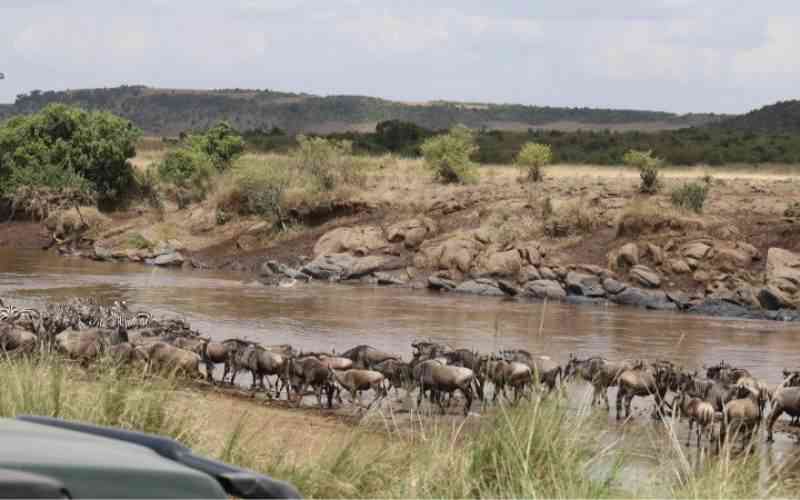
The Kenya Wildlife Service (KWS) has refuted claims circulating on social media alleging that the Ritz-Carlton Safari Camp is blocking wildebeest migration routes and river crossings within the Maasai Mara National Reserve.
The agency clarified that the concerns are unfounded and assured the public that wildlife movement within the reserve remains uninterrupted.
In a statement released on Thursday, November 27, 2025, KWS noted that the wildebeest migration is a globally celebrated natural spectacle, recently recognised by the World Book of Records (UK) and World Tourism Market (London) as the world’s greatest annual terrestrial wildlife migration and Africa’s top tourism attraction.
This recognition, KWS said, reaffirms Kenya’s leadership in conservation and sustainable tourism.
“The Government of Kenya accords the highest priority to the protection of wildlife corridors and dispersal areas, which are essential for the survival of migratory and resident species,” the statement read.
KWS added that national initiatives such as the recent Cabinet approval to secure the Nairobi National Park–Athi-Kapiti wildlife corridor demonstrate the government's continued commitment to safeguarding natural heritage.
KWS emphasized that the Ritz-Carlton Safari Camp is located in a designated tourism investment low-use zone as stipulated in the Maasai Mara National Reserve Management Plan (2023–2032).
The zonation plan ensures that development occurs without disrupting critical habitats or migration pathways.
“We remain committed to protecting all existing wildlife corridors within the broader Maasai Mara ecosystem,” KWS said, reiterating that no approved development is permitted to obstruct wildebeest movement.
The agency urged the public to rely on verified information and assured continued monitoring of the Mara ecosystem to prevent any interference with the famed migration.
KWS further stated that it will continue working with conservation partners, local communities, and tourism stakeholders to maintain the Reserve’s ecological integrity, noting that the Maasai Mara remains one of the world’s most important wildlife landscapes.
Scientific evidence spanning more than two decades has dispelled concerns that the proposed Ritz-Carlton Safari Camp in the Maasai Mara is obstructing wildebeest migration corridors.
According to authorities, GPS collar data collected from migratory wildebeest between 1999 and 2022 confirms that the animals use the entire 68-kilometre breadth of the Kenya–Tanzania border within the reserve, without relying on a single preferred route.
“The long-term collar data clearly shows that migrating herds disperse widely across the Mara. There is no single corridor that the camp interferes with,” officials said, noting that the dataset includes GPS tracks from more than 60 collared wildebeest.
The Maasai Mara National Reserve is naturally serviced by the Mara, Sand and Talek rivers, where numerous lodges and camps have coexisted with wildlife for decades.
Stay informed. Subscribe to our newsletter
Along the Sand River alone, five permanent safari camps and two seasonal ones operate without incident.
“None of the existing camps on the Sand River has ever been linked to migration disruptions,” the statement added.
Authorities say images and claims circulating online are based on older incidents from 2018 and 2020.
“The monitoring data is conclusive. The Ritz-Carlton site does not fall within or obstruct any wildebeest migration paths,” read part of the statement.
Subscribe to our newsletter and stay updated on the latest developments and special offers!










 join
join