×

The Standard e-Paper
Kenya’s Boldest Voice
 The Standard Group Plc is a
multi-media organization with investments in media platforms spanning newspaper
print operations, television, radio broadcasting, digital and online services. The
Standard Group is recognized as a leading multi-media house in Kenya with a key
influence in matters of national and international interest.
The Standard Group Plc is a
multi-media organization with investments in media platforms spanning newspaper
print operations, television, radio broadcasting, digital and online services. The
Standard Group is recognized as a leading multi-media house in Kenya with a key
influence in matters of national and international interest.

Audio By Vocalize
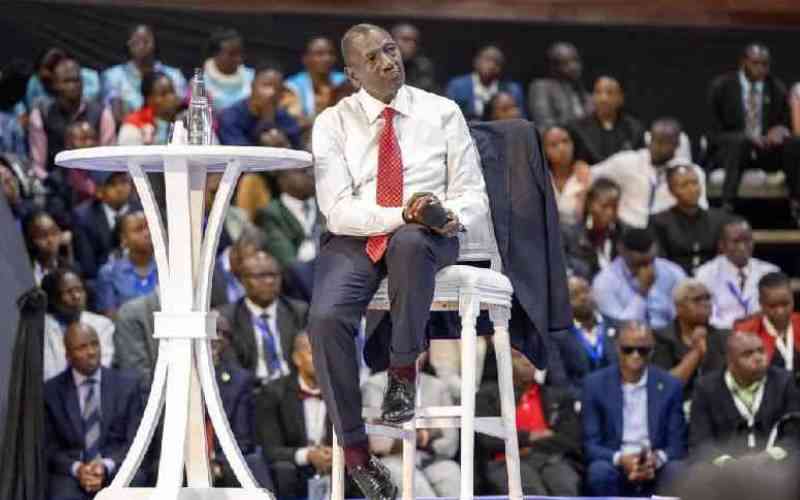
The 2026 Health Summit provided a platform for Kenyans, health workers and experts to assess the progress and gaps in the country’s journey towards Universal Health Coverage (UHC), with calls for the government to turn reforms into tangible improvements in healthcare delivery.
The summit was met with both praise and criticism, but experts said it was an important starting point for confronting longstanding challenges in the health sector.
The summit brought together policymakers, development partners, health workers and other stakeholders, including the United Nations and Amref Health Africa, to review reforms and identify areas requiring urgent action.
At the Town Hall that culminated the summit, President William Ruto gave a scorecard of his 2022 health manifesto, saying his administration had delivered on most of the commitments it made to Kenyans.
The manifesto contained eight major commitments on health, including establishing a health insurance system that would enable every Kenyan to access quality healthcare.
That commitment evolved into the Social Health Authority (SHA), which replaced the National Health Insurance Fund (NHIF).
Ruto said 32.2 million Kenyans were now enrolled under SHA, describing the scheme as a vehicle for achieving UHC.
He also pointed to the recruitment and deployment of Community Health Promoters (CHPs) as progress towards strengthening healthcare at the community level.
“I said then in good numbers. I can stand here and say we have 107,800 CHPs, trained properly, deployed and their stipends paid,” said Ruto.
The Sh5,000 monthly stipend for the promoters is jointly funded by the national and county governments.
The CHPs have also been enrolled under SHA cover, alongside their families.
On his pledge to ensure healthcare contributions were based on people’s ability to pay, Ruto said the government had introduced an income-based contribution system.
He said the government was also paying health insurance contributions for vulnerable households unable to afford the payments.
Data shows 560,000 households, representing about 2.2 million Kenyans, are supported, while teenage mothers are also covered.
Stay informed. Subscribe to our newsletter
The manifesto also committed to strengthening primary healthcare facilities so that dispensaries and health centres could effectively support higher-level hospitals.
Ruto said health facilities now had management boards and were receiving funds through SHA, which he argued had improved their ability to provide services.
“I made a commitment that we must make dispensaries and health centres work, for Level Five and Six to work,” he said.
The President also highlighted his pledge to improve support for mothers giving birth, particularly through maternity benefits.
Previously, the Linda Mama programme, he said, had operated separately from the broader insurance system, but the current arrangement under SHA covers the mother, father and entire household.
The government, he added, had also revised maternity reimbursement rates, with normal deliveries now attracting Sh10,000 across facilities, up from Sh2,500 in public facilities and Sh3,500 in private facilities.
Reimbursement for C-Sections had also been increased to Sh30,000 across private and public hospitals.
He pointed to the Emergency, Chronic and Critical Illness Fund as another fulfilment of his manifesto commitment.
He said at the moment, the government has addressed a longstanding problem where hospitals demanded payment before treating patients in emergencies, a situation he said has contributed to preventable deaths.
Legislation establishing the fund provides for emergency services, including ambulance support, without requiring a patient to first be a member of a health insurance scheme.
“So long as you are in an emergency, and you are a Kenyan, today I have discharged that responsibility,” emphasised the President.
Also, he acknowledged that his government had faced legal battles in implementing its proposed health insurance reforms, but maintained that the administration had made significant progress.
Ruto also defended the 2.75 per cent health insurance contribution, saying the system had replaced unequal contributions with a rate linked to income.
“Contributions have been made equal as a function of income,” he said, noting that some people who previously paid five per cent were now contributing less.
Ruto said he expected to have fulfilled all the health commitments in his 2022 manifesto by the end of his first term.
“By the time I complete my first term, I will have discharged all the commitments I made and make sure every mother walking out of hospitals walks away with diapers,” he said.
Nevertheless, he told Kenyans that he would therefore be ready for what he termed the 'exams'next year.
“On that list I made for the people of Kenya, I will be ready for exams next year. My target is to get 100 per cent,” he said.
During the summit, President William Ruto promised to resolve the longstanding human resource challenges in the health sector in a week's time.
For instance, health services across the country have been paralysed following a healthcare workers' strike.
The striking workforce includes clinical officers, nurses, laboratory technicians and public health officers, among others.
Posting of employees under UHC has remained a thorn in the flesh since they were onboarded during the Covid-19 pandemic.
President Ruto is scheduled to meet governors on Monday to seek a solution to the matter.
If an agreement is not reached with counties, he said the workers could be absorbed by the national government on permanent and pensionable terms.
The pledge has been welcomed by health workers, who have for years raised concerns over delayed salaries, lack of promotions, poor remuneration and uncertainty over the future of workers employed under various health programmes.
Kenya Union of Clinical Officers (KUCO) chairperson Peterson Wachira said the President's commitment offered hope that the human resource crisis could finally be addressed.
“The President promised to address the issues. He promised in one week to resolve the issue of UHC,” said Wachira.
He said the Kenya Kwanza administration had given health greater prominence by making it a national agenda, citing reforms in preventive and promotive healthcare, health financing and digital health.
Wachira pointed to reforms under the Social Health Authority (SHA), Facility Improvement Financing (FIF) and the Primary Healthcare Fund, as well as increased commodity availability through the Kenya Medical Supplies Authority (KEMSA).
He said KEMSA's commodity refill rate had improved from about 40 per cent to 90 per cent, while digital health reforms had also been enhanced.
But despite these gains, Wachira said human resources for health remained the biggest gap.
“There are many reforms but not on HRH. We may have everything else, but so long as human resources are not done effectively, others will not work because work is done by human resources,” he said.
He proposed the establishment of a Health Commission or Authority to manage health workers across the 47 counties, including salaries and welfare, without necessarily amending the Constitution.
Wachira said counties had struggled to recruit and retain health workers, with several programmes leaving workers in limbo after their funding arrangements ended.
These include workers employed under UHC and Covid-19 health emergency programmes, while other initiatives such as the National Tuberculosis Programme and Every Woman, Every Newborn, Everywhere (EWENE) initiative are also seeking to strengthen staffing.
The government has, under the EWENE programme, announced plans to recruit 5,000 nurses under the national government.
Wachira said counties often cite inadequate finances as the reason for failing to employ and retain health workers, but argued that a centralised mechanism could ensure funds allocated for health workers are used for their intended purpose.
“If we have an Authority mandated to manage human resources, the entire sum allocated will be paid,” he said.
The proposed commission or authority, he added, could also coordinate specialised care and ensure specialists are available to serve patients regardless of their county of residence.
Wachira cited cases where some counties had restricted access to specialised services for non-residents, arguing that specialists should serve patients from across the country.
“Specialists should be available to offer services to anyone and everyone within the boundaries of this country,” he said.
He added that the continued devolution of human resource management had exposed weaknesses in the system, including delayed salaries and promotions.
“It is time to agree that HRH under counties is not working, the management is not effective, and we are having issues with salaries. There is a lack of promotions and remuneration. This is why there is no capacity,” he said.
Wachira, however, said counties should not be blamed entirely, noting that many were constrained by their financial and administrative capacity.
The summit also emphasised strengthening local manufacturing, particularly of medicines and health commodities.
Wachira said Kenya had the capacity to produce more of the commodities it consumes, pointing to existing pharmaceutical manufacturing facilities and local production during the Covid-19 pandemic.
He said the government should create an environment that protects and promotes local manufacturers rather than encouraging dependence on imported products.
“During Covid-19, the PPEs were made from within. We have the capacity. It is the human resource we are not focusing on. It is the message we have kept repeating that we must focus on human resource,” he said.
People Living with HIV, however, felt left out of the engagement
"It should also be clear that the UHC drive is leaving people living with HIV and those affected by TB behind because of vertical financing," said NEPHAK executive director Nelson Otwoma.
"The summit was good for feedback but should have more voices from the demand side," added Otwoma.
On Thursday, he said the focus was more on the supply side, including health workers, leaders, and policymakers, instead of those who seek services.
Nevertheless, NEPHAK acknowledged that reforms delivered have revitalised the health sector by getting facilities and counties additional resources.
SHA and its funds, Otwoma explained, give more money to health facilities, but the money is based on capitation informed by the number of patients accessing care in the facilities through SHA.
"Regretfully, people living with HIV and TB-affected communities are not under SHA and are not part of the capitation. They are never counted under SHA," added the official.
Additionally, he said people living with HIV and TB patients are supported by the Global Fund and USG and are therefore not under SHA despite the ongoing integration.
The solution he observed is to negotiate with funding partners to give the money through SHA so that 1.4 million Kenyans living with HIV and their families are included in the UHC drive.
Beyond health financing and service delivery, the summit also raised questions about how Kenya can reduce the burden of disease in the first place.
Amref Health Africa Group Chief Executive Officer Gitahi Githinji urged the government to broaden the health conversation beyond mobilising funds to treat illness and invest more in prevention and health promotion.
Addressing President Ruto, Dr Gitahi welcomed the progress made in health reforms but challenged the government to focus equally on how to “produce health and wellness” before people require hospital care.
“We cannot rely on mobilising more and more money to treat an ever-growing burden of preventable disease,” he said, warning that rising cases of conditions such as hypertension and diabetes would increase the cost of lifelong treatment, dialysis, hospitalisation and intensive care.
He called for greater investment in community health, noting that Community Health Promoters were already playing a critical role in bringing services closer to households.
But he said they needed adequate support and equipment to help families prevent disease, identify risks early and seek care before conditions became severe.
He also called for stronger primary healthcare networks and integrated community case management, arguing that prevention should become the foundation of Kenya's health system.
Dr Gitahi said producing health also required action beyond hospitals and clinics, including addressing the food environment.
“What people eat matters. What is marketed to our children matters. The amount of sugar, salt and harmful trans fats in our food matters. And the policies that shape these environments matter,” he said.
He urged President Ruto to consider stronger food regulation as part of Kenya's public health investment, saying prevention would not only protect future generations from avoidable illness but also reduce the enormous healthcare costs associated with preventable diseases.
President Ruto acknowledged the concerns raised and committed to further discussions on health production and how the approach could contribute to Kenya's broader health agenda.
The Health Summit therefore closed with progress on several fronts, but also exposed a persistent gap: while financing, digital health, commodities and primary healthcare have dominated the reform agenda, health workers remain central to whether those reforms translate into services for Kenyans.
Provision of diapers, he said, will be included in the maternal package, under the ongoing tariff package review to be gazetted in October.
Even as Kenyans continue to critique the summit, saying there seems to be a disconnect from reality, KMPDU Deputy Secretary General Dennis Miskellah argued that the summit came at the right time, when healthcare workers in several counties were on strike over unpaid salaries and other grievances.
Also, there have been incidents of shortages of essential drugs in hospitals, limiting care, coupled with a shortage of human resources.
According to Miskellah, the summit provided an opportunity to confront the challenges facing the health sector openly, noting that healthcare workers were owed arrears that needed to be cleared.
The summit came as doctors across 33 counties faced unpaid salary arrears, while doctors in Isiolo had entered their 82nd day of strike.
Miskellah said the President’s intervention, including directing the relevant authorities to address some of the outstanding issues, demonstrated the importance of having all players in the health sector in the same room.
He said discussions on SHA, human resources and the EWENE programme were particularly timely, with healthcare unions and Kenyans able to follow the discussions, which demand answers from those responsible.
“What was good about this summit is that everybody was there. Anybody who would be accused was present to defend themselves,” said Miskellah.
He said previous discussions on health challenges had largely been held behind closed doors, with meetings between the national and county governments often taking place in boardrooms.
“This time round, we were all there. Counties were asked why they refer lots of patients; they were accused; KEMSA was accused. Everybody was accusing everyone, but everybody was watching,” he said.
Miskellah said such open discussions were necessary because solutions could only be found when those responsible for problems were confronted publicly.
He challenged governors to take greater responsibility for healthcare, arguing that devolution had also transferred accountability for health services to county governments.
“Devolution means even accountability should be involved,” he said.
Further, the union official called on counties to explain persistent challenges in the sector and take responsibility for addressing them.
For instance, President Ruto asked counties to explain why there are increased referrals to national hospitals and stockouts of drugs
Counties did not have a clear explanation, only accusing KEMSA of not supplying drugs.
But counties are accused of owing KEMSA billions of money, limiting the distribution of medicine and commodities.
The entity currently has a fill rate of 90 per cent, an increase from 40 per cent.
Miskellah also defended the need for continued reforms under SHA, saying political criticism should not be allowed to derail efforts to establish a system that protects Kenyans from being forced to pay for healthcare from their pockets.
He urged politicians to focus on fixing weaknesses in the system rather than misleading the public.
For instance, with reported SHA inefficiencies, no single legislator has pushed for amendment of any clause running the Authority.
“You can politic, but don't misinform. Help with solutions to what needs to be fixed. Let us stop misleading people,” he said.
Miskellah said the success of the health reforms would ultimately depend on leadership and governance.
He warned that Kenyans should not continue suffering strikes, shortages of health workers and inadequate services because of poor accountability.
Additionally, Miskellah maintained that improvements in infrastructure, including the opening of Level Six facilities and expansion of dispensaries, would not be enough without adequate staffing and stronger governance.
Subscribe to our newsletter and stay updated on the latest developments and special offers!

 Prefer the Standard on Google





 join
join