×

The Standard e-Paper
Stay Informed, Even Offline
 The Standard Group Plc is a
multi-media organization with investments in media platforms spanning newspaper
print operations, television, radio broadcasting, digital and online services. The
Standard Group is recognized as a leading multi-media house in Kenya with a key
influence in matters of national and international interest.
The Standard Group Plc is a
multi-media organization with investments in media platforms spanning newspaper
print operations, television, radio broadcasting, digital and online services. The
Standard Group is recognized as a leading multi-media house in Kenya with a key
influence in matters of national and international interest.

Audio By Vocalize
Gaps in access to essential sexual and reproductive health services for adolescents have come into sharp focus as the Solutions for Supporting Healthy Adolescents and Rights Protection (SHARP) Project comes to a close, with stakeholders warning that rising teenage pregnancies and declining commodity availability are fuelling poor health outcomes.
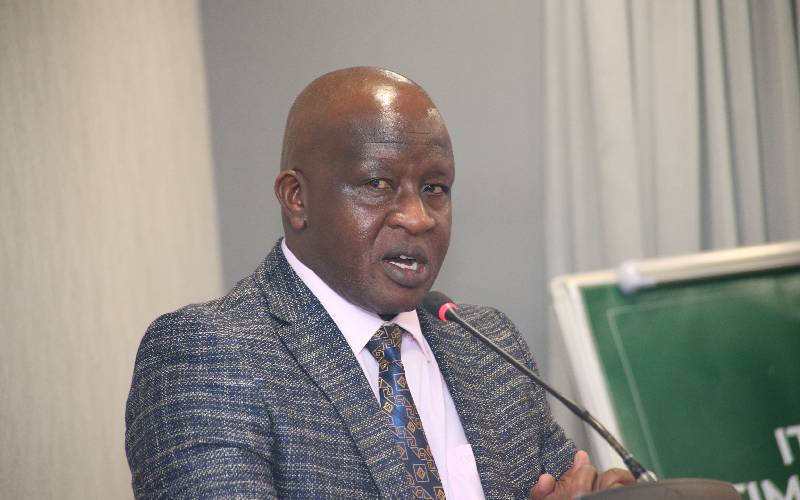
“SHARP has been focusing mainly on adolescent sexual and reproductive health, which are key priorities for the Ministry. We are seeing gradual progress, but the challenges affecting adolescents remain wide-ranging, from teenage pregnancy and HIV transmission to school dropouts,” said Dr. Edward Serem from Kenya’s Ministry of Health.
“The challenges are many, including teenage pregnancy, HIV infections, and low school attendance. These are directly linked to poor health outcomes and, in many cases, deaths among young mothers,” he added.
Dr. Serem said high teenage pregnancy rates continue to significantly contribute to maternal mortality, noting that many adolescents are not physically prepared for childbirth and often delay seeking care due to stigma.
“Between 10 and 15 percent of adolescent pregnancies result in maternal complications or deaths.
When teenage pregnancy is high, maternal mortality also rises because many of these girls are not physically prepared, face stigma, and often delay seeking care,” he said.
The project, coordinated by Health Action International and supported by the European Union, has been implemented across six countries in the Great Lakes Region and is credited with strengthening adolescent health systems and amplifying youth voices.
In Kenya, the project was implemented in the ASAL counties of Garisa, Isiolo, and xxxx
However, findings presented at the close-out meeting reveal worsening gaps, particularly in access to essential commodities.
In Isiolo County, the availability of male condoms and selected oral contraceptives in public health facilities dropped from over 80 per cent in 2022 to 38.5 per cent in 2025.
In Marsabit County, stocks of oxytocin, a life-saving drug used to prevent postpartum haemorrhage, declined from 51.9 per cent to just 14.3 per cent.

A representative of the European Union delegation to Kenya said the project had delivered measurable progress but warned that economic pressures are making access to services increasingly difficult.
“We have been very proud to support this project. It has played a vital role in strengthening sexual and reproductive health and rights for adolescents across the region. But rising costs of living and constrained public budgets mean many people are unable to consistently access health services,” the representative said.
The official noted that shrinking global funding and shifting priorities among donors are likely to further limit support for health programmes, calling for more efficient use of available resources and stronger domestic investment.
“External funding is not going to be available at the same scale as before. Countries will need to find ways of doing more with less while prioritising essential health services,” the representative said.
Stay informed. Subscribe to our newsletter
Implementing partners also noted mixed outcomes, pointing out that while awareness and engagement have improved, access to commodities remains a major concern.
“While modest improvements were recorded in a few areas, the overall findings point to significant deterioration, particularly in the public sector, which serves the most vulnerable communities. Chronic stockouts of life-saving medicines, sometimes lasting several months, have become increasingly common,” a project lead noted.
Dorothy Juma of META Kenya said the project helped address the triple threat facing adolescents: teenage pregnancy, HIV, and gender-based violence, by placing young people at the centre of interventions.
“This project ensured that adolescents had a voice and could engage in discussions about the challenges they face. In some cases, girls have been able to stay in school and resist early marriage because of the support and information provided,” she said.
She noted that in arid and semi-arid regions, cultural practices and socio-economic challenges continue to expose girls to early marriage and school dropout, underscoring the need for sustained interventions.
At the grassroots level, youth-led organisations said the project strengthened accountability and improved engagement with authorities.
Brenda Loani, one of the grassroots implementers from My Body, My Body Organisation, said adolescents are now more informed and better positioned to demand services.
“We have seen increased engagement between young people and county authorities, and youths are now able to hold leaders accountable for the services they were promised. Before, many of them were not even going to health facilities because they lacked information,” she said.
Despite these gains, stakeholders warned that systemic gaps, including commodity shortages, stigma, inadequate youth-friendly services, and funding constraints, continue to hinder access to care.
As the SHARP project concludes, growing concerns are emerging that without sustained investment in stronger health systems and improved supply chains, the progress made over the past four years could be reversed, leaving adolescents across the region vulnerable to preventable health risks and poor outcomes.

Subscribe to our newsletter and stay updated on the latest developments and special offers!






 join
join