×

The Standard e-Paper
Join Thousands Daily
 The Standard Group Plc is a
multi-media organization with investments in media platforms spanning newspaper
print operations, television, radio broadcasting, digital and online services. The
Standard Group is recognized as a leading multi-media house in Kenya with a key
influence in matters of national and international interest.
The Standard Group Plc is a
multi-media organization with investments in media platforms spanning newspaper
print operations, television, radio broadcasting, digital and online services. The
Standard Group is recognized as a leading multi-media house in Kenya with a key
influence in matters of national and international interest.

Audio By Vocalize

Church leaders have taken divergent positions on calls for the resignation of Inspector General of Police Douglas Kanja, exposing differences over how Kenya should address police conduct, political violence and security challenges ahead of the 2027 General Election.
The Church and Clergy Association of Kenya (CCAK) had demanded Kanja’s resignation, accusing him of failing to contain the goon menace and ensure impartial policing as political activity intensifies.
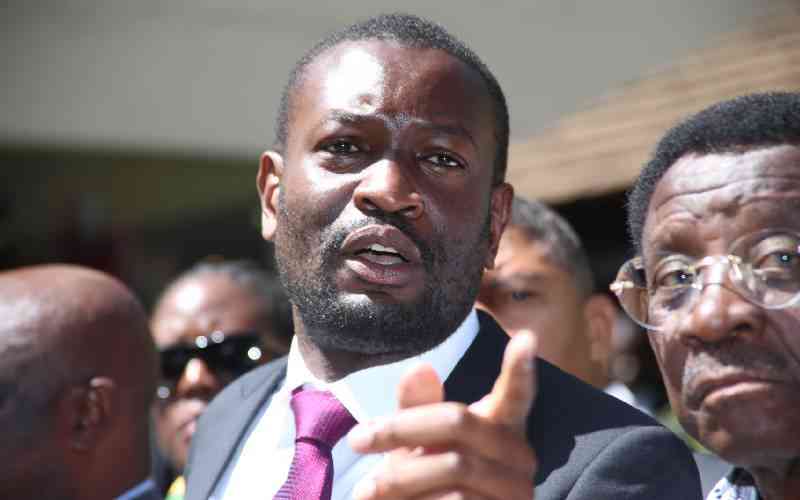
CCAK national chairman Bishop Hudson Ndeda called on Kanja to step aside and allow a competent Kenyan to take over.
“We ask the IG to resign and pave way to a competent Kenyan to take over from him so that he can serve Kenyans,” Ndeda said.
CCAK accused police officers of disrupting political gatherings and engaging in partisan politics, and called on the Independent Policing Oversight Authority to investigate officers accused of abusing their powers.
The association also wants the Independent Electoral and Boundaries Commission to deny clearance to leaders who promote violence, tribalism and hate speech.
CCAK Secretary General Bishop Jonas O. Cheng said politicians who promote division should not qualify to contest elective positions under Chapter Six of the Constitution.
But the Federation of Evangelical and Indigenous Christian Churches of Kenya (FEICCK) has taken a different position, cautioning against making Kanja’s removal a substitute for wider reforms in the security and justice system.
FEICCK chairman Archbishop Samuel Njiriri said policing was only one part of the criminal justice chain, which also involves prosecution, witness protection and the courts.
“A call for the resignation of the Inspector General of Police should not become a substitute for addressing the wider challenges within the security and justice system,” FEICCK said.
The federation called for stronger coordination between the National Police Service, the Office of the Director of Public Prosecutions, the Judiciary and the Witness Protection Agency.
“Kenya needs stronger institutions, better coordination and effective justice, not simply a change of personalities,” Njiriri said.
FEICCK also warned against early political mobilisation, urging leaders to govern before we campaign and focus on employment, education, healthcare, security, agriculture and business.
Njiriri further called on IEBC to take action on leaders preaching and spreading hate speech and ethnicity by baring them from vying for elective posts in the coming 2027 elections.
Both groups condemned ethnic mobilisation and political hatred, but differed on the remedy for the country’s security concerns.
Stay informed. Subscribe to our newsletter
The contrasting positions come as political activity gathers pace ahead of the 2027 elections, placing the church at the centre of an increasingly heated debate over policing, political violence, electoral accountability and the relationship between the State and religious institutions.
Subscribe to our newsletter and stay updated on the latest developments and special offers!


 Prefer the Standard on Google





 join
join