×

The Standard e-Paper
Home To Bold Columnists
 The Standard Group Plc is a
multi-media organization with investments in media platforms spanning newspaper
print operations, television, radio broadcasting, digital and online services. The
Standard Group is recognized as a leading multi-media house in Kenya with a key
influence in matters of national and international interest.
The Standard Group Plc is a
multi-media organization with investments in media platforms spanning newspaper
print operations, television, radio broadcasting, digital and online services. The
Standard Group is recognized as a leading multi-media house in Kenya with a key
influence in matters of national and international interest.

Audio By Vocalize
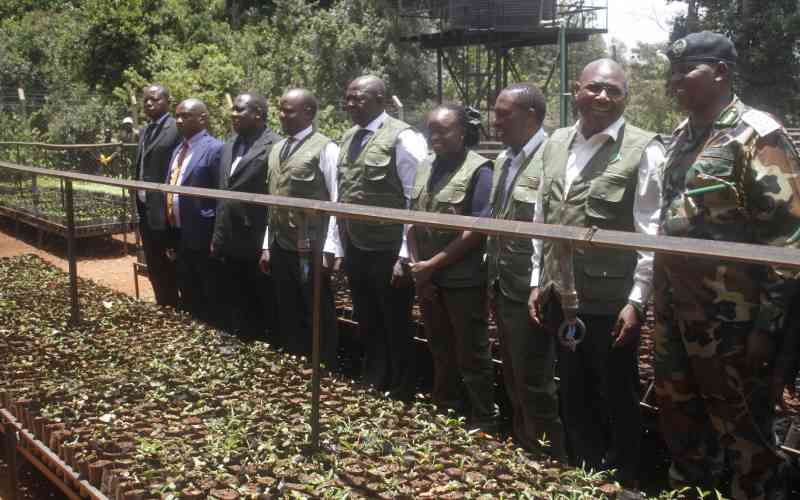
The Government has set a target of planting 17.24 million trees during this year’s National Mazingira Week, as it steps up efforts to restore degraded ecosystems and move Kenya closer to its ambitious goal of planting 15 billion trees by 2032.
Government Spokesperson Charles Owino announced the week-long programme on Monday at the Kenya Forest Service Nairobi Conservancy office, in the presence of Cabinet Secretary for Environment, Climate Change and Forestry, Dr Deborah Barasa, who described the initiative as a national call to action involving households, institutions, communities and workplaces.
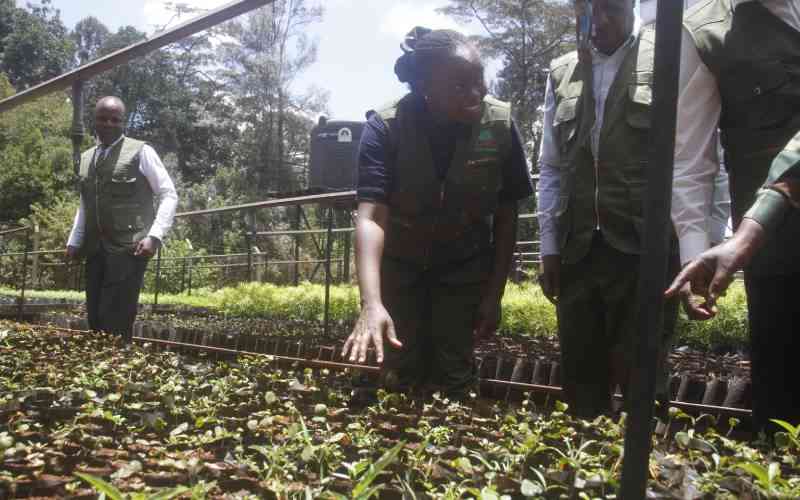
But as the country prepares for a week of tree growing and environmental restoration, CS Barasa says the real measure of success will not be the number of seedlings put in the ground, but how many survive.
“Our input is planting trees, but let us remember that our outcome is really survival,” Barasa said.
The week-long programme begins Tuesday with educational institutions, including basic education schools, TVETs and universities, combining tree growing with environmental clean-ups. The Government is targeting one million trees in TVETs, 640,000 in basic education and 400,000 in higher learning institutions.
On Wednesday, attention shifts to restoring degraded mining areas in Kakamega, Siaya, Migori, Busia and Kisii counties, in an exercise led by the State Departments of Mining and Forestry. Thursday will focus on highway greening and drainage clean-up, while Friday has been designated as a nationwide clean-up day across all 47 counties, led by the State Department for Climate Change and NEMA.
But the biggest push will come on Saturday, National Mazingira Day, when the Government will deploy three layers of execution to drive tree growing and ecosystem restoration across the country.
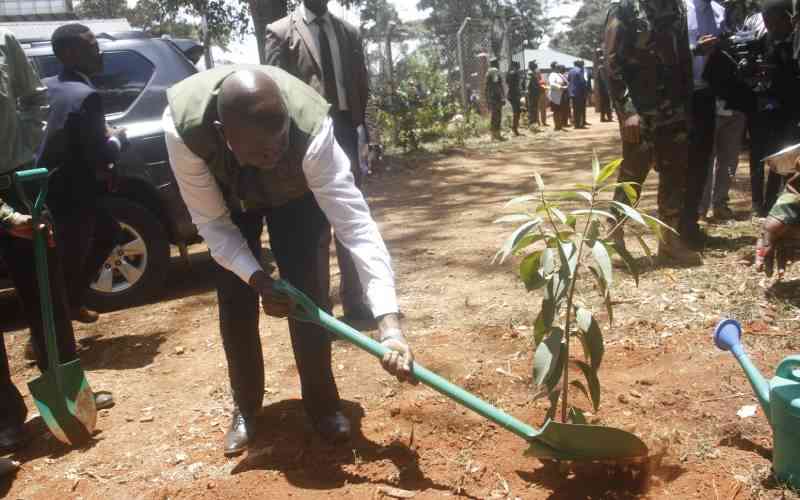
The first layer is the Presidential Green Challenge, targeting 5.1 million trees at 79 sites across 31 counties. The exercise will bring together about 51,115 community members to plant trees across 4,951 hectares. The national event will be held in Trans Nzoia County, where the Kenya Forest Service and Community Forest Associations will lead the preparation of planting sites and the actual tree-planting exercise.
The day will also feature the launch of the JazaMiti USSD code, exhibitions, a cocoa value-chain showcase and the flagging off of 5.3 million fruit tree seedlings.
The second layer goes down to the communities, placing village elders at the centre of mobilisation. The Government says 77,252 village elders across 30 counties will each lead the planting of 100 trees, translating to about 7.7 million trees. The initiative will be tied to community dialogues planned across approximately 108,000 villages, creating a local structure for mobilising residents beyond the national celebrations.
The third layer will focus on institutions, with public agencies taking responsibility for planting around their facilities and areas of operation. The Kenya Prisons Service will plant one million trees across 68 correctional facilities, while the National Youth Service will plant another 1.5 million trees following a passing-out parade. The Ministry of Defence will also mobilise military units to undertake tree growing around their respective locations.
The Ministry says planting numbers will only tell part of the story. CS Barasa said the Government is upgrading the JazaMiti platform to JazaMiti 2.0, alongside a national dashboard that will track not only the number of trees planted, but also their survival and eventual economic value.
Counties have been tasked with ensuring adequate supplies of seedlings, while Community Forest Associations, village elders and farmers have been urged to mobilise communities and embrace agroforestry.
The approach reflects a shift from simply counting seedlings to measuring whether tree-growing efforts translate into lasting restoration of Kenya’s degraded landscapes.
Stay informed. Subscribe to our newsletter
Subscribe to our newsletter and stay updated on the latest developments and special offers!


 Prefer the Standard on Google









 join
join