×

The Standard e-Paper
Smart Minds Choose Us
 The Standard Group Plc is a
multi-media organization with investments in media platforms spanning newspaper
print operations, television, radio broadcasting, digital and online services. The
Standard Group is recognized as a leading multi-media house in Kenya with a key
influence in matters of national and international interest.
The Standard Group Plc is a
multi-media organization with investments in media platforms spanning newspaper
print operations, television, radio broadcasting, digital and online services. The
Standard Group is recognized as a leading multi-media house in Kenya with a key
influence in matters of national and international interest.

Audio By Vocalize

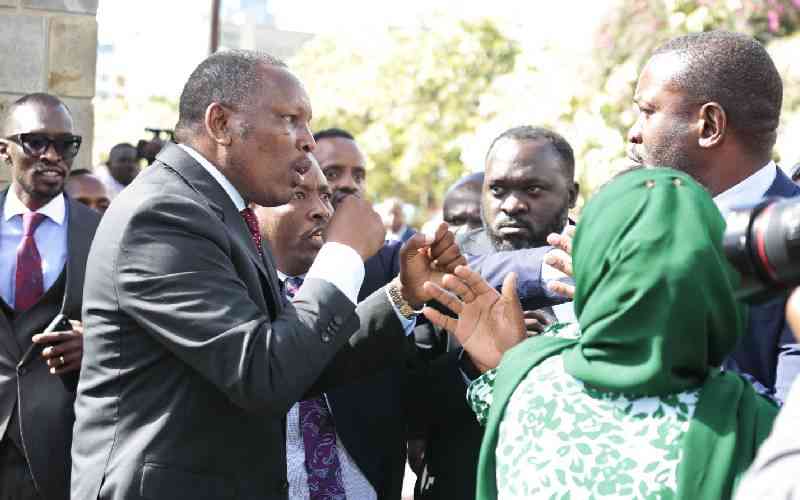
The flying political jabs we are witnessing as we gear up to the 2027 General Election offer a glimpse of the neck-to-neck political competition ahead of us. The incumbent is determined to get another term. The Opposition has vowed to defeat the incumbent.
Competitive politics is healthy. We need a strong push from either side so that the government can account for its time in office and the Opposition can justify why it should form the next government. Political boxing is part of the game.
But competitive politics can go out of hand. The 2007 General Election began like a political boxing game but as we know, it became fatal. There are people still nursing wounds. The 2007 disputed presidential election outcome, besides loss of lives, became the foundation stone for throwing justice out of the window.
It took the international community to bring back a semblance of peace and justice to a deeply polarised country. Since then, we have perfected the art of switching off live media tallying of presidential election results only to announce controversial outcomes that end up in the Supreme Court.
I have two concerns on the way the current campaigns are shaping up. First, unless the government completes some of the major projects it has embarked on, particularly roads such as the Rironi–Mau Summit, its own song of success will continue to sound hollow. The government has made too many lofty promises with contestable results.
Going to an election without clearly verifiable and significant results that speak of a committed regime will lead to misinformation and tones of disinformation. An incumbent facing a ruthless opposition without good performance results might be tempted to use unorthodox strategies to retain the seat. While there is time, the government should ensure it improves its scorecard to confidently face the challenger.
More media coverage is not sufficient to convince the public. The incumbent’s fixers should focus on higher goals within the remaining period. Spending energy to chase around very informed critics is a very low priority. A measured response that respects freedom of speech is all you need.
Second, the Opposition needs to go beyond words and push the government to score an own goal. There needs to be clarity on what it brings to Kenyans. One is to get the incumbent out of office. But the other is to have an identity. The Opposition should have a development signature propelling it to power. Promises alone will be no different from the thousands we have had in the past – from MCAs to the presidential candidates.
The problem with an opposition that punches really hard with no clear blueprint will most likely be to radicalise its followers on personality and not issues. In the event that the presidential outcome is disputed, followers will fold to their ethnic blocks to bargain since no issue bonded them during the campaigns. Renditions of betrayal and polarisation along ethnic lines will deepen.
The Opposition has a golden chance to articulate itself better. Exhausting the opponent is half way the campaign. A knock out is showing unity of purpose in and out of parliament with a tangible vision. It is not clear what the one thing the Opposition stands for is, away from the concerted campaign efforts to occupy the highest political office on the land.
I fear we might be running into political chaos when the major political competitors miss on their strengths. There is ambiguity from the incumbent’s camp and the Opposition’s kitchen on what exactly their 2027 agenda is. The jabs flying left and right might lead us back to 2007 if the leaders don’t focus on substantive goals.
As citizens, we have an obligation to remind politicians, including third parties of high interest and high influence in our political systems, that peace is not sold in supermarkets. Its very easy to lose it but very difficult to restore. All we want is a credible election leading to a peaceful country.
Dr Mokua is the Executive Director, Loyola Centre for Media and Communication
Subscribe to our newsletter and stay updated on the latest developments and special offers!






 join
join