×

The Standard e-Paper
Stay Informed, Even Offline
 The Standard Group Plc is a
multi-media organization with investments in media platforms spanning newspaper
print operations, television, radio broadcasting, digital and online services. The
Standard Group is recognized as a leading multi-media house in Kenya with a key
influence in matters of national and international interest.
The Standard Group Plc is a
multi-media organization with investments in media platforms spanning newspaper
print operations, television, radio broadcasting, digital and online services. The
Standard Group is recognized as a leading multi-media house in Kenya with a key
influence in matters of national and international interest.

Audio By Vocalize

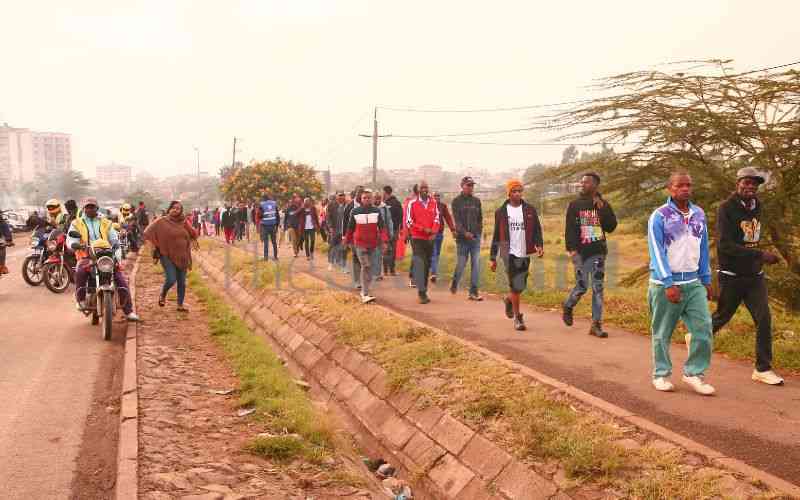
Students from Nairobi Road Secondary School along Nakuru-Nairobi highway on July 28, 2025. [Kipsang Joseph, Standard].
Members of Parliament are seeking to entrench structured sex education and nationwide awareness in the school curriculum through amendments aimed at curbing sexual harassment and abuse in schools.
If adopted, MPs say the changes would ensure students understand what constitutes sexual offences, victims’ rights and reporting mechanisms, placing prevention and protection at the center of the education system.
The proposal, introduced through a motion by Kisii County MP Dorice Donya, emphasises advocacy and public awareness as key tools in combating sexual offences, particularly among young people.
“We should not come soft on saying that we should not have sex education, while we know that sex is very important. No one came from mass; we came out of this when properly done.”
She argued that resistance to sex education ignores reality. “We should not shy away from saying that sex education is important. None of us came from nowhere,” she said.
Donya also condemned what she described as degrading behavior, including body-shaming and sexually suggestive remarks directed at girls and women.
“We must tell our people to look and talk responsibly. You cannot tell a girl, ‘you have big body parts’ as if she wanted to leave them at home,” she said.
Kenya strengthened its legal framework with the Sexual Offences Act, sponsored by Njoki Ndung’u. However, MPs said cases of child sexual abuse, teenage pregnancy and gender-based violence remain widespread, highlighting gaps in implementation.
Mwingi West MP Charles Ngusya said the amendment aligns with the 2010 Constitution by assigning the education Cabinet secretary a clear mandate to lead awareness efforts.
“The issue is not the number of sexual offences laws. The problem is implementation. If properly implemented, this will reduce cases of teenage pregnancies and other abuses,” he said.
Donya said many perpetrators are known to their victims, making reporting difficult.
Lamu East MP Ruweida Mohamed argued the amendment would help deter offenders and protect children.
“It will protect both boys and girls. Awareness should reach schools so learners understand boundaries,” she said.
Khwisero MP Christopher Aseka, on his part, urged parents to play a more active role. He said that by the third term of 2025, 31 girls in Khwisero Sub-county had been reported pregnant, some allegedly by relatives and teachers.
Stay informed. Subscribe to our newsletter
“We must protect our children and guard them against harmful exposure on social media.”
Tinderet MP Julius Melly, who chairs the National Assembly’s Education Committee, said the Bill would give the education Cabinet secretary express authority to establish
guidance and counseling programs to support victims and prevent school dropouts.
“The CS should establish guidance and counseling programs for both girls and boys affected by sexual offences,” Melly said.
He added that stronger awareness and protection mechanisms are needed to ensure victims remain in school.
“The prevalence is high. Offenders are often known in the community. They stigmatize and traumatize children, disrupting their education.”

Subscribe to our newsletter and stay updated on the latest developments and special offers!








 join
join