×

The Standard e-Paper
Smart Minds Choose Us
 The Standard Group Plc is a
multi-media organization with investments in media platforms spanning newspaper
print operations, television, radio broadcasting, digital and online services. The
Standard Group is recognized as a leading multi-media house in Kenya with a key
influence in matters of national and international interest.
The Standard Group Plc is a
multi-media organization with investments in media platforms spanning newspaper
print operations, television, radio broadcasting, digital and online services. The
Standard Group is recognized as a leading multi-media house in Kenya with a key
influence in matters of national and international interest.

Audio By Vocalize
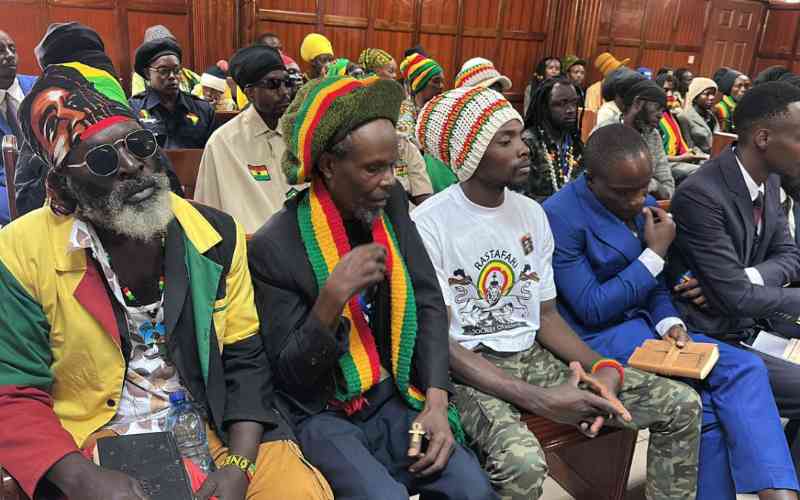
The High Court has declined to stop government arrests of Rastafarian members over marijuana use pending the determination of a petition on the decriminalisation of cannabis for spiritual use on March 19, 2026.
Justice Bahati Mwamuye rejected an oral application by the Rastafarians to bar the police from further harassment, house searches, and arrests over cannabis (bhang) and directed them to file a formal application for protection and file evidence of continued victimization by police across the country.
"I urge the Rastafarians to file a formal application and evidence through affidavits form of the alleged harassment, victimisation, home searches and arrest over use of marijuana," Justice Mwamuye directed.
Members of the Rastafari community have urged the court to issue interim orders protecting them from further arrest and harassment, arguing that heightened media coverage of a constitutional case seeking the legalisation of bhang for religious use has exposed them to increased encounters with police officers.
Through lawyer Shadrack Wambui, they said publicity surrounding the case had made members of the faith easily identifiable, resulting in what he described as frequent and intrusive police stop-and-search operations.
"There have been concerns that images have been out in public and, as a result, our clients are easy targets by police officers. We urge the court to issue interim reliefs," Wambui told the court.
According to the petitioners, some Rastafari adherents have been subjected to repeated searches merely because of their appearance, even where they do not possess cannabis.
They argue that the encounters are driven by stereotypes linking their faith to bhang use, rather than reasonable suspicion.
The Rastafari Society urged the court to issue temporary directions to protect its members from what it termed harassment, pending the determination of the main petition.
"We pray that members of the community be allowed to operate without constant searches and stereotyping," Wambui submitted, adding that continued police encounters undermine the community's dignity and right to privacy.
The claims come amid widespread public interest in the case, which has attracted significant media attention due to its implications for religious freedom and drug policy in Kenya.
However, the Attorney General through Christopher Marwa vehemently opposed the request for conservatory orders, stating that the Rastafarians had not tendered any evidence on the allegations of harassment and arrests of their members.
The petition, first filed in 2021, seeks recognition of the Rastafari faith and a declaration that cannabis use for religious purposes should not be criminalised.
The Rastafarian faithful, led by Prophet Wambua Mwendwa, were present at Milimani High Court on Wednesday where they argued that cannabis, known locally as bhang, is a sacred herb central to their worship, meditation, and spiritual growth.
Stay informed. Subscribe to our newsletter
In their petition, they emphasize that criminalizing cannabis use infringes on the community's constitutional right to freedom of conscience, religion, belief, and opinion, stating that the law discriminates against Rastafarians for practicing their faith.
The petitioners are seeking a declaration that sections of the Narcotic Drugs and Psychotropic Substances (Control) Act are unconstitutional, to the extent that they criminalize the possession and use of cannabis by Rastafarians in private homes and recognized places of worship.
They are also asking the court to bar the police and prosecution from arresting, charging, or harassing followers solely for possessing or using cannabis for bona fide spiritual purposes.
The society maintains that cannabis is a sacrament central to its spiritual practice and that existing laws disproportionately affect its members.
During earlier court appearances, Rastafari members have staged peaceful cultural demonstrations outside court premises, singing and displaying symbols of their faith to call for respect and non-discrimination. Those appearances have frequently been covered by television and print media.
The society now argues that such visibility has come at a cost, exposing individual members to scrutiny by law enforcement officers long after court sessions end.
The issue of alleged police targeting was raised as the court considered an application to enjoin the National Authority for the Campaign Against Alcohol and Drug Abuse (NACADA) as an interested party in the case.
Justice Mwamuye allowed NACADA to join the proceedings as an interested party, noting that the authority's statutory mandate on drug abuse prevention made it a relevant stakeholder in the dispute.
NACADA has been ordered to file and serve its response to the petition by January 20, 2026, with the petitioners allowed to file a rejoinder by January 27, if necessary.
The court also set new hearing dates for January 30 and February 4, 2026, and reminded the parties that judgment in the matter is scheduled for March 19, 2026.
Subscribe to our newsletter and stay updated on the latest developments and special offers!










 join
join