×

The Standard e-Paper
Stay Informed, Even Offline
 The Standard Group Plc is a
multi-media organization with investments in media platforms spanning newspaper
print operations, television, radio broadcasting, digital and online services. The
Standard Group is recognized as a leading multi-media house in Kenya with a key
influence in matters of national and international interest.
The Standard Group Plc is a
multi-media organization with investments in media platforms spanning newspaper
print operations, television, radio broadcasting, digital and online services. The
Standard Group is recognized as a leading multi-media house in Kenya with a key
influence in matters of national and international interest.

Audio By Vocalize
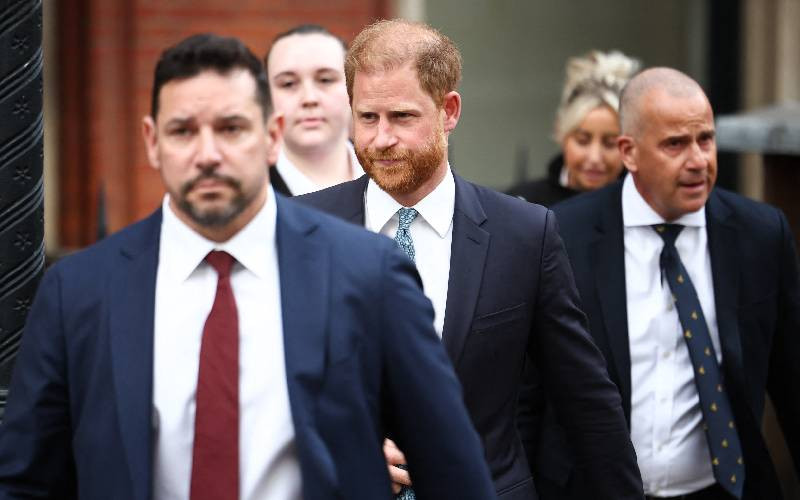
Britain's Prince Harry leaves the High Court, in central London, on April 8, 2025, after a hearing about a decision by the British Government to downgrade his personal security during visits to Britain. [AFP]
Prince Harry's return to Britain has reignited debate about whether taxpayers should foot the bill to protect him and his family, with experts warning genuine threats likely exist.
The Duke of Sussex, who arrived in Britain last week with his wife Meghan and their two young children, had previously ruled out returning to his home country, citing security concerns.
The couple left Britain and quit royal duties in 2020 amid a royal family feud and Harry subsequently waged a years-long, ultimately unsuccessful, legal battle to retain UK taxpayer-funded security while living in California.
Now back with their seven-year-old son, Prince Archie, and five-year-old daughter, Princess Lilibet, he has reportedly been pushing for reinstated police protection.
However, when the family landed August 26 at Birmingham Airport, they had private security in place rather than police officers, according to British media.
"It's very surprising," Scott Hamer, an ex-protection officer for Harry's father King Charles III when he was Prince of Wales, told AFP.
"There's probably people who are being protected now who are at less threat and risk than he is. So the question would be, why does he not receive that protection as well?"
Harry and Meghan, who are reportedly living in central England's Cotswolds region, are said to have enrolled their children at private schools there for the coming academic year.
They are thought to have heightened concerns about security around the kids' daily drop-off and collection, given that these follow predictable patterns.
"The vulnerability aspect needs to be assessed," said Hamer.
"The fact that he'll have to take his kids to school at the same time each day, and pick them up at the same time each day, now makes him quite vulnerable."
Britain's Royal and VIP Executive Committee (Ravec) -- an independent body overseen by the interior ministry -- decides which politicians, royals and others get police protection.
Harry battled the ministry in the courts after Ravec downgraded his security following his 2020 North America move.
The prince lost his bid to reverse the decision, branding the 2025 dismissal of his appeal a "good old-fashioned Establishment stitch-up".
Stay informed. Subscribe to our newsletter
With his return, Ravec's risk management board will likely be re-evaluating the threat level he faces.
"It's very real," explained Hamer, noting it could range from international terrorism to extreme right-wing actors opposed to his marriage to mixed-race Meghan.
The Sunday Times reported last week that Harry's lawyers wrote to interior minister Shabana Mahmood in August requesting she intervene.
The paper said he had lost faith in Ravec's ability to rule fairly on his security needs, citing sources close to him.
A government spokesperson said the protection system was "rigorous and proportionate" while noting its long-standing policy not to provide details of arrangements.
"Doing so could compromise their integrity and affect individuals security," the spokesperson added.
Harry is thought to be pushing for police protection in part because private security in the UK cannot be armed.
"That's what his argument is: that the threat against him is so great that it can only be dealt with [through] an official police protection team," another former royal protection officer, Simon Morgan, told AFP. "He feels that he should get it."
However, the British public appear to think otherwise.
Just six percent say the prince's security should be fully taxpayer-funded while 63 percent believe the couple should pay for it, according to a poll last week for The i Paper.
"He's paid for security in the States. I can't see why he can't pay for security here -- it's a lot less dangerous," royal expert Andrew Lownie told AFP.
Hamer said whether Harry was a working royal or not "shouldn't be part of it," noting ex-PMs get protected despite leaving office.
Lownie predicted Harry would succeed in getting some taxpayer-funded protection reinstated for the same reason.
But he noted the bill for such services has ballooned over the last decade, which has seen six prime ministers leave office -- compared to just two in the prior 10 years.
"If we're doing it for all these prime ministers, then I think we're going to have to do it for Harry and his family. But that is going to cost a lot of money."
Harry has consistently argued he and his family are at increased risk given he is the king's son and due to his UK military service.
The prince completed two tours of Afghanistan and claimed in his explosive 2023 memoir "Spare" to have killed 25 Taliban fighters.
Choosing to make the high-profile admission prompted criticism at the time from some British veterans, who noted it could increase his personal security risk.
Subscribe to our newsletter and stay updated on the latest developments and special offers!






 join
join