×

The Standard e-Paper
Kenya’s Boldest Voice
 The Standard Group Plc is a
multi-media organization with investments in media platforms spanning newspaper
print operations, television, radio broadcasting, digital and online services. The
Standard Group is recognized as a leading multi-media house in Kenya with a key
influence in matters of national and international interest.
The Standard Group Plc is a
multi-media organization with investments in media platforms spanning newspaper
print operations, television, radio broadcasting, digital and online services. The
Standard Group is recognized as a leading multi-media house in Kenya with a key
influence in matters of national and international interest.

Audio By Vocalize
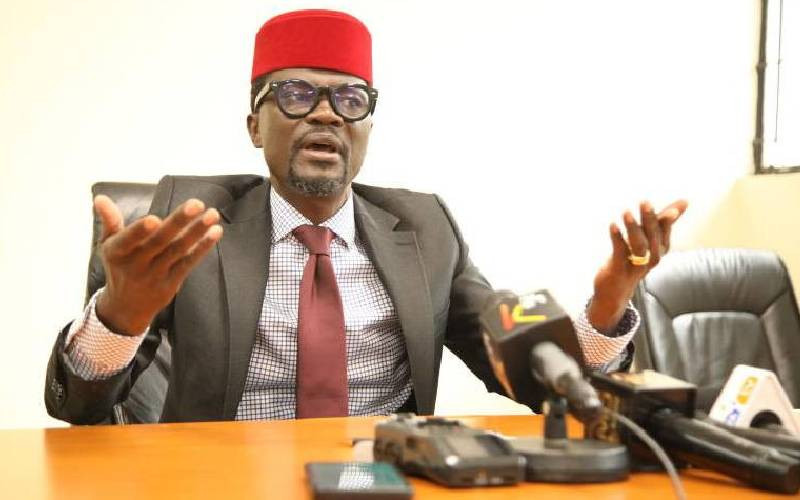
Elders from the Sabaot clan have endorsed Kimilili MP Didmus Barasa's gubernatorial bid.
The declaration is more than a routine political gesture and has been interpreted in some quarters as a calculated move meant to shift political alliances, identity-driven mobilisation, and the growing influence of minority communities in shaping the 2027 governor's race.
In a region where voting patterns have historically been influenced by ethnic arithmetic, community trust, and strategic inclusion, the backing of the Sabaot elders’ places Barasa in a potentially advantageous position.
Their endorsement reflects both appreciation of his recent engagement with the community and a broader political message about recognition, inclusion, and reciprocity, according to a section of voters in Bungoma.
Led by elder John Shikuku, the Sabaot council made it clear that their support for Barasa is grounded in what they describe as consistent engagement and genuine interest in the welfare of the community found in Mt Elgon community.
Mount Elgon is home to the current Bungoma Deputy Governor, Janepher Mbatiany, who is also eyeing the county top job and could face off with Mr. Barasa.
Unlike previous election cycles, where the community has often felt sidelined, the elders now say they see a leader who has made deliberate efforts to integrate with them socially and politically.
Of particular significance is Barasa’s recent association with the Sabaot community, including his marriage from within the community, an act that carries both cultural and political weight.
In many Kenyan communities, such ties are often interpreted as a sign of long-term commitment and belonging, reinforcing trust and political loyalty.
The elders argue that among all the aspirants eyeing the Bungoma gubernatorial seat, it is the lawmaker who stands out as the only candidate who has demonstrated genuine interest in their affairs.
“Other aspirants have neglected the Sabaot community for a long time. They only remember us during election periods, but Barasa has shown us respect and inclusivity,” Shikuku stated.
The Sabaot elders’ endorsement also draws heavily from past electoral patterns in Bungoma County.
In 2013, the county’s pioneer governor, Kenneth Lusaka, secured victory partly by selecting a deputy governor from the Sabaot community, a move widely seen as a strategic effort to consolidate votes from Mt Elgon
The same formula proved successful again in 2022 when Lusaka picked Pastor Jenipher Mbatiany as his running mate.
Beyond the symbolic gesture of inclusion, Lusaka’s consistent engagement with the Sabaot community, attending local events and addressing their concerns, helped solidify his support base in the region.
Stay informed. Subscribe to our newsletter
These precedents highlight a recurring political reality in Bungoma. Meaningful inclusion of minority communities can be a decisive factor in electoral success, according to Ayub Wafula, a voter Mr Barasa’s supporter.
By aligning themselves with Barasa this early, the Sabaot elders appear to be signalling their intent to once again play a kingmaker role in the upcoming elections.
Speaking at Kapsokwony market after receiving the endorsement, Barasa struck a tone of responsibility and unity, positioning himself not just as a candidate but as a leader committed to serving all communities.
He pledged to be “a responsible elder” and to champion the interests of the people of Mt Elgon, emphasizing that their concerns would be central to his administration if elected governor.
Further, the lawmaker stated that the key pillar of his development agenda is infrastructure, particularly the long-stalled Kimilili Kapsokwony road, which he cited as a priority project.
Barasa outlined an ambitious plan to improve road networks across the county by decentralizing public works operations to the constituencies.
“Those offices will be established and supplied with graders, tippers, and tractors that will undertake the face-lifting of the road networks in the county,” he stated.
The UDA MP added that the idea to establish public works offices in every constituency is aimed at ensuring faster response to infrastructure needs, a move that could resonate strongly with voters in remote and underserved areas such as Mt Elgon.
Beyond roads, Barasa also pledged to upgrade Vocational Training Institutions (VTCs), health facilities, and Early Childhood Development Education (ECDE) centres that are currently in poor condition.
“These sectors are critical to grassroots development and directly impact livelihoods, education outcomes, and access to healthcare,” he said.
Barasa’s endorsement comes at a time when the race for the Bungoma gubernatorial seat is beginning to take shape, with several contenders positioning themselves for the 2027 elections. Among his close competitors is Westlands MP Tim Wanyonyi, whose political influence and experience make him a formidable candidate.
However, local political dynamics could work against Wanyonyi, particularly perceptions that he has not been consistently present in the region.
Political observers note that frequent engagement with local communities is a key factor in building trust and securing votes at the county level.
In this regard, Barasa’s recent visibility and targeted outreach to minority groups may give him an early edge.
The Sabaot community, though considered a minority within Bungoma County, holds significant electoral influence, especially when voting as a bloc. Their strategic location in Mt Elgon and their history of political mobilization make them an important constituency for any serious gubernatorial aspirant.




Subscribe to our newsletter and stay updated on the latest developments and special offers!






 join
join