×

The Standard e-Paper
Smart Minds Choose Us
 The Standard Group Plc is a
multi-media organization with investments in media platforms spanning newspaper
print operations, television, radio broadcasting, digital and online services. The
Standard Group is recognized as a leading multi-media house in Kenya with a key
influence in matters of national and international interest.
The Standard Group Plc is a
multi-media organization with investments in media platforms spanning newspaper
print operations, television, radio broadcasting, digital and online services. The
Standard Group is recognized as a leading multi-media house in Kenya with a key
influence in matters of national and international interest.

Audio By Vocalize
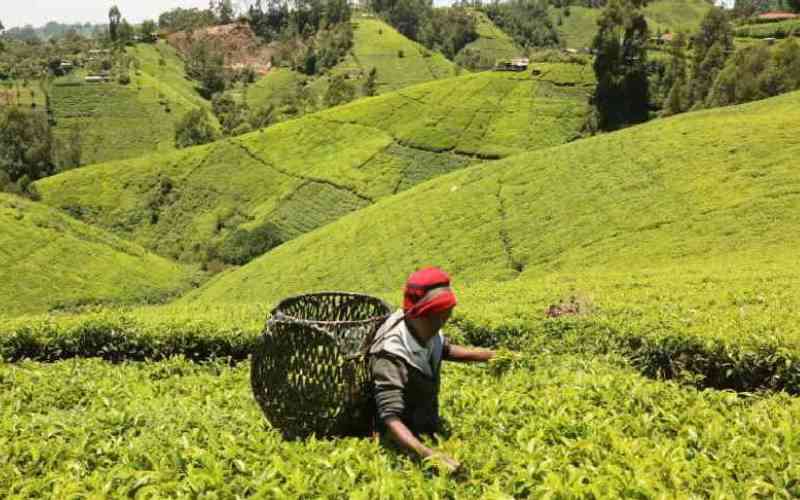
More than 200 Kipsigis clans have revived their campaign to reclaim vast tracts of land occupied by multinational tea companies in Kericho and Bomet counties, declaring they want ownership of the land returned to the community rather than financial compensation.
Through their legal team, led by advocates Kipkoech Ng'etich and Keter Chebusit, the clans have issued a 30-day notice to the tea companies, demanding they surrender title deeds and vacate the land.
If the notice is ignored, the community says it will file a case at the Environment and Land Court.
Speaking in Nakuru, Ng'etich said the community had instructed about 20 advocates to pursue the matter, insisting the disputed land should be registered in the names of the Kipsigis clans instead of the Government of Kenya.
"Our clients are not interested in compensation. They want their land back," Ng'etich said.
He argued that the land was taken from the Kipsigis community by the British colonial administration in the early 1900s and was never returned after Kenya gained independence in 1963.
According to the lawyers, the case seeks to correct what they describe as a long-standing historical land injustice.
Once ownership is restored, Ng'etich said, the community would decide whether to lease the land and to whom.
Chebusit said the land was seized through colonial laws imposed without the consent of the indigenous community.
"The land was taken by force under laws passed by the colonial government. The expectation was that it would revert to the community after independence, but that never happened," he said.
He added that successive governments had failed to resolve the dispute despite repeated appeals by the community.
The renewed legal action follows years of efforts by the Kipsigis and Talai communities to seek justice over land they say was confiscated to establish commercial tea estates during the colonial era.
Community members maintain they were evicted from fertile farmland and relocated to the tsetse fly-infested Gwasi area in present-day Homa Bay County under the 1901 Talai Removal Ordinance.
The two communities have pursued the matter through several avenues, including a case against the British Government at the European Court of Human Rights, petitions to the Senate and claims before the National Land Commission (NLC).
Stay informed. Subscribe to our newsletter
Former Kericho Governor Paul Chepkwony, whose administration initiated part of the legal process, argued that Britain's actions violated the European Convention on Human Rights.
In October 2022, Kericho Senator Aaron Cheruiyot and Nandi Senator Samson Cherargei also petitioned the Senate, claiming the British colonial government unlawfully took Kipsigis ancestral land without compensation.
The petition identified land occupied by major tea companies, including Unilever Tea Kenya (Brooke Bond), James Finlay Kenya, George Williamson Tea, Sotik Tea and Sotik Highlands, among others.
The National Land Commission has twice investigated the claims and acknowledged that the Kipsigis and Talai communities suffered historical land injustices.
In recommendations published in the Kenya Gazette in 2019, the commission called on the British Government to apologise to the affected communities and urged the Kenyan Government to formally acknowledge that the land had been unlawfully taken during colonial rule and should have been returned after independence.
The commission also proposed that Britain and multinational tea companies invest in schools, hospitals, roads, a museum and a university, while providing essential services such as water and electricity as part of reparations.
It further recommended direct compensation for victims, payment of commercial lease rates by tea companies and that expired leases should not be renewed without the concurrence of county governments. It also proposed that the Government identify land for the resettlement of affected families.
In a separate Gazette notice issued in April 2023, the NLC recommended that lease renewals be suspended until agreements were reached with county governments and proposed increasing land rates to benefit both national and county governments.
However, the recommendations were later quashed by the High Court after multinational tea companies challenged them.
Justice Oscar Amugo Angote ruled in April 2023 that the recommendations could not be implemented and barred the Ministry of Lands, the Director of Surveys and the county governments of Kericho and Bomet from acting on them.
The land dispute has continued to attract political attention.
Earlier this year, a task force appointed by Kericho Governor Erick Mutai found that large tea estates were still paying land rates agreed decades ago with the former County Council of Kipsigis and Municipal Council of Kericho.
The task force recommended increasing the rates from Sh1, 600 to between Sh5,000 and Sh10,000 per acre.
Tea companies are also facing demands to surrender about 1,000 acres for the expansion of Kericho town.
President William Ruto backed the proposal in October 2022, saying both the national and county governments would work to acquire land from multinational tea firms to support





Subscribe to our newsletter and stay updated on the latest developments and special offers!