×

The Standard e-Paper
Stay Informed, Even Offline
 The Standard Group Plc is a
multi-media organization with investments in media platforms spanning newspaper
print operations, television, radio broadcasting, digital and online services. The
Standard Group is recognized as a leading multi-media house in Kenya with a key
influence in matters of national and international interest.
The Standard Group Plc is a
multi-media organization with investments in media platforms spanning newspaper
print operations, television, radio broadcasting, digital and online services. The
Standard Group is recognized as a leading multi-media house in Kenya with a key
influence in matters of national and international interest.

Audio By Vocalize
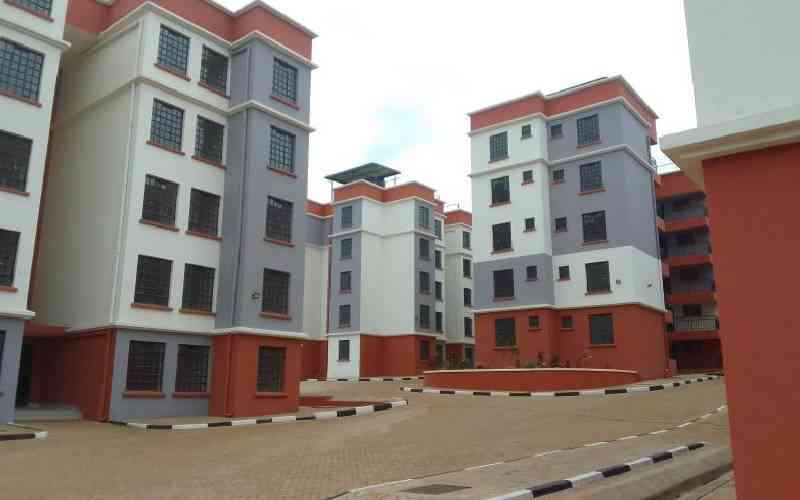
Alternative building technologies that reduce construction costs while expanding access to decent housing are emerging as practical solutions to Kenya’s worsening housing crisis, with experts calling for their wider adoption to help bridge the country’s growing housing gap.
Kenya’s housing shortage remains a major challenge despite increased investment in the sector, with demand continuing to outpace supply. The country requires about 260,000 new housing units annually, but formal supply remains significantly below this level, contributing to a deficit estimated at more than two million housing units.
The challenge is most pronounced in urban areas, where rapid population growth, high land prices, rising construction costs, and limited access to affordable financing continue to restrict homeownership. Many households have been forced to depend on rental housing as the cost of acquiring land and constructing homes continues to rise faster than incomes.
The technologies, which include Compressed Stabilised Soil Blocks (CSSBs) and Interlocking Stabilised Soil Blocks (ISSBs), use locally available materials to produce durable building blocks and can lower construction costs by up to 25 per cent compared to conventional methods.
They are also creating opportunities for youth and women involved in manufacturing construction materials while reducing reliance on expensive imported inputs.
Speaking during the Housing Innovation Forum and Expo in Nanyuki, Laikipia County, Habitat for Humanity Kenya Director Dr Eileen Mokaya said Kenya will struggle to meet its housing needs unless governments, the private sector, financial institutions and communities embrace innovative, low-cost construction methods.
The forum, held under the theme “Catalysing Sustainable Demand for Alternative Building Technologies,” brought together national and county government officials, development partners, housing practitioners, researchers, financial institutions and community groups to discuss ways of making quality housing more accessible.
Dr Mokaya said despite significant investment in the housing sector over the years, millions of Kenyans continue to live in poorly constructed houses that lack essential services such as clean water, sanitation and adequate ventilation.
“Kenya’s housing challenge cannot be solved by the government alone. It requires coordinated action involving county governments, the national government, the private sector, development organisations, financial institutions and communities. Alternative building technologies provide an opportunity to reduce construction costs without compromising the quality, safety or durability of houses,” she said.
“One of the biggest barriers to home ownership remains the high cost of construction, making decent housing unattainable for many low- and middle-income households.”
Dr Mokaya said compressed and interlocking soil blocks rely largely on locally available materials, reducing dependence on expensive fired bricks and cement-intensive construction while lowering transport costs and the environmental impact associated with building.
“Unlike conventional construction materials whose prices continue to fluctuate, the alternative technologies utilise soil available within communities and require less mortar during construction, making them particularly suitable for rural and peri-urban housing projects,” she said.
She said Habitat for Humanity Kenya was also promoting incremental housing designs that allow families to construct homes gradually based on their financial ability instead of starting projects they cannot afford to complete.
“An incremental design means you can start by building one room today, but the design of that house will allow you to add a second bedroom and a third bedroom as resources become available. You build at your own pace so that you do not start an incomplete house and then lack the resources to complete it,” she said.
Stay informed. Subscribe to our newsletter
Dr Mokaya said Habitat for Humanity Kenya has spent the last 45 years demonstrating that affordable housing doesn't need to come at the expense of quality.
During that period, the organisation has supported the construction of hundreds of houses for vulnerable families across the country. In Laikipia County alone, it has facilitated the construction of more than 200 houses, many benefiting households previously living in unsafe structures.
However, she noted that isolated projects are insufficient to address a national housing shortage driven by rapid urbanisation, population growth, rising construction costs and limited access to affordable housing finance.
She called on county governments to incorporate alternative building technologies into their housing programmes and building regulations while investing in training artisans and contractors on modern construction methods.
She also urged the national government to strengthen policies that encourage the production and use of locally manufactured building materials, saying this would lower housing costs, stimulate local industries and create employment opportunities.
“The solution is not only about constructing more houses. It is about making decent housing affordable for ordinary Kenyans while creating sustainable livelihoods through local production of building materials,” she said.
Dr Mokaya said involving communities in housing development goes beyond providing construction materials, noting that Habitat is encouraging the formation of social enterprises and voluntary savings groups where women and young people can access financing and gradually improve their homes.
“Because we know the challenges that communities face, we are looking at how we can start social enterprises and make sure our women and youth join voluntary savings groups where they can borrow and incrementally build their homes,” she said.
She explained that the approach allows families to take manageable steps towards home ownership by meeting one construction need at a time. “Today I may borrow for mabati, finish paying for my mabati, tomorrow I may borrow for the doors. It is really a journey that we work with communities to support them to have a decent home,” she said.
Dr Mokaya said access to housing should also be viewed beyond the physical structure, noting that water and sanitation services are key components of a decent home. “Access to safe water is very essential. People always ask us why Habitat seems to be doing a lot of drilling of boreholes and putting up shallow wells. It is because we want to implement an integrated approach. You cannot leave a home without access to sanitation facilities and water,” she said.
“We have to look at the entire ecosystem because that is what defines decency. A decent home is where people have access to the different components that make life safe and dignified,” she added.
The technologies showcased during the forum demonstrated how compressed soil blocks can be produced using relatively simple machinery and locally available raw materials before being used to construct durable and energy-efficient houses.
Housing experts attending the forum noted that besides reducing construction costs, alternative building technologies also minimise construction waste, lower carbon emissions associated with fired bricks and concrete production, and shorten construction timelines.
Laikipia Deputy Governor Reuben Kamuri said counties have an important role in promoting innovations that improve access to affordable housing. He said county governments should work closely with research institutions, technical training institutions, community groups and development organisations to increase public awareness of alternative building technologies and build confidence among homeowners.
“Many people still associate affordable housing with poor quality construction. We need to demonstrate that these technologies meet required standards while significantly reducing construction costs,” Kamuri said.
He added that increased adoption of locally available construction materials could stimulate county economies by creating new enterprises involved in manufacturing building blocks and supplying construction inputs.
Laikipia County Commissioner Duncan Muyesu said addressing Kenya’s housing challenge requires coordinated efforts across different sectors. He said while governments remain responsible for developing supportive policies and investing in infrastructure, sustainable solutions will depend on partnerships involving communities, financial institutions, innovators and private developers.
“Housing is not simply about putting up walls and roofs. It is about improving people's health, dignity, safety and economic well-being. Every institution has a role to play in ensuring families have access to decent shelter,” Muyesu said.
Residents who have benefited from improved housing said access to safe homes has transformed their lives beyond providing physical shelter.
Mary Mukami, a resident of Laikipia, said moving from a dilapidated structure into a decent house improved her family’s safety and health while restoring their dignity.
She said proper housing has reduced exposure to rain and cold weather while providing a healthier environment for children. “I know what it means to live in a house that leaks whenever it rains. Having a decent home has changed our lives. More families deserve that opportunity,” she said.
According to the 2019 Kenya Population and Housing Census, the country faced a deficit of about 14.7 million habitable rooms, reflecting the large number of households living in overcrowded or substandard conditions.
The 2023/2024 Kenya Housing Survey shows that home ownership remains significantly lower in urban areas, standing at 22.8 per cent compared with 85.5 per cent in rural areas.
The survey attributes the disparity largely to high land prices, expensive construction materials, limited mortgage access and rapid urbanisation.
Unlike conventional fired clay bricks, compressed soil blocks require significantly less energy during production, reducing greenhouse gas emissions while conserving natural resources. The technologies also encourage the use of locally sourced materials, reducing transport costs and strengthening local supply chains.
Experts at the forum said wider adoption of such technologies would require stronger public awareness campaigns, harmonised building standards, increased technical training for contractors and artisans, and financial support for entrepreneurs manufacturing alternative construction materials.
They also called for greater collaboration between universities, research institutions and the construction industry to improve innovation and ensure the technologies continue meeting evolving building standards.
“We need to invest in awareness creation because people need to understand that alternative building technologies are not about compromising quality. They are about using innovative approaches that reduce costs while maintaining safety, durability and dignity. We also need to train artisans, support local manufacturers and bring together researchers, government and industry players to strengthen these solutions,” Dr Mokaya said.





Subscribe to our newsletter and stay updated on the latest developments and special offers!








 join
join