×

The Standard e-Paper
Fearless, Trusted News
 The Standard Group Plc is a
multi-media organization with investments in media platforms spanning newspaper
print operations, television, radio broadcasting, digital and online services. The
Standard Group is recognized as a leading multi-media house in Kenya with a key
influence in matters of national and international interest.

Audio By Vocalize
Africa does not lack investment opportunities. From energy and logistics to agriculture, manufacturing and digital infrastructure, the continent has projects capable of transforming economies and creating new sources of prosperity. The harder question is whether the capital being committed can translate into tangible improvements in people's lives.
This is where the growing economic relationship between the United Arab Emirates (UAE) and Africa faces its most important test.
Between 2020 and 2024, the UAE committed more than $118 billion to investments across Africa, according to figures cited in the briefing for The Africa Debate – UAE. More than $70 billion of these commitments were directed towards energy and renewable projects, while a separate $1 billion initiative, AI for Development, points to growing interest in the continent's digital future.
These figures tell a story of ambition. They also raise a question that African governments, businesses and citizens have every reason to ask: what will these investments ultimately deliver?
The answer cannot be found in investment announcements alone. It must be seen in factories that open their doors, young people who find meaningful employment, businesses that gain access to new markets, and communities that benefit from more reliable energy and better infrastructure.
For the UAE and Africa, the next chapter of their economic relationship should be defined by delivery.
Making investment count
Large investment commitments naturally attract attention. They signal confidence in a market and can encourage other investors to take a closer look. But a commitment is the beginning of a process, not its conclusion.
Between an announcement and a functioning project lie several practical hurdles. Land must be secured, infrastructure put in place, permits obtained, financing arranged and commercial risks assessed. In some cases, projects stall because the necessary conditions were never fully established.
For many African countries, employment is perhaps the most immediate measure of whether investment is making a difference.
A new port, power plant, industrial park or data centre can contribute to economic growth. But its wider impact depends on what happens around it. Does it create opportunities for local businesses? Are African workers acquiring skills that improve their prospects? Can domestic suppliers compete for contracts? Does the project encourage other businesses to establish themselves nearby?
For the UAE–Africa partnership, local economic participation should therefore be a central consideration rather than an afterthought.
African governments must also do their part by investing in skills development, improving the business environment and ensuring that local firms have a fair opportunity to participate in major projects. Investment agreements should be structured around realistic, measurable outcomes rather than ambitious promises that are difficult to enforce.
Building the infrastructure Africa needs
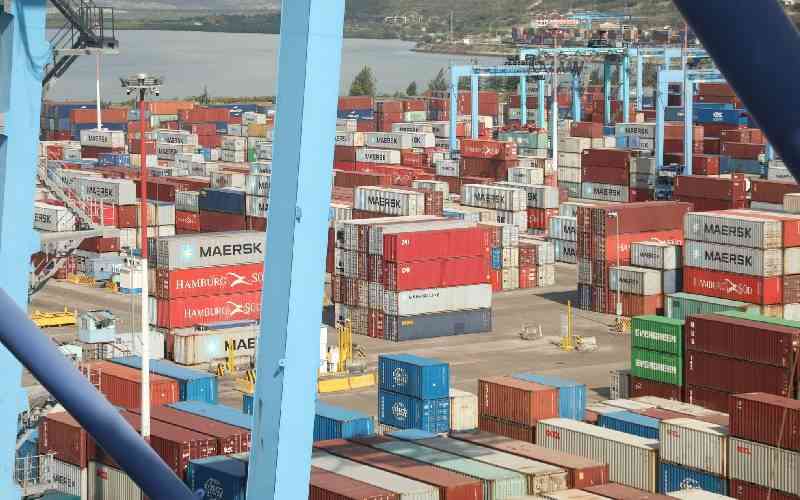
The UAE's experience in ports, logistics, trade facilitation and the development of integrated economic zones offers useful lessons for African countries seeking to strengthen their own infrastructure and manufacturing capacity.
Stay informed. Subscribe to our newsletter
But the aim should not be to reproduce the UAE model wholesale. African economies differ considerably in their resources, institutions, market sizes and development priorities. The more useful approach is to identify practices that can be adapted to local circumstances.
For Kenya, for example, investment in logistics and industrial infrastructure could help the country strengthen its position as a gateway to East African markets. Well-planned special economic zones, supported by dependable energy, efficient transport and predictable regulation, could attract manufacturers seeking to serve regional and international customers.
Such projects would have greater value if they also supported Kenyan suppliers, developed technical skills and created opportunities for businesses beyond the immediate investment site.
Across the continent, the same principle holds: infrastructure should serve productive economic activity, not simply stand as evidence of capital expenditure.
A digital future built in Africa
The digital economy presents another opportunity to deepen cooperation.
The UAE's announced $1 billion AI for Development initiative reflects the growing importance of artificial intelligence and related technologies in international development and investment. For African countries, the opportunity extends beyond adopting new software or deploying imported systems.
It includes building the infrastructure on which digital services depend, developing local expertise, supporting African technology businesses and making these tools useful to sectors such as healthcare, education, agriculture and manufacturing.
However, the benefits will not be automatic. Digital infrastructure requires dependable electricity, connectivity, appropriate regulation and skilled people. Countries must also consider data governance, affordability and the risk that technological advances could widen existing inequalities.
UAE investment can help address some of these needs, but African institutions and entrepreneurs must remain central to shaping the solutions. The long-term goal should be to strengthen Africa's capacity to develop, adapt and benefit from technology, rather than simply increase its consumption of imported digital products.
The UAE–Africa relationship has the scale to make a substantial contribution to the continent's economic ambitions. Realising that potential will depend on the quality of projects, the strength of partnerships and the willingness of all sides to remain focused on results.
Ultimately, Africa does not need investment announcements to become an end in themselves. It needs investment that expands opportunity, strengthens local enterprise and builds productive economies.
The author is a Global Communications Strategist and former Business &Technology Editor








Subscribe to our newsletter and stay updated on the latest developments and special offers!